admin
admin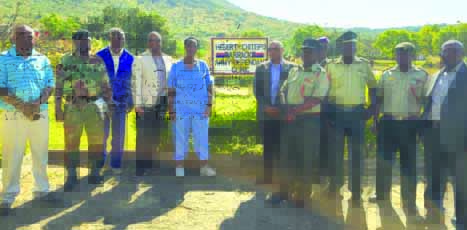
Ray Bande
Senior Reporter
IT is one of life’s laws that most people are remembered, not for what they have done for themselves, but for what they would have done for the people around them and the world at large.
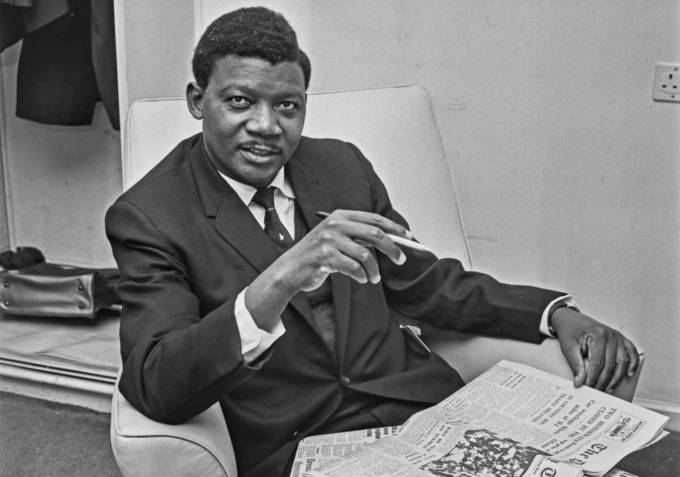
That is the case for national hero, Cde Herbert Wiltshire Pfumandini Chitepo.
Cde Chitepo, who would have turned 100 years this week had it not been for the diabolical car bomb that took his life in Lusaka, Zambia, was remembered in style on Monday as his family took time to visit some of the Mutare places that were named after the country’s first black lawyer and his wife, Cde Victoria Fikile Chitepo.
The Zimbabwe National Army’s 3 Brigade Headquarters was renamed the Herbert Chitepo Barracks, while Mutare Provincial Hospital was renamed Victoria Chitepo Provincial Hospital.
Cde Chitepo, who died March 18, 1975, was born on June 5, 1923.
Mr Bernard Chitepo, the late national hero’s nephew said: “We are here to get an appreciation of the places that were named after our late father and national hero, Cde Herbert Chitepo as well as his wife, Victoria.
“In the same breadth, we really appreciate Government for honouring our father. It is something we will forever cherish and appreciate as a family. The main purpose for us visiting these places is to foster a lasting relationship with these institutions as well as build synergies for mutual cooperation.
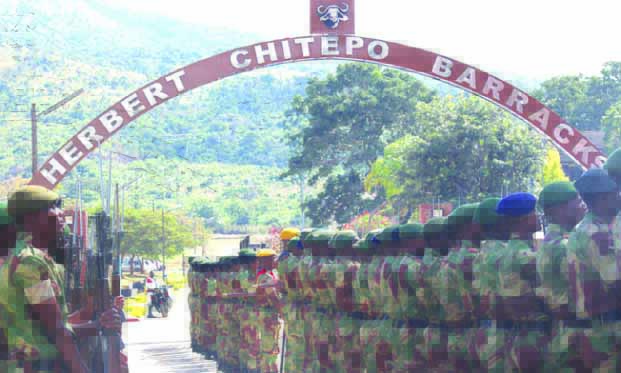
“We sincerely appreciate the hearty welcome we got from the two institutions we visited — Victoria Chitepo Provincial Hospital as well as Herbert Chitepo Barracks,” he said.
Other places that were named after the late national hero in recognition of his important role include the Great Zimbabwe University’s Herbert Chitepo School of Law, University of Zimbabwe Law Department Herbert Chitepo chair, Herbert Chitepo Training Centre in Bonda, ZANU PF Chitepo School of Ideology as well as many schools, streets and roads in major towns and cities countrywide.
One of the country’s most eminent sons, Cde Chitepo was the chairman of the Zimbabwe African National Union (ZANU).
According to available literature, his death came after his fiery language and his role in developing ZANU’s new military strategy inevitably made him a target for assassination by the Rhodesian regime.
Cde Chitepo and Cde Silas Shamiso, one of his bodyguards, were killed instantly in the Lusaka bomb blast.
He was the first black Rhodesia citizen to become a barrister.
He was educated at St David’s Mission School, Bonda; St Augustine’s High School, Penhalonga; and then at Adams College, Natal, South Africa, where he qualified as a teacher in 1945.
He met his wife, Victoria, a heroine who was also interred at the national shrine.
After teaching for a year, he resumed his studies to graduate with a BA Degree from Fort Hare University College in 1949.
In 1954, Cde Chitepo became Rhodesia’s first black advocate.
On returning to Rhodesia that year, he practised as a lawyer and defended African nationalists such as fellow national hero, Reverend Ndabaningi Sithole.
In 1961, he served as legal adviser to the late Father Zimbabwe, Dr Joshua Nkomo, the founder of the Zimbabwe African People’s Union (ZAPU), at the Southern Rhodesia Constitutional Conference in London.
During the same year, he was also appointed to the Board of Governors of Bernard Mzeki College, along with Sir W.C.R. Honey and Sir Robert Tredgold.
In May 1962, ZAPU was banned because of militarism and Cde Chitepo was persuaded to go into voluntary exile to escape possible detention.
He became Tanzania’s first African Director of Public Prosecutions.
The Sithole and Nkomo factions of ZAPU split in July 1963.
Dr Nkomo’s supporters founded the PCC-ZAPU and favoured a more militaristic approach.
At ZANU’s first congress in Gweru in 1964, Cde Chitepo was elected in absentia as national chairman.
He held this post until December 7, 1974 when the Lusaka Accord was signed.
In 1966, Cde Chitepo decided to leave his prestigious job in Tanzania and moved to Zambia to devote himself full-time to re-organising the party and begin the armed struggle in earnest.
It was a decision that separated him from some of his contemporaries in academic institutions and in comfortable jobs who had decided not to join nationalistic politics.
It was also a role that radicalised his views.
Under the guidance of Cde Chitepo as ZANU’s most senior leader, the party shaped its military wing, the Zimbabwe African National Liberation Army (ZANLA), under the command of national hero, Cde Josiah Magama Tongogara.
Both ZANU and ZAPU chose to leave the country and and form military armies outside Rhodesia, although they chose different countries to set up their bases.
ZAPU set up base in Zambia where it organised ZIPRA (the Zimbabwe People’s Revolutionary Army.)
They allied with the Soviet Union and organised a vanguard of highly trained soldiers.
ZANU, however, moved into Tanzania and then to Mozambique and set up ZANLA, which concentrated more on mobilising the masses in the countryside in a guerrilla warfare method.
Cde Chitepo toured world capitals canvassing support for ZANU.
With his friendly disposition, he was very effective and earned international recognition and respect for ZANU.
Accordingly, Cde Chitepo with the assistance from the military supremo, Cde Tongogara organised and planned successful guerrilla warfare attacks and underground activities in Rhodesia from 1966 onwards.
In 1972, he co-ordinated war operations with FRELIMO and opened up the north-eastern region of Zimbabwe as a new and effective war frontier.
Cde Chitepo’s immense contribution in the nationalistic movement and the liberation struggle is unquestionable.
He was a strong proponent of the distribution of land and on his return from a trip to Australia in 1973, he put it succinctly: “I could go into the whole theories of discrimination in legislation, in residency, in economic opportunities, in education.
“I could go into that, but I will restrict myself to the question of land because I think this is very basic. To us the essence of exploitation, the essence of white domination, is domination over land. That is the real issue.”



 Online Reporter