

 admin
admin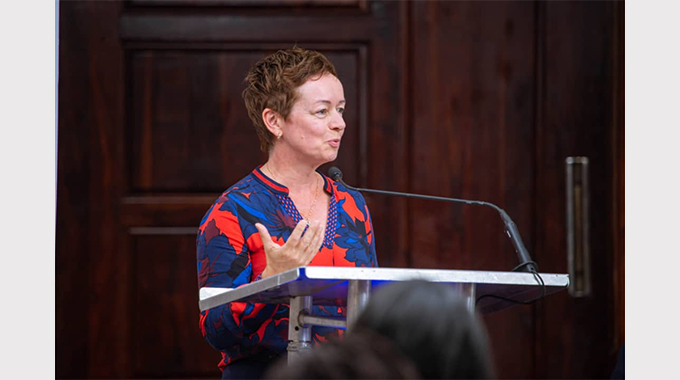
Sifelani Tsiko Agric, Environment & Innovations Editor
Examining the gender dynamics in each country and local context is important to ensure gender equality solutions meet the needs of local women, said Fionnuala Gilsenan, ambassador of Ireland to Zimbabwe and four other southern African countries.
The Irish ambassador told participants recently at a Gender Café Platform to scale up women’s empowerment and gender equality that it was important to map gender equality solutions using the local context determined by local people.
This, she said, could make interventions that sought to advance gender equality and women empowerment more effective unlike gender equality solutions that were foreign and not grounded in the local context.
“Gender equality is one of the areas that our Irish government is interest most in. The Gender Café Platform provides an opportunity to learn from each other and to share good practices that can help us attain gender equality,” she said.
“It is important to map gender equality solutions using the local context determined by local people. We need bring more heads of missions to the discussion table to come up with possible solutions.”
UN Women organised this edition of the dialogue focusing on Financing for Gender Equality, Women’s Empowerment and Promotion of Violence Free Elections.
Through this interactive dialogue format, UN Women sought to ignite discussion on resource mobilisation for advancing gender equality and women empowerment, the current election context and how violence free elections can be achieved especially for women and girls
Head of cooperation in the Delegation of the EU in Zimbabwe, Franck Porte said gender equality and empowerment was one of the major priorities of EU programming in Zimbabwe.
He said the EU had invested US$500 million globally for the Spotlight Initiative (SI) to end violence against women and girls worldwide, of which Zimbabwe had received US$30 million to tackle GBV.
“This is one of the things the EU has done towards financing gender equality. Gender is a consensus priority for EU,” he said.
Fadzai Traquino, director pf Women and Law in Southern Africa said it was important for more women to move into the macro-economic budgeting space to help influence the budgetary process in a way that advanced gender equality and women’s empowerment.
“Women are disadvantaged in many spheres and it is important for us to look at where resources are coming from and understand who the players are and how they are influencing the budgetary processes,” she said.
“We have to break into these budgeting spaces to influence financing into gender equality and women’s empowerment.”
The café offered an opportunity for dialogue on gender equality and women’s empowerment between private sector players, donor community, government, civil society, women experts and business leaders working in different sectors at different levels



 Online Reporter