Vusumuzi Dube
Nqobile Bhebhe, [email protected]
ZIMBABWE’S preparations for the 46th Independence Day celebrations in Maphisa, Matobo District, Matabeleland South, have evolved beyond a national commemoration, with the event increasingly seen as a test case for how rotational hosting of major national events can stimulate rural tourism and decentralised economic growth.
Introduced in 2021 under the Second Republic’s Devolution Agenda, the rotational model shifted national celebrations from Harare to provinces across the country. Since then, Bulawayo, Mashonaland Central, Manicaland and, most recently, Gokwe North in the Midlands have hosted the annual event.
While the policy promotes inclusivity and national unity, tourism and economic analysts argue its deeper value lies in its potential to create temporary economic clusters capable of catalysing long-term rural enterprise development.
Independence Day functions as a short-term economic hub. Government departments, private contractors, security services, exhibitors, transport operators, media houses and tens of thousands of visitors converge on one rural district. More than 50 000 people are expected in Maphisa this year, generating demand across accommodation, catering, transport, retail and informal trade.
Community tourism consultant Mr Sibusiso Ndlovu said the key to maximising the opportunity lies in structured local participation.
“When you bring a national event like Independence Day to Maphisa, you are effectively creating a temporary city,” he said. “The opportunity lies in integrating local suppliers — caterers, transporters, farmers and artisans — into formal supply chains. That is where sustainable income is generated.”
Analysts warn that without deliberate planning, much of the expenditure could leak to external contractors and suppliers.
Preparatory works in Maphisa — road rehabilitation, water reticulation upgrades, power supply improvements and venue construction — are being framed as long-term tourism infrastructure rather than once-off event costs.
Improved road links between Bulawayo and Maphisa enhance access to the Matobo Hills World Heritage Site, while upgraded utilities strengthen the district’s capacity to host conferences, cultural festivals and private sector retreats beyond April.
This aligns with Government’s Tourism Policy framework, which identifies township and community-based tourism as critical pillars for sector diversification. Under the Rural Tourism Cluster, authorities are prioritising village-based accommodation, heritage product development, formalisation of small operators and improved access to finance.
The policy aims to reposition rural districts from peripheral transit zones to authentic economic and cultural destinations. The Rural Tourism Cluster is one of several key pillars within Zimbabwe’s tourism sector, alongside Meetings, Incentives, Conferences and Exhibitions (MICE), Cultural and Heritage Tourism, Eco tourism, Gastronomy Tourism and Adventure Tourism.
It focuses on unlocking tourism potential in rural communities by promoting village-based accommodation, cultural experiences, traditional architecture, crafts and nature-based attractions. By integrating rural areas into the mainstream tourism value chain, the cluster helps diversify national tourism offerings while spreading economic benefits beyond established resort centres.
Promoting the Rural Tourism Cluster is central to the national development philosophy of leaving no one and no place behind, ensuring that remote and previously marginalised communities benefit from tourism through job creation, income generation and infrastructure development. In line with the devolution agenda, rural tourism strengthens local economies, preserves cultural heritage and builds community pride.
Economist and development consultant Ms Nomsa Dube said the influx of visitors provides a natural stimulus.
“The visitors are already coming. The challenge is converting that foot traffic into repeat visits and sustainable enterprise growth,” she said. “Rural tourism must be engineered — with pricing models, marketing strategies, tour operator partnerships and measurable performance indicators.”
Maphisa and surrounding areas possess commercially viable tourism assets, including liberation war heritage, balancing rock formations, San rock art and proximity to the Matobo Hills. Structured heritage trails, interpretive centres and curated exhibitions could transform these into revenue-generating attractions, while trained youth guides monetise cultural storytelling.
Digital amplification is also becoming critical. Youth content creators can position the district on regional and international platforms, extending visibility beyond the commemorative period.
For communities in Kezi and surrounding wards, Independence Day presents immediate commercial opportunities.
Designated market zones offer platforms for craft sales, traditional cuisine and cultural performances. Structured vendor registration and procurement systems can ensure women’s cooperatives, youth groups and smallholder farmers participate formally.
Local authorities, in collaboration with the Zimbabwe Investment and Development Agency (Zida), can also establish an investment facilitation desk during the event to enable formal engagements, project profiling and follow-up mechanisms.
Tourism operator Mr Thabang Tlou said pairing national celebrations with a business and cultural expo could deepen impact.
“These gatherings bring decision-makers into one geographic space. If local authorities prepare bankable proposals with clear land tenure frameworks and projected returns, investors can move from interest to commitment,” he said.
Potential investments include eco-lodges, community conservancies, agro-tourism ventures linked to cattle ranching and solar-powered campsites.
“A single eco-lodge creates direct jobs in hospitality, security and maintenance, while indirectly supporting farmers, transporters and artisans. Multiply that across provinces and you have meaningful rural industrialisation,” Mr Tlou said.
However, stakeholders emphasise that long-term impact hinges on skills development. Training in hospitality, tour guiding, catering and digital marketing — backed by certification — can convert event-based exposure into lasting employability. With Zimbabwe’s youthful demographic, rural tourism offers a labour-intensive sector capable of absorbing semi-skilled and creative talent.
For the rotational hosting model to evolve into a sustainable tourism growth strategy, experts say robust monitoring is essential. Post-event assessments should track tourist arrivals, local business registrations, employment figures, enterprise revenues and infrastructure utilisation. Data-driven evaluation would allow future host provinces to refine best practices and strengthen linkages between national events and rural economic activation.
Meanwhile, the Zimbabwe National Water Authority (Zinwa) has announced that 24 village and school business units (VBUs) will be established in Maphisa. Zinwa head of corporate communications and marketing Mrs Marjorie Munyonga said the VBUs, part of several legacy projects planned for the province, will significantly transform communities.
“Typically comprising a solar-powered borehole, one-hectare drip technology horticulture project, fish ponds and a communal water point, village and school business units are transformative interventions being implemented under the auspices of the Presidential Rural Development Programme and are aimed at uplifting livelihoods for rural communities,” she said.
“Under the Presidential Rural Development Programme, which aims to establish 35 000 village business units, 9 600 school business units and 4 500 Youth Business Units, Zinwa is the lead implementing agency responsible for infrastructure development.
“These village, school and youth business units are registered as formal companies and are run on sound commercial lines with locals as both employees and shareholders, earning monthly salaries and sharing dividends at the end of a given trading period.”
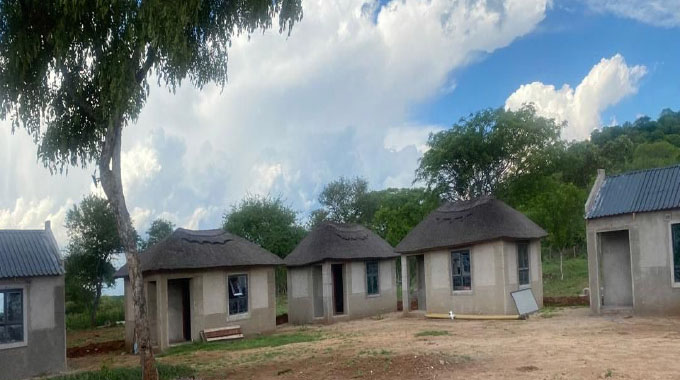
The Agricultural and Rural Development Authority (ARDA) oversees registration and day-to-day management of the business units, while the Agricultural Marketing Authority secures markets to inform crop choices. Additional VBUs are being established at Shashane Secondary School, Tjewondo Primary School, Gohole Primary School, Lingwe Primary School, Kezi Primary School and Mangala Primary School. About 16 boreholes have also been drilled at the tourism rondavels, Mrs Munyonga said.
If strategically managed, analysts say, the rotational hosting model could redefine Independence Day from a symbolic national gathering into a deliberate decentralised tourism stimulus.
As Zimbabwe convenes in Maphisa this April, they add, the long-term success of the celebrations may ultimately be measured not by attendance figures, but by whether rural districts convert a temporary city into a permanent tourism economy.



 Online Reporter