Online Reporter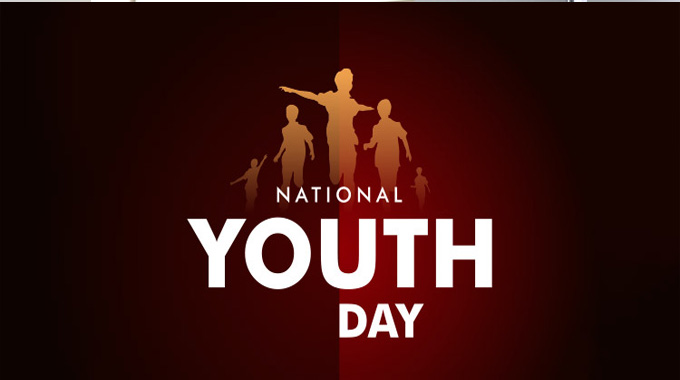
Elliot Ziwira
Igava Business Centre in Marondera, Mashonaland East, pulsed with youthful energy yesterday as more than 30 000 young Zimbabweans converged to commemorate National Youth Day, a celebration of promise, patriotism and productivity.
The event, officiated by President Mnangagwa, comes at a time when the nation is sharpening its focus on youth empowerment as a cornerstone of socio-economic transformation under Vision 2030.
Recently, the President launched the National Youth Empowerment Strategy (2026-2030) and the Presidential Youth Empowerment Revolving Fund to support economic development and improve skills among youths, through technology as enshrined in National Development Strategy 2 (NDS2).
From the early hours of the morning, the usually tranquil business centre has transformed into a sea of banners, vocational exhibitions, innovation hubs and cultural showcases, reflecting the dynamism of Zimbabwe’s young population.
This year’s commemorations whose theme is “Youth Agenda for Transformation”, are not merely symbolic but are grounded in policy, opportunity and action.
At the heart of the celebrations is the clarion call from the Ministry of Youth Empowerment, Development and Vocational Training, which has reaffirmed its commitment to empowering youths across all sectors.
In a press statement issued ahead of the event, the ministry clarified public discourse surrounding Youth Service in Zimbabwe (YSZ), stressing that the programme is not punitive, but purposeful.
The ministry emphasised that graduates deployed for vocational training in the People’s Democratic Republic of Algeria are products of the 2024 and 2025 Youth Service in Zimbabwe programmes, young men and women who already hold honours degrees from various universities.
Far from being a barrier, the YSZ certificate has become a bridge linking academic knowledge with national service and practical skills.
The 2025 Cabinet Directive integrates YSZ graduates into the civil service employment framework, making the YSZ certificate a key requirement for public sector employment and an essential criterion in the selection process for Government scholarships.
The thrust is clear that Zimbabwe seeks professionals who are not only academically competent but also socially conscious and rooted in national values.
Here in Marondera yesterday, that vision was on display. Government ministries, departments and agencies joined hands to ensure the day’s success. Exhibition tents showcased vocational training opportunities, innovation funding mechanisms, agricultural empowerment schemes, digital skills programmes and entrepreneurship incubation initiatives.
For many young attendees, this event was a marketplace of possibilities going beyond celebration.
Observed annually on 21 February, the National Youth Day is more than a date on the calendar. It is a reaffirmation of the liberation ethos that young people are the vanguard of development. The day celebrates the contribution of young people to Zimbabwe’s political, social and economic development, while providing a platform for the Government to engage youths on empowerment, employment and nation-building programmes.
In the liberation struggle, it was the youths who carried the dream of independence into the forests and onto the diplomatic frontlines. The struggle has shifted from political emancipation to economic empowerment.
The ministry’s statement situates Zimbabwe within a continental movement. Countries such as Nigeria, Namibia, Kenya and Ghana have implemented youth service initiatives designed to enhance employability and civic responsibility.
Zimbabwe’s YSZ programme aligns with this broader African commitment to structured youth engagement as a lever for national development.
Yet beyond policy frameworks and continental comparisons lies a more urgent reality: the challenge of youths classified as Not in Employment, Education, or Training (NEETS). Across the world, idle youth populations pose social and economic risks.
Zimbabwe’s approach, as articulated by the ministry, seeks to reintegrate these young citizens into productive pathways through vocational and technical training, entrepreneurship support and structured national service.
Yesterday’s gathering in Marondera speaks directly to this reintegration agenda.
Drawing thousands of young people into one shared space of dialogue, mentorship, exhibition and inspiration, the Government signals that youth issues are not peripheral. They are central to the national development matrix.
The fight against drug and substance abuse also features prominently in the commemorations. In recent years, communities across Zimbabwe have grappled with the scourge of illicit substances targeting vulnerable youths. Structured training, national service and purposeful engagement are being championed as antidotes to despair and delinquency.
“When young people are anchored in their identity and national consciousness, they are better prepared to lead with integrity, skill and purpose,” the ministry noted in its statement. This sentiment echoes the spirit of National Youth Day.
With approximately 6,7 million Zimbabweans out of a population of 16,6 million being of school-going age — learners between three and 18 years, it is imperative that pledges to self and nation, involving young people are revisited.
Negativity, therefore, should not be allowed to grow into a habit, where everything to do with the nation is trivialised; no matter how significant it may be to shared values.
A culture of love, peace and unity, even in the face of adversity, should be cultivated in young people, for misfortune is a state of mind.
There is always a starting point. If young people are taught the essence of nationhood and citizenship, through a shift, not only in mindset, but changes to the curricula in schools, then, patriotic nationals, who will stand tall in defence of their country, are created.
Therefore, it is commendable that the Second Republic, under the stewardship of President Mnangagwa, revived and rebranded the national youth service. It is an apt starting point, for every nation is as good or bad as its citizens.
Young people should remain mindful of the choices they make, alive to the fact that opportunities open to them now, did not come on a silver platter. They are products of sacrifice, selflessness and patriotism.
Hence, they should take an interest in the affairs of their country, and desist from partaking in the politics of subterfuge. They should not always be pretentious and dishonestly straddle the fence, expecting others to do their bidding, and blame them when their expectations are not met.
Since Independence in 1980, the Government has played its part in ensuring youth inclusivity. It has remained steadfast in its commitment to the welfare of young people and artists across all genres. Previously suppressed talents across a gamut of disciplines in sport and arts were liberated.
The Second Republic has made significant strides in empowering youths through various programmes and initiatives aimed at promoting entrepreneurship, education, and skills development.
It cannot be overemphasised that through enabling policy frameworks, more citizens have been afforded opportunities to scribble their scripts on the global landscape across all spectrums of human endeavour, as spaces that colonial Rhodesia closed them out of were unlocked.
Such empowerment programmes do not only capacitate youths in the fight against poverty, but also take them away from drug and substance abuse.
Crucially, for many of the expected 30 000 attendees, Igava Business Centre stands as a site of affirmation. Some are university graduates exploring public service careers. Others are vocational trainees, artisans, farmers, tech innovators and aspiring entrepreneurs. Still others, perhaps uncertain about their next step, found in yesterday’s proceedings a compass pointing toward opportunity.
President Mnangagwa’s presence highlights the political will behind youth empowerment initiatives. Under the Second Republic, youth development has been framed as an investment rather than an expenditure. The mantra, empower the youth, empower the nation, clearly fits into that frame.
As Marondera hosts this historic convergence, local businesses anticipate brisk trade, while community leaders welcome the spotlight on Mashonaland East. Igava Business Centre stands as a national symbol of youthful aspiration.
Therefore, National Youth Day 2026 is both a celebration and covenant. It is a covenant between the Government and the young generation that their energy, creativity and resilience will not be taken for granted.
In the rhythm of drumbeats, the choreography of traditional dances, the hum of innovation exhibitions and the solemnity of official addresses, Zimbabwe’s youth see themselves reflected not as statistics, but as stakeholders in the country’s destiny.
From Marondera, the message echoes across provinces and districts that Zimbabwe’s future is youthful, skilled, patriotic and purposeful. At Igava Business Centre, that future is already unfolding.