Online Reporter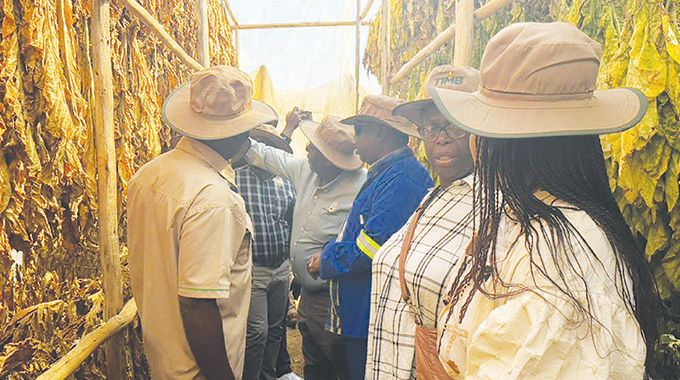
Raymond Jaravaza, [email protected]
FOR tobacco farmer Mr Sola Reed of Marula in Matabeleland South Province, successful farming requires planning beyond a single crop, with diversification forming part of his agribusiness strategy to maximise profitability.
His decision to grow multiple crops throughout the year has set a model of how tobacco farmers can still thrive by venturing into horticulture.
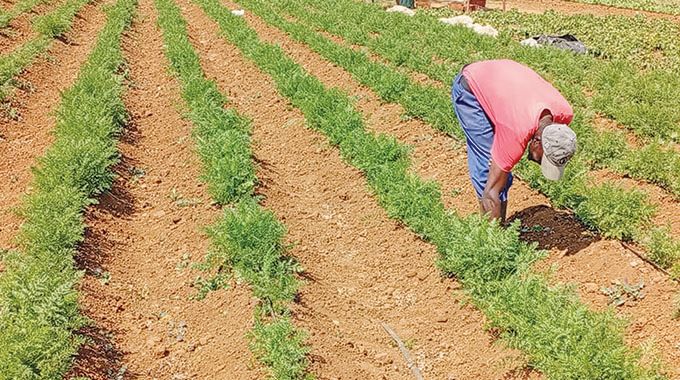
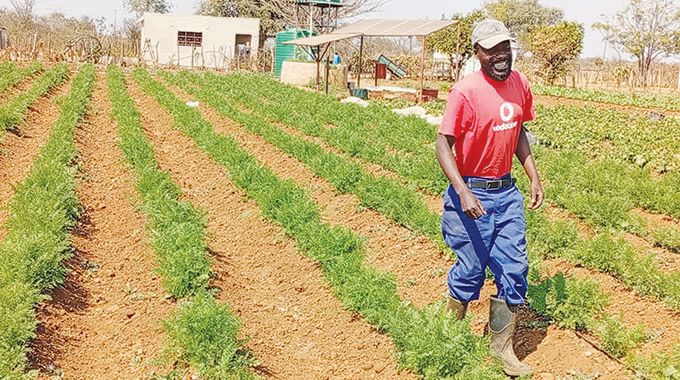
Outside tobacco, Mr Reed produces tomatoes, cabbages, carrots and maize. He is one of the 395 tobacco growers from Matabeleland South who ventured into tobacco production, a project that continues to grow in leaps and bounds, having started with just 17 farmers in the 2023/24 season.
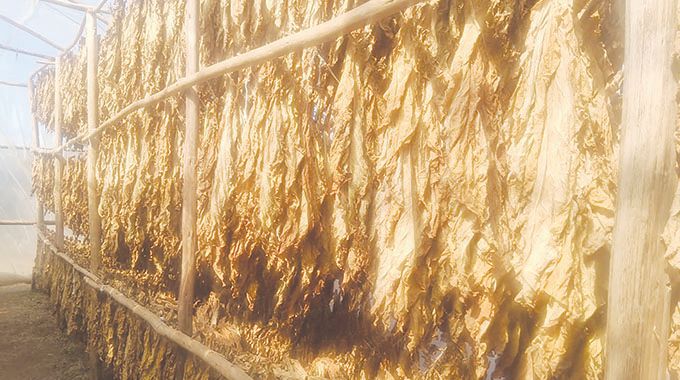
This season he sold over 1 100 kilogrammes harvested from one hectare and managed to repay a US$1 000 loan advanced to him by a tobacco contracting company to buy inputs when he sold the golden leaf at an auction floor at the Zimbabwe International Trade Fair (ZITF) last month and still pocketed a significant profit.
While tobacco production is a lucrative business, Mr Reed does not want to be solely dependent on growing the cash crop alone, as that will leave him vulnerable to market shocks, changing weather patterns and other unforeseen vulnerabilities.
“For a first-time tobacco farmer like myself, the 2025/26 season was a good one after our area received good rains and I managed to harvest over 1 100 kilogrammes of tobacco, which left me in a better financial position,” he said.
“But I don’t want to be known just as the old man who grows tobacco in my area but a complete farmer that produces a wide range of crops. Right now we have cabbage and carrots planted on an acre of land and we should start harvesting any time soon.
“Farming is a full-time job for me, so I always have more than one crop in the fields. In a few days we will be planting maize that we will sell as green mealies in the next three months,” said Mr Reed.
From tobacco proceeds, Mr Reed has started building a two-bedroom house at his plot, an investment he said was a dream come true.
“It’s important to live a comfortable life at the plot with my family and thanks to the money we made from tobacco and other cash crops I’m building a bigger home,” he said.
The Tobacco Industry and Marketing Board (TIMB) has come out urging tobacco farmers to emulate Mr Reed and others who have taken crop diversification seriously in their respective farms, communal land and plots.
For decades, tobacco has been the backbone of Zimbabwean agriculture, generating vital foreign currency and sustaining rural livelihoods.
The sector supports more than 160 000 households nationwide and feeds many downstream industries.
“While tobacco remains a viable and profitable crop, the modern farmer can no longer afford to treat the farm simply as a lifestyle or heritage asset. Today’s economic environment demands that farms be managed as agile, commercially focused enterprises capable of creating wealth under changing market and climatic conditions,” said TIMB.
As of 17 July, 353 813 565 kilogrammes of tobacco valued at US$882 492 252 had been sold, while tobacco auction floors close this Friday.
TIMB said it views diversification not as a retreat from tobacco, but as a deliberate agribusiness strategy that maximises profitability, stabilises cash flow and protects farming businesses from market and climatic shocks.
“Successful farming today requires planning beyond a single crop. Diversification should be viewed as an integral component of every tobacco farming business, complementing rather than replacing tobacco production,” said the agency.
“Sound agribusiness depends on disciplined risk management. Relying entirely on one crop, however strong its historical returns may be, goes against a fundamental principle of financial management. Never invest all your capital in a single asset.”
Tobacco specialist Mr Rodrick Musiyiwa said tobacco growers in Mashonaland are supplied with seeds for other crops as part of a diversification drive by companies such as AtlasAgri.
“A complete farmer must grow at least four crops throughout the year so tobacco growers cannot rely on just one crop. A tobacco farmer cannot buy mealie meal because they fail to produce a few 50 kilogramme bags of maize or buy vegetables from the market when they can have their own nutritional garden,” said Mr Musiyiwa.
TIMB added that the prediction by the Meteorological Services Department (MSD) that the country will have below-normal rainfall during the 2026/27 season is a reminder to growers of the importance of strengthening resilience against climate-related risks associated with the looming El Niño conditions.
“Diversification itself is a climate adaptation strategy. Producing tobacco and food crops, livestock and other commercial enterprises spreads production risk and ensures that households continue generating income even if one enterprise performs below expectations because of adverse weather,” he said.
“Beyond food security, diversification contributes to better production through efficient utilisation of land, water and other natural resources. It promotes economic growth by creating opportunities for participation in new markets.”