

 admin
admin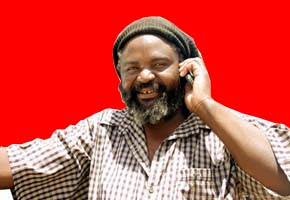
the dance floor
IT all started in Chinhoyi and sadly ended there yesterday. Cephas Mashakada’s life can be likened to a hilarious comedy, which ends abruptly, leaving viewers in suspense. God has surely taken back his gift.
Mother earth has swallowed her own.
For sure is death to the living, but Mashakada deserved a bit more time on earth.
His death has changed the perking order in the music industry leaving it looking more like a bouquet of flowers without colourful roses.
“Mazangata”, “Motomuzhinji”, “ZiSamson”, “Maproper” and his totem “Wadyegora” are names that were used by people in reference to the lumbering giant. His is like a book whose last paragraphs are hard to discern, leaving the reader with many unanswered questions. The burly and dreadlocked singer who passed on at Chitungwiza Central Hospital on Tuesday led a simple life pregnant with humour.
He was almost always alongside his sidekick John Bunga better known as “Mr Ten Days Under Water.”
Self-proclaimed messenger of God Hosiah Chipanga was to be so close to him towards the end during which period they toured the length and breadth of the country for live gigs. A 750ml bottle of Mainstay was always nearby, but this had changed in the later days when diabetes had dictated a different lifestyle.
Mashakada had a unique blend of gospel music fused with jiti, which carried listeners to glory with a distinct lead guitar, a stable rhythm and imposing bass guitar riffs. Also not to be outdone was the drum.
So skilful was the husky-voiced and grey-bearded artiste that he made the guitar do the singing while fans wreaked havoc on the dancefloor. Mashakada’s bald-headed backing vocalist and dancer Shame Mashonganyika aka Chibage who played hosho was a major draw card to his shows.
The guy used to dance skillfully while playing his hosho as if possessed by a spirit. A musical gala was incomplete without the Sounds of the Muddy Face.
Almost every Christmas they staged gigs in Mhondoro at the invitation of a celebrated businessman there. The band had gelled in so tight that it needed no sound check. They simpy plugged in their guitars and set the ball rolling.
Though the band had no dancing queens, these usually emerged from the crowd. In the early stages of his career, Motomuzhinji penned songs on political developments in the country, paid tribute to heroes and traditional songs, but in the end he was doing strictly gospel. He did collaborations with other artistes like the rising Nyaradzo Mashayamombe on the song Vasikana Vanegumi.
While other musicians struggle for exaltation, Mashakada was not one such. The man was comfortable in his khakis, jeans and large woolen hat.
He was a man of the people and it was easy to strike a conversation with him. You did not require countless phone calls to be granted an interview.
Before fortune knocked on his door around 2004, Motomuzhinji confined his live shows to mining towns, farming areas and small bars in the ghettos.
On certain occasions he would stage gigs in the Kopje area at Mai Jojo’s place where the common men usually meet for a drink or two after work.
Mashakada was a common sight along Kaguvi Street in downtown Harare where those with psychomotor skills fixed his bedraggled yellow VW Kombi, which he used for family travel and carrying his instruments to live shows.
On certain occasions, he would also be seen in the same street driving an equally old red Alfasud with rusty fenders.
The streetwise Mashakada literally had time for everyone and allowed fans, yours truly included, to play his instruments during breaks.
Wadyegora used to refer to everyone as “Baba” while stroking his grey beard.
You could also hire his car easily and even instruments. He enjoyed assisting others provided every part met their side of the bargain.
Former members of the late John Chibadura’s Tembo Brothers would at times stage joint gigs with the burly artiste who passed on at the ripe age of 51.
Mashakada was loved by small boys whom he occasionally bought plates of sadza and assisted with bus fare.
The man was a heavy guzzler who could quaff copious bottles of undiluted brandy without showing signs of intoxication.
Despite being a man of the people, there was something about his dreadlocks that made the lion in him roar. He always kept them in the large woolen hat, except on sleeves of some of the 15 albums he recorded.
Even in his last days, rumour has it that Wadyegora refused to have the dreads shaved. He loved them with a passion. He reportedly once defied his huge frame to hide in a fridge during political disturbances at Mereki Shopping Centre in Warren Park D.
When he released the chat-topping Nyaradzo Yakaitwa in 2004, his life changed for the better.
Samson, a hit song off the album, won best song at the 2005 Zimbabwe Music Awards.
The song took him to the length and breadth of the country where fans waited patiently to see him strumming the wires.
This is when he entered the belly of the city and staged joint shows with the inimitable Alick Macheso including curtain raising for international artistes.
He was to acquire a good Toyota Corona, a powerful musical kit and a lorry to carry the instruments.
Typical of the ghetto boy he was, the car was inscribed “Wauya Motomuzhinji” with raging flames on the fringes.
His next album was to carry a song titled Kusatenda Huroyi in which he praised God for showering him with blessings.
It was not long however, before he developed diabetic complications that claimed his leg and later his life.
The singer prophesied his death.
Panyika pano, hapana anogara pano,
Baba, tese tiri makuva,
Panyika pano, hapana anogara pano,
Tese takabatabata,
Zviri kwamuri ishe mundiregerere, he sang in this song loosely translated to mean no one lives forever, we have all sinned.
But how did Mashakada’s music journey begin?
Mashakada recorded 15 albums in a career spanning three decades. He released Nyaradzo Yakaitwa in 2004, his best selling album to date.
He was born in Chinhoyi in 1960, and 17 years later he teamed up with a few friends in the farming town and formed a group called the Wild Ten.
Among them was Biggie Tembo, who later became an international superstar with Bhundu Boys.
In 1978, the group was invited to Paul Mpofu’s World Tomorrow band in Harare, but Tembo left to join Wild Dragons which was later renamed Bhundu Boys.
After joining Mpofu, the new band with Mashakada was renamed Muddy Face.
It went on to release hits such as Amai Mandigona, Rakabuda Zuva MuAfrica, Denga Rababa, PaInyanga, Kilimanjaro and Nherera.
Mpofu quit the band in the 1990s to form Zambuko Band, but Mashakada remained in the now renamed Sounds of the Muddy Face.
The Sounds of the Muddy Face released a string of hit albums such as Tenda Midzimu Yako, Nhamo Yehuroja and Rino Idandaro but a lean spell followed, prompting Mashakada to change direction.
Go well Wadyegora; it was good while it lasted.


 Peter Tanyanyiwa
 Online Reporter