

 Online Reporter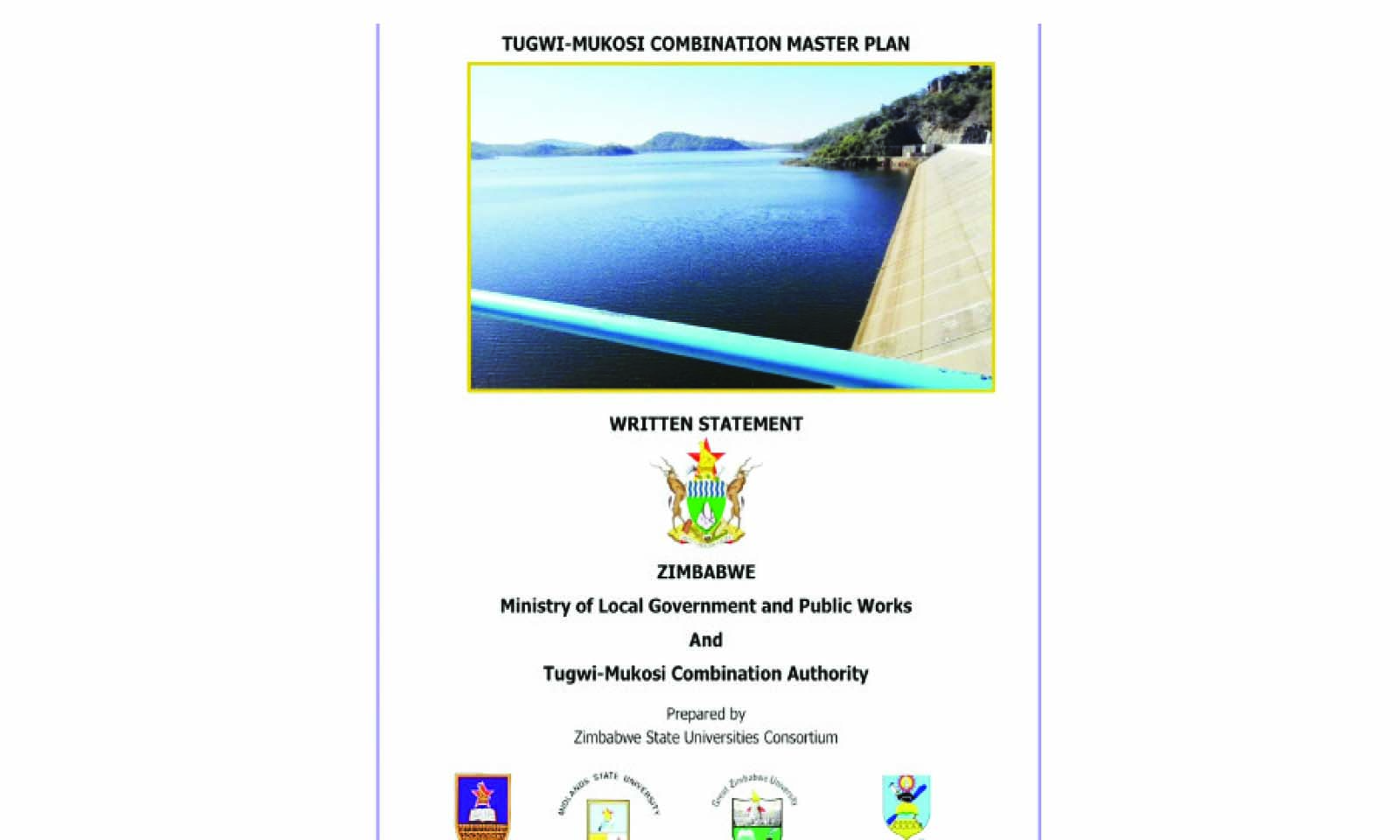
Richard Muponde
Zimpapers Politics Hub
THE Government has launched a multi-sectoral master plan for the Tugwi-Mukosi area aimed at making the region an economic hub anchored on agriculture, tourism, and energy development.
The 20-year Tugwi-Mukosi Combination Masterplan is a roadmap, which integrates land use, infrastructure development, and sustainable economic activities around the lake, the country’s largest inland water body.
Unveiled last week, the masterplan which is spearheaded by the Ministry of Local Government and Public Works in partnership with the Ministry of Environment, Climate, Tourism and Hospitality Industry, and the Masvingo Provincial Affairs office, was developed to unleash the economic potential of the lake.
“Tugwi-Mukosi Combination Masterplan represents policies and development proposals to be pursued by local and international investors and partners, in the short, medium and long term. The statement is based on specific assumptions and results from the Report of Study conducted in the year 2020, for the designated Tugwi-Mukosi Combination Masterplan area,” read the masterplan
“Furthermore, it is informed by a concept masterplan, which was prepared soon after an inception report, but preceded the report of study. The Combination Masterplan will serve as a visionary, strategic and dynamic secondary law document for coordinated socio-economic development and growth, and conservation of the physical environment in the Tugwi-Mukosi planning area.”
The plan proposes extensive irrigation schemes supported by the dam’s vast water capacity, with specific areas designated for citrus, sugarcane, and livestock production.
“There is potential for irrigation development and aquaculture industry within the Tugwi-Mukosi planning area. The Tugwi-Mukosi dam can also provide water for irrigation in the neighbourhood communities for improved livelihoods. An irrigation assessment demonstrated that within Tugwi-Mukosi, a total land area of 4 544 ha is suitable for irrigation. There is also an existing Banga irrigation scheme, which is currently not functional due to lack of irrigation water as the Banga Dam has dried up,” reads the document
There are also plans to convey water to Banga Dam not only to resuscitate Banga Irrigation Scheme, but to provide water to Ngundu rural service centre, and for pastures, fish production, livestock watering and domestic use to communities close to Banga River, starting from Saddle Dam 3.
“The pipe route to supply the area is there. However, the overall benefits derived from the Tugwi-Mukosi Dam should be understood in the context of its contribution to agricultural development in the entire South-East Lowveld,” an excerpt from the masterplan says.
The other proposal is for the conservation of the dam and guarding against the effects of environmental degradation as a result of mining activities in Tugwi- Mukosi catchment area.
A number of people in both Chivi and Masvingo Rural districts are engaged in small-scale mining as a form of employment. However, there is limited compliance to environmental requirements to minimize environmental damage.
Overall, illegal mining activities are causing environmental degradation in the planning area especially along the Ngundu-Chiredzi Road. With some of the communal land incorporated into the dam conservation zone there is likely to be pressure on mining activity expansion.
The masterplan outlines tourism development which will include eco-tourism lodges, waterfront resorts, and a range of recreational activities such as boating, sport fishing and game viewing.
It explains potential for tourism including having the appropriate infrastructure and superstructure in place.
Efforts would also be made to protect the scenic environment and heritage to promote tourism. Tourism sector is anchored on abundant natural resources such as wildlife and scenery, which sustains tourism development in Zimbabwe.
The improved operating environment owing to continued economic stability and enabling infrastructure developments such as the ongoing upgrading of the Beitbridge-Harare-Chirundu Highway will widen opportunities for further tourism growth within the planning area.
The tourism sector will be anchored on increased investment in diversified tourism products such as heritage tourism, medical tourism and community-based tourism, among others.
The masterplan complements the tourism policies in unlocking tourism opportunities in Masvingo Province through connecting the many tourist attractions in the region and designing of marketing models.
The dam was completed in December 2016 and commissioned in May 2017.




Could you please share a link to the actual Master plan. Contribution close on J25 une 2025. But can not make contributions without seeing the actual master plan