Fairness Moyana in Hwange
MATABELELAND North is increasingly turning livestock and household waste into a source of clean energy as Government expands biogas projects across rural communities, providing farmers with an alternative to firewood while creating new opportunities to improve agricultural productivity.
The initiative, being implemented by the Rural Electrification Fund (REF), combines household and institutional biogas digesters with solar electrification as part of broader efforts to expand access to sustainable energy solutions and reduce reliance on conventional fuels.
Under its 2026 programme, REF plans to construct 25 domestic biogas digesters and one large institutional digester in Matabeleland North.
REF provincial rural electrification manager, Engineer Vincent Sande, said the projects were aimed at providing clean energy to communities while promoting the productive use of waste generated from livestock and household activities.
“REF is pushing in terms of sustainable projects, largely on solar and biogas, to support a number of Sustainable Development Goals,” he said.
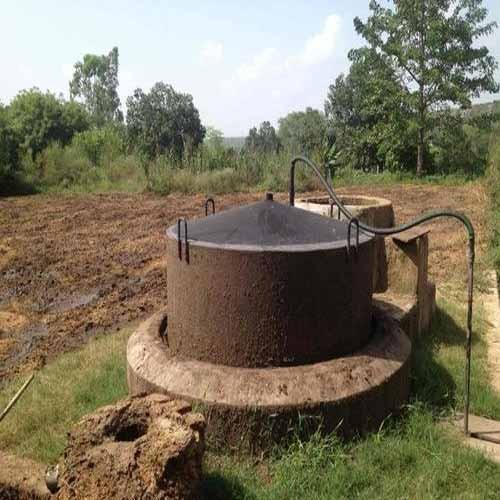
Biogas is generated when organic matter such as animal manure decomposes in an oxygen-free environment, producing methane gas that can be used for cooking, heating and, where infrastructure allows, electricity generation.
The process also produces nutrient-rich slurry and liquid fertiliser, creating a circular system in which agricultural waste is converted into both energy and valuable farming inputs.
Eng Sande said the technology has the potential to reduce pressure on forests, particularly in rural communities where firewood remains the main source of cooking fuel.
“It cuts down on deforestation, as now we have an alternative source of energy,” he said.
For farmers, biogas technology offers the additional advantage of converting waste from livestock and poultry production into a useful resource.
The methane generated by digesters can be used for cooking and heating chicken and piglet brooders, while the resulting slurry can be applied to crop fields and household gardens as organic fertiliser.
One of the province’s flagship biogas projects is under construction at Khami Medium Complex Prison, where REF is installing a 200-cubic-metre digester.
The project is currently 25 percent complete and is expected to demonstrate how large institutions can generate clean energy from organic waste produced on site.
Eng Sande said plans were also in place to install a biogas purification plant and an electricity generator powered by gas produced from the digester.
The development is expected to reduce the institution’s dependence on conventional energy sources while providing a practical model for other institutions that generate substantial volumes of organic waste.
At household level, REF has completed 14 biogas digesters at Stanhope in Umguza and plans to construct a further 11, bringing the total number in the area to 25.
The fund also constructed 19 domestic digesters in Hwange and 20 in Lupane last year.
In addition, two institutional digesters were installed at facilities run by the Zimbabwe Prisons and Correctional Service, including Ntabazinduna, as well as at the Zimbabwe Republic Police training depot.
Eng Sande said the benefits of biogas technology extend beyond energy production to improved waste management and agricultural productivity.
The fertiliser-rich slurry and liquid produced through the digestion process can be returned to farms, potentially reducing reliance on commercially produced fertilisers and other agricultural inputs.
The biogas programme forms part of a broader renewable energy strategy being implemented in Matabeleland North.
REF is targeting universal electrification of public institutions across the province in 2026, with 131 primary and secondary schools as well as rural health centres expected to be connected to the national electricity grid.
A further 97 institutions are set to receive solar power systems, expanding access to electricity in communities where extending the national grid remains difficult or prohibitively expensive.
A community solar plant is also planned under the province’s renewable energy programme.
The combination of grid electricity, solar power and biogas reflects a growing shift towards decentralised energy solutions, particularly in rural areas where reliable power is critical for households, schools, health facilities and income-generating activities.