Online Reporter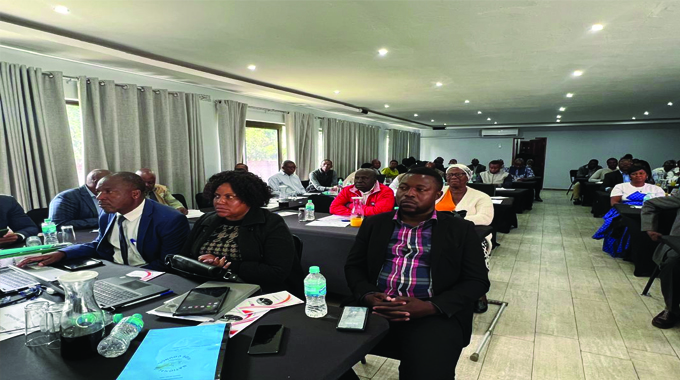
Sukulwenkosi Dube-Matutu, [email protected]
MATABELELAND South Province has intensified the fight against teenage pregnancies and child marriages under a campaign code named: “Not in My Village” led by traditional leaders.
The concern over child marriages and teenage pregnancies comes at a time when Matabeleland South has one of the highest HIV provincial prevalence rate at around 17,3 percent against the national rate of 10,49 percent.
More than 100 000 people out of a population of about 750 000 in the province are said to be living with HIV.
All the districts have a prevalence rate, which is higher than that of the national rate. Bulilima, Mangwe, Matobo and Gwanda districts have higher prevalence rates with Bulilima standing at about 22,5 percent followed by Mangwe District with 21,6 percent.

The province held its campaign inception meeting on Monday in Bulawayo, which was attended by chiefs and stakeholders from various Government departments and hosted by National Aids Council.
The initiative takes a community approach where chiefs play a leading role in their communities to mobilise joint community efforts to tackle adolescent teenage pregnancies. Communities will be educated on HIV related issues, teenage pregnancies and early marriages.
It also seeks to change the attitudes and behaviours of the community gatekeepers and the general public towards child marriage and to promote the rights and well-being of girls.
Beitbridge and Insiza Districts will pilot the project because of their high teenage pregnancy burden.
NAC Matabeleland South provincial manager, Mr Mgcini Sibanda, said HIV remains a challenge in the province where prevalence is disproportionately skewed towards female population.

He said in 2024 the province recorded about 5 700 teenage pregnancy cases for girls between 10 and 19 years.
“Females are disproportionately affected from age group 15-19 right up to 35-39 years. For the ages 15-19, the females incidence rate is six times more than their male counterparts with males recording 0,6 percent and ladies four percent,” said Mr Sibanda.
“Bulilima and Mangwe District’s HIV incidence is highest in the province. The incidence is almost twice for females than that of their male counterparts. Beitbridge has the least incidence among females followed by Umzingwane.”
Beitbridge and Insiza also have the highest proportion of early teenage marriages at 24 percent and 16 percent, respectively.
The province recorded 85 372 female teenage pregnancies with Beitbridge accounting for 31 248 while Insiza recorded 20 872.
Chief Sitaudze from Beitbridge said child marriage and teenage pregnancies have a negative impact on communities. He said as traditional leaders they embrace their responsibility to protect communities and future generations.

“We have a responsibility to protect and promote the well-being of our people, in particular our young people,” he said.
“There is need to exercise our role in shaping the future of our communities, and it is our duty to ensure that we leave a long lasting legacy.
“Early child marriages and teenage pregnancies are common among the people we lead. By our standards, this is unacceptable and we must take collective action to arrest this.”
Young People’s Network on Health and Well-being (YPNHW) Southern Region deputy national facilitator, Mr Ziphozenkosi Ndlovu said as young people they are eager to take a leading role in fighting these ills, which are destroying the future of young people.
He said as a result of teenage pregnancies and child marriages, girls and boys were being deprived of their childhood, education, health and other opportunities in life.
In a speech read on her behalf by Secretary for Provincial Affairs and Devolution, Mrs Lathiso Dlamini Maseko, Minister of State for Matabeleland South Provincial Affairs and Devolution, Dr Evelyn Ndlovu said the campaign will be effective in the prevention of new HIV infections in the province.
“This concept is a call to action, a declaration that we will no longer tolerate high HIV prevalence, teenage pregnancies and early marriages in our areas of jurisdiction,” she said. “The strategy we are pursuing is very much befitting the national response to HIV and Aids, for us to eliminate Aids by the year 2030.
“This initiative resonates well with President Mnangagwa’s mantra of leaving no one and no place behind. I stand firm to say that the Government of Zimbabwe is committed to ensuring the success of such programmes, let us do it for our people,” she said.
—@DubeMatutu