Online Reporter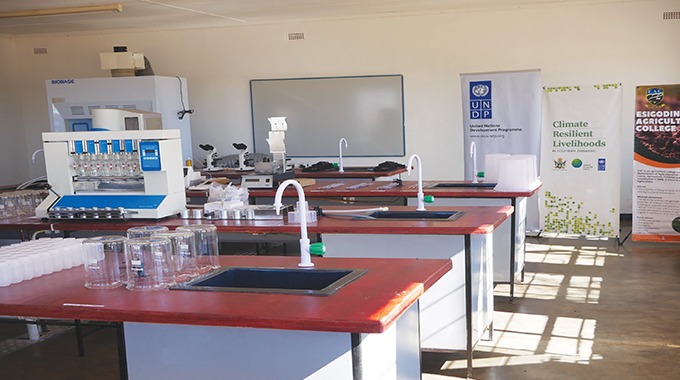
Sukulwenkosi Dube-Matutu, [email protected]
GOAT breeders in Matabeleland South have begun reaping the benefits of an innovation centre established at Esigodini Agricultural College in Umzingwane District to enhance the genetic quality of their livestock.
The innovation centre features a feed analysis laboratory and a goat housing station. These facilities are aimed at improving the animals’ health and nutrition, with the feed analysis centre enabling the analysis of the nutritional content of farm-produced fodder for the goats.
The innovation platform is facilitating the production of quality feed for better animal performance. Farmers are being equipped with knowledge on the nutritive quality of the fodder legumes they grow and which to mix to ensure optimal animal performance.
The college has conducted an outreach programme where farmers have been trained on goat nutrition, goat housing, and goat health. The institution is working with 21 farmer field schools in Umzingwane, Insiza, and Gwanda districts.
Each farmer field school is set to receive two bucks of a cross between Kalahari Red and Matabele breeds by June to improve their genetics. The Matabele breed is known for its adaptive ability to low plains of nutrition, harsh weather conditions, medium to large body frame, low maintenance costs, and good mothering ability. The Kalahari Red goats are characterised by a large body frame, adaptation to dry environments, large carcass weight, good carcass quality, and twinning ability.
Through training, mentorship, and scientific feed analysis, the initiative is set to improve livestock farming practices, ultimately contributing to food security and economic growth in the province.
The innovation platform was established under the Building Climate Resilience of Vulnerable Agricultural Livelihoods in Southern Africa programme.
In an interview, Esigodini Agricultural College principal, Mr Farai Gomo, said the college seeks to empower farmers with skills and technical support to improve livestock farming. In April last year, the college commissioned a feed analysis centre to assist farmers in analysing animal feed, ensuring proper nutrition for livestock.
“The college has been actively working with farmers in Matabeleland South to improve livestock productivity and feed quality. In April 2024, the college commissioned a feed analysis centre to assist farmers in analysing animal feed, ensuring proper nutrition for livestock,” said Mr Gomo.
He said the initiative is part of a broader collaboration with various stakeholders to enhance agricultural practices in the region.
“The college is working with 21 farmer field schools from the province. In collaboration with the Agricultural and Rural Development Advisory Services, we have trained farmers in goat housing and goat feed formulation,” said Mr Gomo.
He said the recently established nutritional laboratory will play a key role in analysing feed samples to ensure that livestock receives optimal nutrition.
Umzingwane Ward 3 agricultural extension officer, Ms Velaphi Mhlanga, said the innovation platform is playing an important role in capacitating farmers and promoting goat breeding as a business. She said farmers visit the college to learn about feed formulation and improve breeding skills.
Ms Mhlanga urged farmers to produce fodder crops, including knowing how to mix the fodder to produce the required nutritional content. She said farmers have also been trained in silage-making through the innovation platform.
UNDP Green Climate Fund project manager, UNDP Climate Smart Agriculture Expert, Dr Nelson Chanza said Esigodini Agricultural College is one of the five innovation centres under the project.
He said among the outputs of the Building Climate Resilience of Vulnerable Agricultural Livelihoods in Southern Africa programme is improved climate resilience agriculture, including improved market linkages by smallholder farmers.
“Esigodini Agricultural College is one of the five innovation centres that we are working with in the country, and each has a specific value chain focus. Esigodini Agricultural College is focused on improved goat production, and their strategy is on improving goat breeds,” said Dr Chanza.
The Building Climate Resilience of Vulnerable Agricultural Livelihoods in Southern Zimbabwe Green Climate Fund project is aimed at strengthening climate resilience in agriculture. It seeks to empower communities by providing resources, training, and support to mitigate climate change effects.
It is being implemented by the Government with technical and management support from the United Nations Development Programme (UNDP) and funded by the Green Climate Fund.
The project is being implemented in 14 districts in three provinces.
@DubeMatutu