Chronicle Editor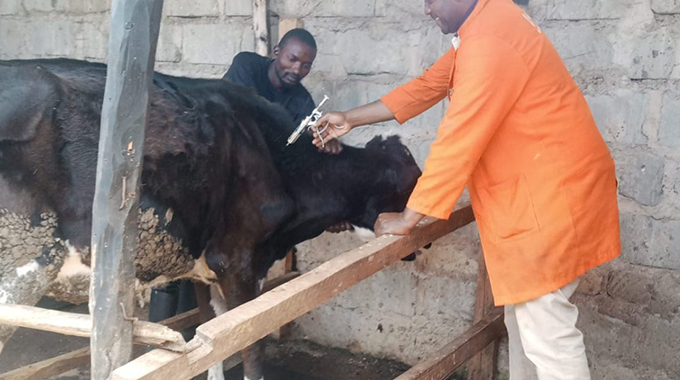
Sukulwenkosi Dube-Matutu, [email protected]
MATABELELAND South Province has enough acaricides to last for the next three months with farmers being urged to dip their cattle regularly to prevent them from contracting Theileriosis also known as January Disease.
Theileriosis is a tick-borne infection that has had a devastating impact on the country’s cattle population in recent years.
To control tick-borne diseases, the Government introduced the Integrated Tick and Tick-Borne Disease Control Strategy (ITTBDCS) which comprises three components namely intensive cattle dipping, vaccination of cattle and acaricide resistance monitoring.
These three components complement each other well in reducing the impact of tick-borne infections. Acaricide resistance monitoring is important in ensuring the effectiveness of cattle dipping as it continually evaluates acaricide resistance profiles of different tick species against specific dipping chemicals, and thus prevents dipping failures.
It is also used to evaluate the effectiveness of current dipping regimes and thus provides useful information to decision-makers on whether to alter dipping regimes to ensure effective tick control.
During the wet season, livestock is susceptible to tick-borne diseases and farmers should properly implement the above measures to protect their livestock.
Matabeleland South has since January last year recorded 2 068 cases of January disease and 1 634 deaths.
In an interview, Matabeleland South provincial veterinary director, Dr Enat Mdlongwa said while the January disease mortality in the province has dropped, there is a need for farmers to adhere to regulations.
“We have managed to contain the January Disease as there has been a significant drop in the cases that we were recording monthly. In January last year, we recorded 297 cases and 188 deaths, but this month we have recorded 88 cases and 72 deaths,” he said.
“To maintain this momentum we are saying that farmers have to dip their animals regularly. As a province, we received additional acaricide last week and the supplies we have can last the province till April.”
Dr Mdlongwa urged farmers to utilise the acaricide which has been made available to protect their livestock.
In December last year, the province recorded 86 deaths and 101 cases. Most cases were recorded in February last year with 350 cases and 211 deaths.
Theileriosis was first reported at PBS farm in Insiza last year before the disease further spread to Umzingwane and Bulilima districts. Dr Mdlongwa said the hotspots in the three districts were still quarantined and the movement of cattle from those areas is restricted.
The other hotspots are, Bayethe, Bradford Farm, and Amazon area in Insiza, Willbies and Godlwayo area in Umzingwane and Orap Zenzele Farm near Figtree in Bulilima.
“As the Department of Veterinary Services, we are still conducting awareness campaigns to contain the spread of the disease. There is a need for farmers to act responsibly to protect their animals and contain the spread of the disease,” said Dr Mdlongwa. He said farmers must adhere to the quarantine orders as they help to preserve their animals.
“Farmers must also be transparent when dipping their cattle by ensuring that all the animals are brought in for dipping. Some farmers tend to misrepresent the number of livestock with some not appearing on the stock card. If one animal remains behind then it defeats the whole process of dipping.”
Dr Mdlongwa also urged farmers to quarantine affected animals and follow the suggested treatment regime.
“We also urge traditional leaders to assist in enforcing these regulations. Farmers should report villagers who are not following regulations as they are putting other farmers at risk of losing their animals,” he said.
“Farmers should dip their animals every week while those in the Theileriosis hotspots have to adhere to the 5-5-4 dipping regime system to contain the disease.”
Under the dipping system, farmers are supposed to dip their animals after five days, dip them again after five days, and then dip them after four days before reverting to five days.
Farmers are supposed to adhere to the recommended 32 dipping sessions per year. From the beginning of the year until March 31, the Department of Veterinary Services has been conducting 12 dipping sessions for cattle throughout the country’s 4 099 dip tanks.



 Online Reporter