Vusumuzi Dube, Deputy Radar Editor
MATABELELAND South is set to benefit from a range of infrastructure and social development interventions under the 2027 National Budget, with investments targeting irrigation, health facilities, vocational training, education infrastructure and roads as Government seeks to accelerate development in underserved communities.
The measures outlined in the Budget Statement presented by Finance Minister Professor Mthuli Ncube include rehabilitation of Maphisa District Hospital, construction of Kezi Rural Hospital, expansion of irrigation infrastructure, completion of vocational training facilities and upgrading of roads linking rural communities.
The interventions are expected to strengthen service delivery while supporting agriculture, skills development and economic opportunities in a province where rural communities rely heavily on farming, livestock production and access to public infrastructure.
Prof Ncube said regional development and inclusivity through devolution and decentralisation remained central to the country’s socioeconomic transformation agenda.
“Regional development and inclusivity through devolution and decentralisation are key pillars of the country`s socio-economic transformation agenda under NDS2. It is central to Government’s commitment to leaving no one and no place behind by reducing regional economic disparities and improving access to essential public services,” he said.
Agriculture and irrigation remain among the key areas of intervention, with Government allocating ZiG970,9 million towards rehabilitation and expansion of irrigation infrastructure countrywide to reduce dependence on rain-fed agriculture and mitigate drought risks.
The allocation includes ZiG21 million for Zhove irrigation, while other irrigation development and support programmes will receive funding to sustain and expand irrigation initiatives.
Prof Ncube said Government was pursuing irrigation investments to strengthen agricultural productivity and climate resilience.
“Therefore, the 2027 National Budget will provide ZiG970.9 million for the rehabilitation and expansion of irrigation infrastructure, to reduce dependence on rain-fed agriculture and mitigate drought risks,” he said.
The allocation comes as farmers in Matabeleland South continue to face the effects of erratic rainfall and recurrent droughts, making irrigation infrastructure critical in sustaining production, livestock feed availability and household incomes.
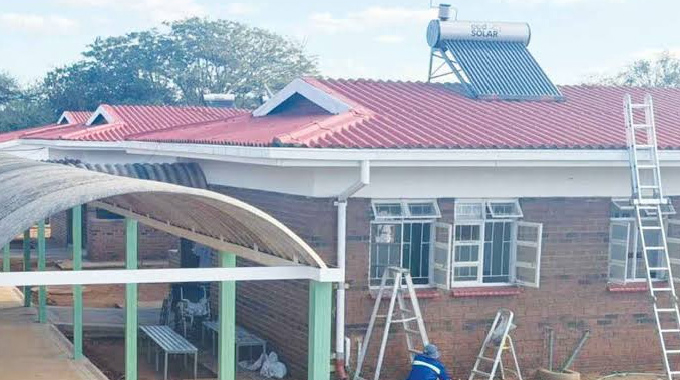
The province is also set to benefit from the rehabilitation of health infrastructure, with Government highlighting the refurbishment of Maphisa District Hospital, including its nursing school, mortuary, kitchen, laundry and incinerator equipment.
The construction of Kezi Rural Hospital in Matobo District is also among the projects being undertaken to improve access to healthcare in rural communities.
“Progress has also been made in the construction and rehabilitation of clinics and hospitals across the country, as well as in the acquisition of modern medical equipment, which was partly financed by the sugar tax,” said Prof Ncube.
He listed the rehabilitation of Maphisa District Hospital and construction of Kezi Rural Hospital among the projects undertaken as part of efforts to improve health delivery.
Government is also targeting the completion of outstanding infrastructure at vocational training institutions, with Matabeleland South expected to benefit from investment in the Joshua Mqabuko Nkomo Youth Service and Vocational Training Centre.
The 2027 Budget has set aside ZiG426,1 million for capital investment in vocational training centres countrywide, aimed at expanding training capacity, modernising infrastructure and improving practical skills development.
Prof Ncube said the investment would cover workshops, classrooms, laboratories, administration blocks, student accommodation, modern training equipment, ICT facilities and essential utilities.
“Construction and completion of VTC infrastructure, including workshops, classrooms, laboratories, administration blocks and student accommodation with priority on J. M. N. Nkomo
Youth Service and VTC in Matabeleland South, and ED Mnangagwa Youth Service and VTC in Mashonaland East,” he said.
The programme also includes rehabilitation of existing facilities, procurement of modern machinery and equipment, development of ICT infrastructure and provision of water, sanitation, electricity and renewable energy systems.
Education infrastructure is another beneficiary, with Government reporting progress on school construction and rehabilitation projects in Matabeleland South under the Independence Legacy Projects.
The Budget says the programme financed infrastructure including science laboratories, classrooms and ablution facilities in the province, as part of efforts to improve the learning environment.
At tertiary level, Government highlighted the completion of the Engineering Complex at Gwanda State University, a development expected to strengthen the institution’s capacity to deliver science, engineering and technology training.
The province is also set to benefit from cultural infrastructure, with Government prioritising the operationalisation of the Maphisa Culture Centre in Gwanda South as part of efforts to promote cultural heritage and community development.
Road infrastructure is expected to receive attention through the wider Road Development Programme, which has been allocated ZiG9 billion nationally for rehabilitation, upgrading and construction of roads.
Among projects highlighted in the Budget are the Bulawayo-Kezi-Maphisa Road, while the Plumtree-Maitengwe road project has also featured among works being undertaken to improve connectivity and access in the region.
The road investments are expected to improve movement of people, agricultural produce and goods while strengthening links between communities, business centres and border markets.
Prof Ncube said Government remained committed to improving infrastructure and public services while promoting decentralised development and investment beyond major urban centres.
The measures, he said, were part of efforts to translate national development priorities into practical improvements in the lives of communities and support the country’s Vision 2030 aspirations.