admin
admin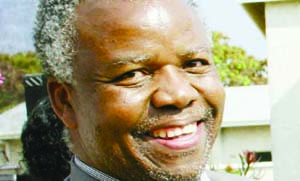
heard yesterday.
Education, Sport, Arts and Culture Secretary Dr Stephen Mahere told the Parliamentary Portfolio Committee on Higher Education, Science and Technology that the requirement was necessitated by the need to develop Zimbabwe.
The committee is chaired by Insiza legislator Mr Siyabonga Ncube.
“Realising the importance of Science and Technological Education in national development, the ministry has made the teaching of science and mathematics compulsory throughout the education system up to Ordinary Level.
MORE…
“At the core of our secondary school curriculum are five compulsory subjects, Mathematics, Science, English Language, Shona or Ndebele and History.
“The rationale behind this policy is that all learners who will have gone through our basic education system, which goes up to O-Level should have acquired a base to enable them, to appreciate the scientific environment in which various innovations and training are taking place,” Dr Mahere said.
He said Government had engaged the Ministry of Higher and Tertiary Education to make it mandatory for all applicants who intend to train as primary school teachers to have passed O-Level Mathematics.
Dr Mahere said his ministry also prepares science kits that facilitate the effective teaching of science in areas where there are no laboratories.
He said Government would make it a policy that schools that wish to expand to Advanced Level should have science laboratories.
“This position was arrived at after it had been realised that most schools were opting to teach subjects other than the sciences.
“On its part, ministry has offered to subsidise the construction of laboratories to the tune of 75 percent of the cost.
“The ministry policy now is that no school can establish Sixth Form unless it can demonstrate that the requisite laboratories are in place and that sciences are going to be part of the A-Level school curriculum,” Dr Mahere said.
He said they would pursue in-service training for mathematics and science teachers, to keep them abreast with changing technology.
Dr Mahere however, said the implementation of in-service training was constrained by the shortage of financial resources.
He said Government would make use of the e-learning facility following the presidential school computerisation programme which saw more than 860 schools across the country receiving 10 computers each.
Dr Mahere said the ministry was facing challenges in making science education viable.
Among the challenges is shortage of qualified staff to teach science.
“Where laboratories have been constructed, it has not been easy to equip them. Chemicals are often in short supply because most of them are imported.
“Our school examination centres have often run out of essential chemicals that are required in science practical examinations,” Mahere said.



 Online Reporter