Siphakeme .Mnindwa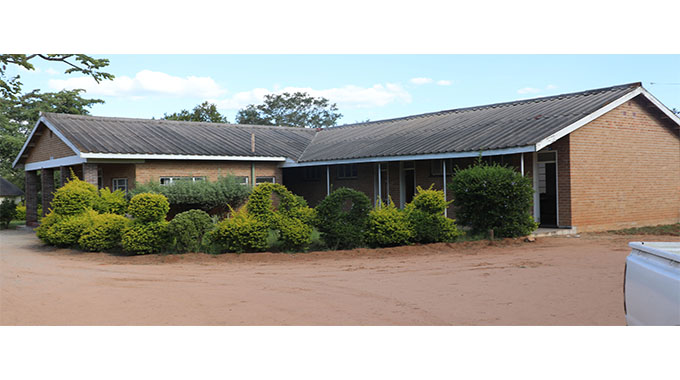
Judith Phiri, Business Reporter
THE University of Matopo has identified dryland agriculture and dryland environment management as critical focal areas to address the challenges faced by the country’s natural regions four and 5 five in the wake of climate change.
Zimbabwe has not been immune to the impacts of climate change, prompting the Government to update the agro-ecological zone map in 2020.
This revision replaced the outdated 1960s map and introduced new sub-regions, 5A and 5B, aimed at equipping farmers with tools to better manage climate risks, enhance agricultural productivity and achieve food security.
Farmers in Regions one and two primarily grow crops such as maize, sunflower, sorghum, pearl millet, groundnuts, African peas, and sugar beans.
Region three focuses on maize, sorghum, and sunflower, while Regions four and five emphasise on sorghum, millet and sunflower, with supplementary crops like maize, African peas and groundnuts.
Southern regions, including Matabeleland North, Matabeleland South, Midlands and Masvingo, are particularly well-suited for traditional grains like sorghum and pearl millet due to their climatic conditions.
Speaking on the progress of the university’s establishment, Professor Henry Sibanda, chairperson of the University of Matopo Trust (UMT), revealed that significant strides have been made in advancing the institution’s development.
“I am currently leading the formation of University of Matopo, which is an institution being setup by the Brethren in Christ Church. This university is going to have its headquarters at Matopo Mission. We are not replacing Matopo Mission but building on the same farm that we have.
“It’s also going to be at Mtshabezi Mission and Wanezi Mission. Those are three of our mission stations that have farms. The focus of this university is dryland agriculture and dryland environment management,” said Prof Sibanda.
He said they were looking forward to opening in August this year.
Prof Sibanda who has worked in various fields and organisation said developing solutions oriented to sustainable livelihoods in the southern regions of the country was important.
“I started in agriculture and l moved to environment. When we were thinking of setting up a university we said it has to be relevant to region. As you can see, it’s distributed in the southern region of the country, mainly Matabeleland South, but our oversight is going to concentrate in Matabeleland North, Matabeleland South, southern Midlands and most of Masvingo,” he said.
“These are agro-ecological regions four and five that is where we will be looking at how people should live and improve their livelihoods, especially with the setting in of climate change.”
He said the university was going to have the Faculty of Agriculture and Faculty of Engineering at Wanezi, Faculty of Theology, Faculty of Health Science and Faculty of Education at Mtshabezi.
Prof Sibanda said they will also have the three other faculties in Matopo where the headquarters is going to be that is, the Faculty of Law, Faculty of Commerce and Faculty of Science, as well as the Faculty of Post-Graduate Studies.
“I was the Dean of Graduate Studies and Research at Solusi University up to 2021, so briefly, we will be concentrating on dryland agriculture in the faculty of Agriculture, dryland environment in the Faculty of Science.
“We will be looking at how people should have livelihoods and how they should improve production in these dry environments, which form about a third to half of the country, so it’s important. We are looking at things like irrigation, adaptation of crops, livestock and everything. We are ready to move and looking forward to opening in August this year,” he said.
Meanwhile, the Zimbabwe Council for Higher Education (Zimche) has approved the proposed University of Matopo.
In a letter dated 9 January 2025, addressed to Prof Sibanda who applied on behalf of the university, Zimche chief executive officer (CEO) Professor Kuzvinetsa Peter Dzvimbo confirmed the approval for the institution that will be established in Matobo District, Matabeleland South Province.



 Online Reporter