

 admin
admin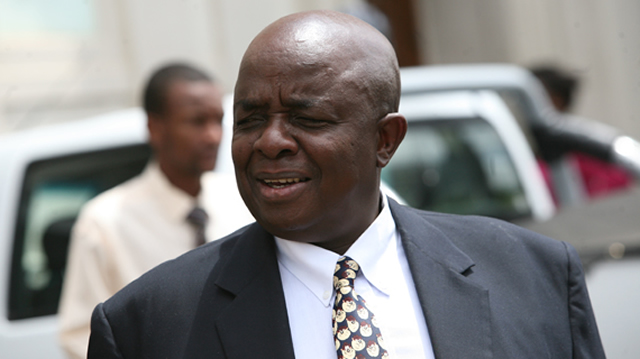
Phyllis Johnson
Correspondent
I first met Tonderai Nyika (the late national hero Major General Paradzai Zimondi) in the bush near Chimoio in Mozambique.
He had just come back from the war front in Manica province.
It was May 11, 1978, at night.
The guerrilla commander had been called back from the front by his Commander Josiah Magama Tongogara.
Communication was by written messages carried by hand, and urgent messages were written in red, as this one was.
After he crossed the border back to the rear base in Mozambique, he received a verbal instruction to meet his Commander at a meeting place outside Chimoio, a small motel called The Windmill (O Moinho, the Mill).
He was the Provincial Field Operations Commander for Manica province and he came with the Political Commissar for the province who soon after became the deputy Army Commissar for ZANLA, Dominic Chinenge, who also attended the meeting.
They had been in the rural areas of Zimbabwe, in the forests and villages, where they were warmly received by the people and offered food and shelter, and they mobilised for independence while fighting against the Rhodesian Security Forces.
Coming from the war front where they had been engaging the enemy, they were now directed to a strange place, a tiny detached bunker-like motel room, lit by a flickering paraffin lamp.
Conscious of their security, but guided by Tongogara’s security detail, imagine their surprise when they bent low to enter through the small door and saw their Commander seated with two white people.
Who were they? Was he a captive?
None of the participants except the Commander knew that he had a new strategy, although they knew him as a great strategic thinker.
They all knew that the liberation armies of ZANLA and ZIPRA were winning the war by then and the enemy was escalating attacks on the camps in Zambia and Mozambique, including the nearby headquarters of ZANLA which was the target of a massive attack the previous year, in November 1977.
The Commander’s new strategy was unusual, as information was a closely guarded commodity in a war zone.
But now he wanted the world to know that the guerrillas had infiltrated throughout the entire country, and in many areas they could move about freely.
He well understood that information was another weapon in his arsenal, and that the time had come to use it to escalate the political pressure for independence.
His two visitors were trusted journalists known for their integrity in reporting — my late husband David Martin and myself.
We had been seeking an interview with him, but none of us knew his intentions.
He knew that David would tell it as he saw it, that he was a respected investigative journalist and that his articles would appear in London in the weekly newspaper, The Observer, and interviews on BBC radio which reached the whole of Africa.
When the two young commanders entered and got seated, we were introduced, and their Commander said they should tell us “what you have been doing”.
They looked surprised, perhaps a little shocked, because they had come from the war front, but he would nod from time to time, and Tonderai Nyika replied first.
“My name is Tonderai Nyika. I am from Zimbabwe. My Chimurenga name means ‘remember the country, watch out for the country’.”
He spoke of the national grievances and oppression from the Ian Smith regime in Rhodesia that caused him to leave secondary school in the fourth year to cross the border in 1974 during the transition to Mozambique’s own independence in 1975.
“Yes, I trained at Mgagao in Tanzania and went into the field in March 1976,” he said.
He spoke confidently about mobilisation of support, and reluctantly about the fighting.
“It was not very difficult to introduce ourselves to the masses of Zimbabwe because they know we are their children, their sons and daughters,” he said.
“They were expecting us. We told them we are combatants of Zimbabwe, but we didn’t have to introduce ourselves. They were quite aware about the war.”
He was first deployed to the south-east of Zimbabwe to open a new operational zone called Gaza province, indicating that it was adjacent to Gaza province in Mozambique.
“Well the first time we went in, the enemy had not really felt our presence in the area,” he said. “So, the type of operations we had to launch were not as intensive as they are now. It was only after the enemy discovered us in the area that they came and then we began to engage with them.
“So, the type of operations we started with was ambushing an enemy, in the south-east, and killed some Rhodesian soldiers. This was the first attack in the sector. It was June 1976.
“It was on a dirt road somewhere in the game reserve, in Gonarezhou. There were only two trucks, and we got one of them. They were Rhodesian Light Infantry. After that we became much more involved in fighting.
“They did a lot of follow-up operations, because after the attack, we retreated, and then in a few minutes time, there were air force hovering around the area, but they could not find us. There were about three helicopters, one Hawker Hunter . . . well they did nothing because they could not get us.
“At times we engage in fighting, when they locate us, they fire on us and then we engage in battles. Yes, from helicopters. At times they can be deployed from the plane.
“We were recruiting and training. Well at times it happens in the operational area that you can train people while in the country, because we are engaged in training people in the operational area now. At that time we thought it was much better for people to come here for training. But now we can train people inside.”
He was deployed to Manica province as Field Operations Commander in 1977, and remained there until the December 28, 1979, ceasefire agreement.
“I went in March 1976 to the field, I was just a soldier in the army,” he said. “Then I became a section commander, inside the country. Thereafter, I became a sectorial commander, in Tete, Honde, south-east. As a sectoral commander, there were 500 soldiers. It was a large area.”
When we met Tonderai Nyika at Chimoio in May 1978, we did not know that a few months earlier, he had commanded the massive operation to attack the Rhodesian airbase at Grand Reef in late December 1977, in retaliation for the attack on Chimoio base in November.
The Grand Reef operation was one of the largest and most audacious attacks of the war, using a large group with heavy equipment and the element of surprise.
Grand Reef was the forward base for air and ground incursions into Mozambique and this well-planned attack just before Christmas destroyed weapons, vehicles and planes, and caught the base security off-guard, clearly giving the message that there was capacity to retaliate.
In September 1978, a few months after our encounter at O Moinho, Tonderai Nyika would command the group who fired on Umtali (Mutare) with mortars from the surrounding hills, for an hour one morning, causing panic, and causing the local tourism publicity association to produce T-shirts that said, “Come to Umtali and get bombed”.
A year later, during the Lancaster House negotiations, a senior Rhodesian security figure congratulated Commander Tongogara for having the capacity to bomb Umtali, which was another action to exert pressure for independence.
Tongogara’s response was to challenge him to a game of golf in liberated Umtali.
After the ceasefire, elections and transition, Independence for Zimbabwe was achieved on April 18, 1980, and when we met again with the Provincial Field Operations Commander after Independence, he had another name.
He was Paradzai Zimondi.
The Deputy Commissar of ZANLA and member of the High Command who was with him and who tells this story far better than I do, was Vice President Constantino Guveya Dominic Nyikadzino Chiwenga.


 Online Reporter