admin
admin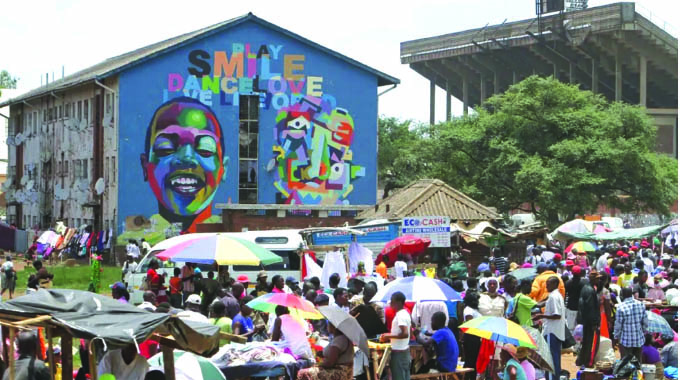
Elliot Ziwira, Senior Writer
Ear-piercing honking, animated shrieking, trills of dejection, and vigilant touting to attract clientele to just about anything on offer — the din from both humans and machines — are what marks this reflective 10 km walk by the writer to and from Mbare from Harare CBD on a wintry Tuesday morning, recently.
The combination hubbub reverberates in the locale as the trodden earth trembles under the weight of dreams — hundreds, nay thousands of dreams, rising above the noise, attempting to drown it all, even, driven by the ancient rhythm of life to survive.
Mbare is where everything goes and indeed, it is a world of its own, with a running economy and lifestyle. Here little else matters.
Strolling to Mbare from Harare city centre via Joseph Msika Street (formerly Cameron Street) into Remembrance Way, past Cripps Road, a cemetery to your right and the symbolic Rufaro Stadium, plus a gaze to the southwest, you would be engulfed in the hustle and bustle that has always defined Zimbabwe’s oldest high-density suburb.
Formerly Harare Township in Rhodesia, Mbare conjures different memories among people who have visited it: the nostalgic, grisly, regretful, hopeful, gleeful and simply unsayable.
Humanity’s capacity to withstand shocks, in all their variables, is soon expressed through engagement of the five senses; evoking visual, olfactory, aural, tactile and gustatory images. In essence, the eye is complemented by the nose and the ear to create an alluringly confounding feeling.
As the eye seeks illusive satiation in the environs bordering the road and beyond, the nose is assaulted by a pungent smell coursing down the pit of the stomach for a while, before it momentarily picks up an inviting aroma of sizzling food to tickle the palate into a drool.
In this paradox, many tales reel out into one boundless story of survival, community, and the human spirit’s capacity to overcome adversity. As Mbare continues to navigate the complexities of life, its inhabitants remain resolute in their determination to thrive, even in the face of uncertainty.
Some are born and bred here, which makes the suburb home, while others have been brought here by the proverbial hornbill to try their hand in the many glaring opportunities. Some of the people are here to buy some wares, and others are simply passing-by.
Products on offer range from new and second-hand clothing, shoes of all varieties, used tyres, apostolic sect garments, which reminds one of Dolly Parton’s song, “Coat of Many Colours”, wheelbarrows, also in varied hues and expressing different aspects of workmanship, and other hardware items, to food and fruits.
Scores of traders and vendors line-up their stalls or pushcarts on either side taking the eye’s fancy from the foot of the flyover where Joseph Msika Street links up with Remembrance Way, past Rufaro Stadium, to Mbare Musika Bus Terminal on the convergence of Mbare Road and Chaminuka, 16th, and 20th streets.
Established in 1907 as Harari Township, Mbare was initially designed as a settlement for impoverished migrant workers from neighbouring countries, and male labourers from so-called Tribal Trust Areas. The colonial legacy of displacement and marginalisation has left an indelible mark on the suburb, which is evident in the designing of the houses and streets.
The history-making high-density suburb is divided into sections; Matererini, Joburg Lines, National and Beatrice Cottages, all contributing to collective memory in their unique ways.
However, intricacies of history and diverse challenges that come with it have not been able to dampen the spirits of the inhabitants of this great space, where dreams are fashioned out of resilience and misfortune is tamed through determination.
Mbare was, and remains the link to other suburbs—low, medium and high density. It links Harare and other provinces through its long-distance bus terminus.
Way before the arrival of the Harare International Roadport in the capital’s CBD, Chitungwiza Town Centre Roadport and Roadport High Glen, Mbare was the hub linking the country to the region and beyond.
Consistently defying the odds, residents of this suburb have transformed their community into a thriving hub of creativity, entrepreneurship, and cultural expression. Curiously, Mbare is both an enigma and open book, depending on one’s experiences with it.
It is home to a diverse array of talents, from musicians and politicians to soccer players, businesspeople, and community developers. Some of these luminaries have been honoured through street names in the neighbourhood.
The suburb’s iconic landmarks, such as Rufaro Stadium, Stodart Hall, Mai Musodzi Hall, Pioneer Cemetery (housed in Mbare West Cemetery), Siyaso and Mupedzanhamo as well as Mbare, Magaba, Matapi, Tagarika, Shawasha and Matererini flats, demonstrate its rich history and cultural significance.
Associated with Mbare are more than names, but institutions, including Carter House, Mbare Produce Market, Mbare Musika Bus Terminal, and DeMbare, Dynamos Football Club.
The nomenclature is symbolic of the shared struggle that has not only brought inhabitants of this suburb together, but how it has also shaped Zimbabwe’s aspirations before and after independence in 1980.
As the dust swirls, sometimes threatening to blow away the wares strewn about, and into large pots and pans steaming on the open heaths, inhabitants here refuse to have fate determine their lives.
For many vendors and traders, the choice between livelihood and exposure to arrest or airborne diseases is a stark reality. Despite the risks, they continue to operate, often having a brush with the law.
Clashes between the police and vendors ensue as common sense favours the stomach, and reason pushes for life. The police cannot give, because to do so would be surrendering authority to lawlessness.
One food trader poignantly says, “It’s either I die of hunger or face running battles with law enforcement officials. I choose to live on a full stomach to fight another day.”
Elsewhere, the storyline remains the same: livelihood or arrest. In this story, which is told over and over again, only two options ensue, mainly because that is what common sense favours—the stomach.
Today is different, for there are no such skirmishes in sight, although police details can be seen milling around the crossroads of Remembrance Way and Cripps Road. They are probably monitoring the situation.
Mupedzanhamo Market, which was reopened for trading in January this year after more than a three-year hiatus remains a beacon of hope to many families.
On this particular Tuesday, around midday, there isn’t much activity, save for a sprinkling of potential clients, with traders flaunting their products in a bid to win them over.
Among the anxious traders is 27-year-old Takudzwa Dakamire from Glen View, who has just arrived, with her five-year-old son clinging onto her. She has been late today, since she had to enrol her second born child for Early Childhood Development classes. Otherwise, she arrives around 6am daily.
“So far so good! I specialise in children’s wear,” Dakamire says in a croaky voice, her eyes glowing with fortitude. “My voice is kind of gone now; from the touting”, she adds, laughing. “Business is generally good, although today, being midweek, is slow.”
Though she has been at the market for only three months, she has literally been raised on Mupedzanhamo, her parents having been traders for about 20 years. She used to work for a non-governmental organisation.
“My father managed to see us, my three siblings and I, through good schools and built a beautiful house in Glen View 2 from here,” beamingly says the mother of two.
Dakamire articulates that her father’s eight siblings have been able to raise their families from Mupedzanhamo, too.
She, however, bemoans stiff competition from those operating from stalls splashed about on open spaces, spreading out to the eye’s limit. Also, the ablution facilities available here are paid for, compounding an already precarious situation.
Human and vehicular traffic thickens as you wander past Rufaro Stadium, with stalls on your left arranged in three columns, while those to the right, adjacent to the home of football, are in a single column. As you move on, clothing stalls give way to tuckshops, making it difficult to mark out the demarcation from houses.
Cars of different models drive past, or are parked in whatever open space that may be found, creating a cosmopolitan maze of this enigmatic landscape.
The discerning wayfarer finds them all here. The smooth-taking Jimmy MaCrook, who can convince you to buy your totem, frequents, too. Chomi is here as well, stoned as ever. He doesn’t seem to remember his name as he staggers on to where his limbs want to carry him. Like a baggard, he caricatures all the worries of this universe in his drunken stupor.
Chenai, of the long eyelashes and cascading curves, strides past with the fluidity and grace of a Geisha, captivating the eye for a while.
Oh, Mbare, how art thou?
At the corner of Chaminuka Road and Mbare Road, a massive construction project is shaping up, with workmen chatting in low tones as they engage in their different occupations.
“They are building space for shops there. You may look around. Who knows, you may find yourself a new place to trade from, brother”, says a young man seated in his empty pushcart.
The complex is anticipated to house 150 business units, some of them already operational.
In this milieu, a young vendor clutches her bag containing a pot pourri of skin lightening creams, cigarettes, and other wares a few paces from the traditional merchandise marketplace. Her dreamy eyes tell stories of anguish and her body bares the tale of early toil, but her determination is solid.
“There are many others selling the same products, but there is always hope. At the end of the day, I will take something back home,” she says, her vigilant eyes dashing around for possible danger and potential clients alike.
Both the eastern and southwestern ends of the long-distance terminus are thinly populated and orderly. Passengers board buses of their choice without any incidences—no honking, no whistling, no touting—simply going home!
The road that passes past OK Supermarket, is a hive of activity as traders and vendors exhibit their merchandise. To the southeastern side are heaps of bags of charcoal, where Mai Kenny trades from.
“Musapfuure mukuwasha”, she jovially calls out, as she digs up charcoal dust for repacking. She lives in Waterfalls. She says she sustains her family from the charcoal, sourced from Mozambique.
To the north, just behind the horde of traders, are houses. Among these houses is one that has a shed used as a canteen.
In the yard of this blue house, Spencer Madzitire is hard at work, sorting bananas and avocado pears with precision and care. The 40-year-old farmer from Marimbire Village, Honde Valley in Manicaland Province, has travelled far to bring his fresh produce, arriving at the market in the early hours of today.
With a keen eye for quality, Madzitire carefully selects and packs his green bananas and avocados, eager to share the fruits of his labour with the world.
His fruitful journey began many years ago, after completing his Ordinary-Level in 2004. He worked for a tea company in the Eastern Highlands and a construction firm before venturing into farming in 2007.
Madzitire, a married father of two, now has 2 500 banana plants, 30 litchi and several avocado trees at different stages of fruition. He also cultivates ginger and yams, showcasing his dedication to diversification and sustainability. Despite the challenges that come with fresh produce, Madzitire’s passion and willpower propel him forward.
“I believe the sky is not even the limit to my star,” he says with a smile.
The Mbare Produce Market, the largest farm produce marketplace in Zimbabwe, which he sells from, is closed for the day.
As he waits for his fruits to ripen, which usually takes six days for bananas and a couple of days for avocados, Madzitire hopes to make his mark in the agricultural sector.
With the sun taking another clear lap towards the golden rim of the west, the voyage back to the city centre of Harare begins, with human and vehicular traffic thickening on the flip-side.
Groups of schoolchildren, resplendent in their colourful uniforms, people, the dusty and empty plastic bottle-coated streets are the hallmark of Mbare.



 Online Reporter