


 Online Reporter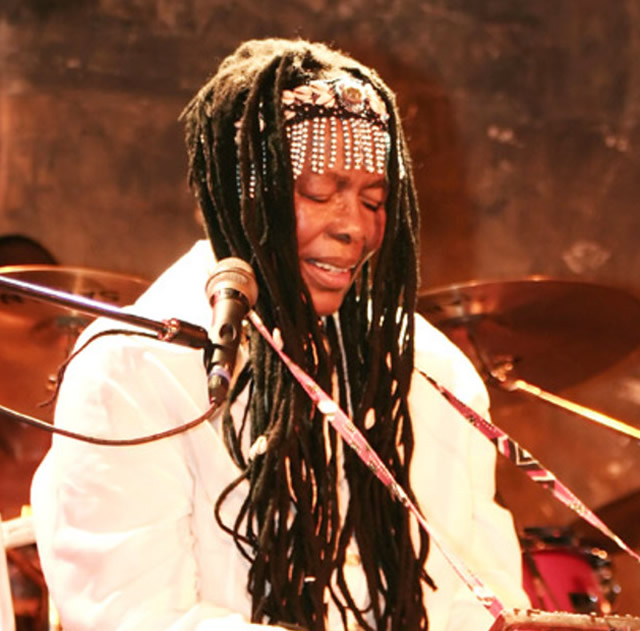
Trust Khosa
Zimpapers Arts and Entertainment Hub
IN Zimbabwe, August is a sacred month dedicated to remembering both living and departed heroes and heroines.
Families often lay wreaths and flowers on the graves of their loved ones or spruce them up.
At the national level, the President delivers an address commemorating both Heroes Day and Defence Forces Day.
In the realm of entertainment, many individuals have left a lasting impact across disciplines such as film, television, theatre, dance, the spoken word, music and fine arts.
Among them is the late Mbuya Stella Chiweshe, a revered cultural ambassador whose influence transformed countless lives.
She passed away in 2023, at the age of 76, leaving behind a legacy that continues to inspire.
The iconic mbira player was more than a performer – she embodied her beliefs through her life and work.
Even in death, she was buried in the traditional manner: wrapped in a white cloth and placed on a reed mat.

A couple of years after she passed away, her family remains committed to fulfilling her wishes.
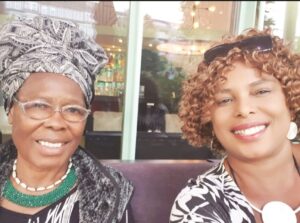
Her daughter Virginia Mukwesha – also a mbira player – has announced plans to honour her mother’s legacy, beginning this month, as the nation commemorates its heroes and heroines.
The family is preparing to perform the traditional ceremony known as kurova guva, which is believed to bring the spirit of the deceased home.
Virginia flew in from Germany for the ceremony, which will take place from August 15 to 17 at her mother’s homestead in Nekati village, Masembura, Mashonaland Central province.
“I believe in my tradition and was impressed when our traditional leaders offered to honour her in the traditional way,” Virginia said.
“We are simply fulfilling her wish of being buried there.”
She emphasised the importance of the ritual.
“When a person dies, their spirit wanders. This can only be addressed through kurova guva, a practice observed for generations. Most of her projects have been on hold because we have not performed this ritual.”
Masembura heritage site
Unlike in some families where the departed’s tools of trade are shared or discarded, Mbuya Chiweshe’s legacy will be preserved.
Her homestead will be transformed into a museum housing her mbira instruments, uniforms and awards.
“This has always been her wish,” Virginia explained.
“By turning the homestead into a museum, fans from around the world can come and learn about Zimbabwean culture at the very place where she was laid to rest.”
The homestead will also serve as an arts centre, given the available space and structure.
“We have someone managing the site full-time and after the ritual, we will convert it into a cultural hub. Her mbiras will remain in the gallery, along with instruments from her homes in Kuwadzana, Germany and Goromonzi.”
Family’s big decision
Thanks to support from traditional leaders and the District Development Committee (DDC) in Masembura, the family has decided to make Nekati village the headquarters for Mbuya Chiweshe’s cultural activities.
“Although we have been developing traditional structures in Goromonzi to promote arts and domestic tourism, we might lean more towards Masembura,” Virginia said.
“The community’s backing makes it hard not to return the favour. Still, we will try to strike a balance between the two locations.”
Virginia believes her mother’s legacy will live on.
“Though she is gone, we remain spiritually connected. Everything she left behind will be safeguarded to ensure continuity.”
With creatives like rapper Awa Khiwe, Caroline Nyaka-Chana, Hope Masike and other female mbira players applauding her guidance, Virginia says the recognition speaks volumes.
“I constantly receive calls from people acknowledging her. It makes us proud whenever our mother is honoured. With Heroes Day approaching, we are grateful the country has honoured her. The State-assisted funeral meant a lot to us. She is not just a legend – she is an influencer who continues to touch hearts from the grave.”
A cultural powerhouse
Originally from Mashonaland Central province, Mbuya Chiweshe spent much of her career overseas but remained committed to empowering her people back home.
“By converting her homestead into a museum and arts centre, we are showing the world that Zimbabwe has cultural heroines,” Virginia added.
“This mirrors global practices where late icons leave behind legacies cherished by their communities.”
Virginia has captured her mother’s wishes and secrets in an upcoming book and is determined to ensure Mbuya Chiweshe is remembered as a game-changer on Zimbabwe’s cultural and artistic landscape.
With a rich catalogue of traditional songs like “Huya Uzoona”, “Chachimurenga”
and “Ndabaiwa”, she was prophetic in every aspect.
She amassed numerous awards and performed on international stages.
As Zimbabwe celebrates its heroes and heroines, omitting the name Stella Chiweshe would be a grave injustice.
She deserves due recognition.



 Online Reporter