

 admin
admin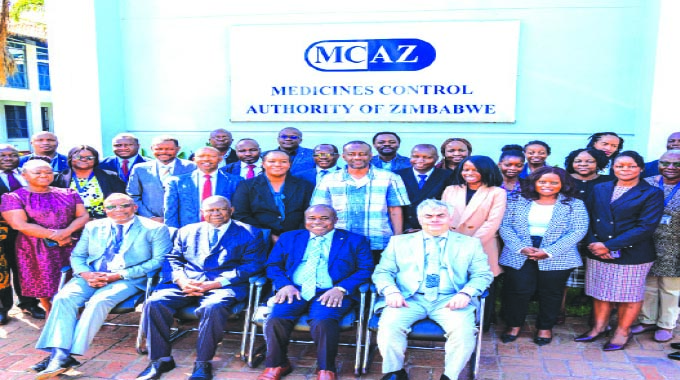
Staff Reporter
The Medicines Control Authority of Zimbabwe (MCAZ) has attained Maturity Level 3 for the regulation of medicines and non-producing vaccines following comprehensive assessment and implementation of the World Health Organisation’s recommendations.
Zimbabwe joins the ranks of six African nations that have reached this significant milestone.
The other five are; Tanzania in 2018, Ghana in 2020, Nigeria, South Africa, and Egypt in 2022.
Achieving global benchmarking tool, Maturity Level 3, demonstrates that MCAZ has developed a stable, well-functioning, and integrated regulatory system, ensuring quality, safety, and efficacy of medicines and vaccines registered by the authority.
This status underscores Zimbabwe’s commitment to maintaining the highest standards in public health protection through rigorous regulatory oversight.
“The attainment of GBT ML 3 has been a strategic objective for us as a regulator, reflecting our dedication to safeguarding public health,” MCAZ director-general, mr Richard Rukwata, said in a statement, recently.
He highlighted that the accomplishment assures citizens and partners of the global standards which the country’s regulatory framework meets.
“I commend the MCAZ Board and all our staff for their relentless efforts and commitment in achieving this goal,” said Mr Rukwata.
Maturity Level 1 means there is no formal approach, or some elements of the regulatory system exists. On the other hand, Maturity Level 2 indicates the existence of a reactive approach, or an evolving regulatory system that partially performs essential regulatory functions.
Maturity Level 3 signifies a stable, well-functioning and integrated regulatory system.
Maturity Level 4, which is the highest level under this framework, shows a regulatory system operating at an advanced level of performance and continuous improvement.
Mr Rukwata stressed that MCAZ has a rich heritage of accolades in the medical products regulatory space, starting with ISO 17025 Accreditation for the laboratory in 2010.
Following that, the MCAZ laboratory became one of the first in Africa to be pre-qualified by the WHO in 2014, leading to the authority undertaking analysis of medicines for many other countries on the continent.
Some of these countries include the Democratic Republic of Congo, Angola, Djibouti, Mali, Zambia, Nigeria, Lesotho, Burkina Faso, Congo Brazzaville, Botswana, Sudan, and South Sudan.
The pre-qualification status was renewed this year.
Furthermore, in 2015, MCAZ was designated a Centre of Regulatory Excellence by AUDA-NEPAD in the field of clinical trials and marketing authorisation. It also acquired ISO 9001:2015 in 2018 and ISO 17020 for its inspectorate wing in 2020.
The above certifications demonstrate that MCAZ has a culture of excellence, which has been in existence over a long period of time.
The latest certification, therefore, solidifies this culture by being another feather in the authority’s cap. It, indeed, proves that it takes its mandate to protect human and animal health seriously.
MCAZ is particularly proud that it achieved this landmark without external help, and purely through its own limited resources. The authority’s commitment to delivering on its mandate, regardless of the obstacles it might face, cannot be overemphasised.
The director-general expressed gratitude for the support and collaboration from stakeholders, including the Ministry of Health and Child Care, local industry players, and all Zimbabweans for their invaluable contributions towards this achievement.
Mr Rukwata pointed out that the journey to Maturity Level 3 involved extensive reviews and enhancements of regulatory policies, procedures, and practices.
Key focus areas encompassed strengthening pharmacovigilance, ensuring robust market surveillance, and enhancing regulatory inspections and enforcement mechanisms.



 Peter Tanyanyiwa
 Online Reporter