Wallace Ruzvidzo
Herald Reporter
MEASURES to cushion farmers and safeguard food security against a predicted super El Niño and potential disruptions to fuel and fertiliser supplies are being stepped up as Zimbabwe faces a projected 663 188 tonne cereal deficit in the coming summer cropping season.
Yesterday, Cabinet approved the 2026-2027 Summer Plan, incorporating the drought plan, as authorities accelerate irrigation development, climate-smart farming, fertiliser imports and livestock protection.
The country is expected to produce 1 607 198 tonnes of cereals against a national requirement of 2 270 386 tonnes, leaving a shortfall that will require management of strategic grain reserves and limited imports.
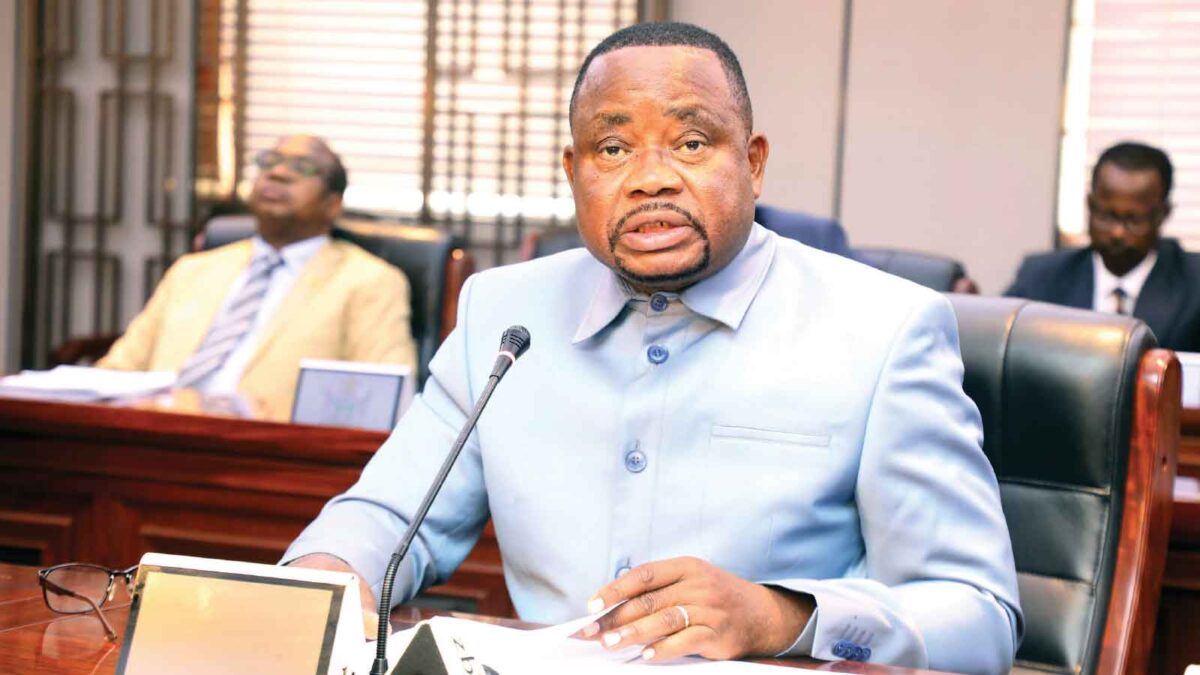
Addressing a post-Cabinet media briefing yesterday, Acting Information, Publicity and Broadcasting Services Minister Professor Paul Mavima said the season faced two major threats: A predicted super El Niño and geopolitical tensions affecting fuel and fertiliser prices and supplies.
The geopolitical tensions were elevating fuel and fertiliser prices and disrupting supply.
The plan builds on lessons from the 2024-2025 season, when Zimbabwe experienced its worst drought since 1980, and is anchored on six pillars; strengthening the strategic grain reserve, expanding climate-smart production, improving agricultural financing, mitigating livestock losses, enhancing imports and strengthening early warning systems.
Government is targeting a strategic grain reserve of 600 000 tonnes by October next year, with Prof Mavima saying authorities would leverage new artificial intelligence-powered silos and aggressively buy grain from the 2025-2026 summer season and the 2026 and 2027 winter cropping seasons.

Under the Pfumvudza/Intwasa conservation farming programme, 16 million plots have been targeted for the coming summer season.
A total of 7 603 250 plots had been established by the time of the briefing, representing 47,52 percent of the target and covering 475 203 hectares.
Government has also identified more than 112 000 hectares for maize irrigation to reduce dependence on rainfall.
Financing for the summer season has been mobilised from Government, the private sector and self-financing farmers, Prof Mavima said.
On fertiliser supplies, measures were being taken to prevent shortages and price shocks amid elevated international prices and anticipated logistical delays. much nitrogenous fertiliser these days is made from natural gas and the Gulf has been a major supplier of these fertilisers and of petroleum fuels.
Statutory Instrument 214 of 2025 provides for the import of 150 000 tonnes of ammonium nitrate and 100 000 tonnes of urea, both nitrogenous fertilisers.
“Noting the elevated price and anticipated logistics delays, the duty-free importation for both basal and top-dressing fertilisers will be allowed to meet the expected shortages in local production,” he said.
Statutory Instrument 59 of 2006 allows households to continue importing basic commodities duty-free until March 2028 to cushion consumers against price shocks.

Livestock protection is another priority, with Government projecting that 2 236 203 cattle could be at risk from drought next year.
Prof Mavima said authorities were establishing ward drought mitigation centres, targeting one in each of the country’s 1 527 rural wards. Interventions will also cover goats, poultry and fisheries to strengthen resilience in rural communities.
A whole-of-Government and whole-of-society coordination approach has been adopted to improve planning, information-sharing and early intervention.
“Government will continue to provide periodic updates on the unfolding 2026-2027 summer season weather, and implications for agriculture, water, energy, animal diseases, human health, livelihoods and the economy,” he said.