Zvamaida Murwira Senior Reporter
PRESIDENT Mnangagwa has challenged his Government to ensure that the national mechanisation programme becomes accessible to farmers across the agricultural spectrum, from communal smallholders to commercial operators, declaring that access to modern farm machinery must no longer be a privilege reserved for those with substantial financial resources.
Speaking at the launch of the Expanded Mechanisation Facility in Harare yesterday, the President said the programme was designed to bridge the mechanisation gap between rural farmers and their commercial counterparts by transitioning smallholder farmers from ox-drawn implements to modern, productive and technologically enabled farming systems.
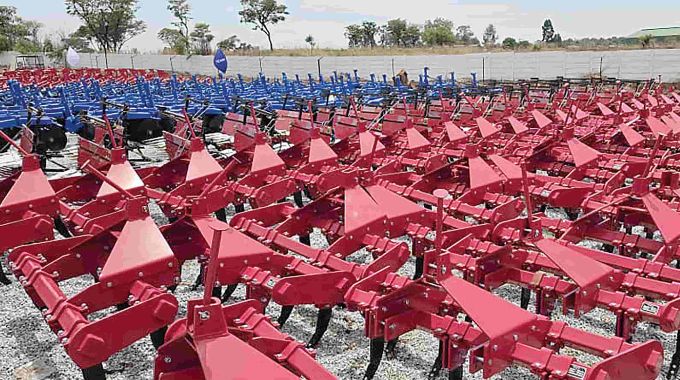
“Of the one million hectares under the Pfumvudza/Intwasa programme this year, animal-drawn implements contributed 19,5 percent of land tilled,” he said.
“These limitations affect timeliness and constrain the area that farmers can cultivate, the intensity of land utilisation and the efficiency with which agricultural resources are converted into production. Against this backdrop, Zimbabwe must therefore continue to move away from predominantly manual, labour-intensive agricultural production towards modern, productive, commercially oriented and technologically enabled farming systems.”
He said the Expanded Farmer Mechanisation Facility, launched at the beginning of the 2026-2027 summer cropping season, would go a long way towards addressing mechanisation gaps in the agricultural sector.
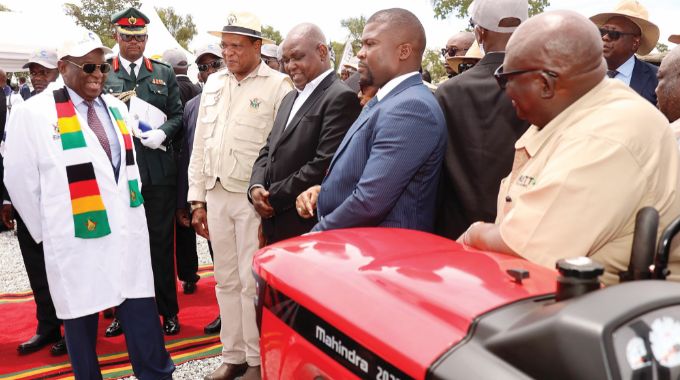
“Our objective is to ensure that mechanisation is no longer a privilege for farmers with substantial financial resources. Under my administration, mechanisation and support will remain an accessible productive instrument for Zimbabwean farmers across the broad agricultural spectrum,” President Mnangagwa said. “We are determined to expand access to affordable, appropriate and reliable machinery, enabling our farmers to increase production, improve yields, reduce production costs and strengthen household incomes.”
He said Government was exploring various initiatives and financing models to support investment in agriculture, with the Mechanisation Development Alliance Framework contributing to several interconnected national priorities.
These include food security and food sovereignty, agricultural productivity and competitiveness, climate resilience and adaptation, rural industrialisation and employment creation, as well as value addition and export-oriented development.
Since the advent of the Second Republic in 2017, Government has invested heavily in tractors and combine harvesters through various mechanisation facilities and initiatives, including Belarus Mechanisation
Facilities Phases 1, 2 and 3, the John Deere Facility, the Bain New Holland Facility, the Zoomlion Facility, the Local Agricultural Equipment Manufacturing Initiative and the Livestock Health and Infrastructure Facility, among others.
“Consequently, our national tractor fleet has grown from 6 300 to 18 740. The number of combine harvesters has also increased from 302 in 2017 to the current 486, resulting in a 61 percent increase. The fraternal win-win bilateral relations between Zimbabwe and Belarus have contributed a whopping total of 3 051 tractors and 150 combine harvesters,” the President said.
“Our new thrust is to explore as well as harness opportunities for local manufacture and assembly of mechanisation equipment and machinery.”
He challenged institutions of higher learning and other stakeholders in the agricultural sector to strengthen collaboration in innovation and reverse engineering, saying these efforts should enhance the country’s domestic manufacturing capacity and agricultural productivity.
“It is pleasing that the results of our investments in mechanisation are evident in wheat production, now at a historical record of 670 000 tonnes for the 2026 season,” he said.
“Going forward, this production trend must also be witnessed across all cropping activities and agriculture sub-sectors. Our country’s citizens in the diaspora are also invited to participate in the agriculture and agro-processing value chains.”
The facility is facilitating the acquisition of agricultural equipment through structured financing and distribution arrangements involving eight financial institutions: CBZ Bank, AFC Land Bank, Women’s
Empowerment Bank, POSB, ZB Bank, BancABC, Youth Empower Bank and SMEDCO.
“I commend the financial institutions for their role in broadening the country’s agricultural machinery supply base and improving the capacity of farmers to undertake critical farming operations. Under the Second
Republic, farming has indeed become a business from village to corporate level, translating into a higher quality of life for our people,” President Mnangagwa said.
He said Government’s rural development philosophy, anchored in the attainment of Vision 2030, required the transformation of villages through increased agricultural production, rural industrialisation and the transition of farmers from subsistence production to surplus generation and export-oriented farming.
“Under this scheme, successful Village Business Units in rural wards across all provinces will benefit together with those run by the youth and war veterans,” he said.
He challenged Village Business Units to remain transformative and productive by generating strong cash flows, maintaining accountable management structures and ensuring proper equipment maintenance.
He also emphasised the need for transparent bookkeeping and record-keeping systems, appropriate service charges and clear plans for meeting operational costs.
President Mnangagwa said the success of the mechanisation programme would depend on effective utilisation of equipment, proper maintenance and adequate capacitation of beneficiaries to meet their financial obligations.
“I call upon participating financial institutions, manufacturers and equipment suppliers to play their part towards ensuring that the facility operates transparently and efficiently,” he said.
He also reminded farmers and the nation of the realities of climate change, noting that an El Niño weather phenomenon had been projected for the 2026-2027 summer cropping season. “Notwithstanding this early warning, let us remain vigilant, focused and united,” the President said.
The programme features 25-horsepower tractors with matching implements, two-wheel tractors, direct seeders, trailers, multi-crop threshers and toolbars.