admin
admin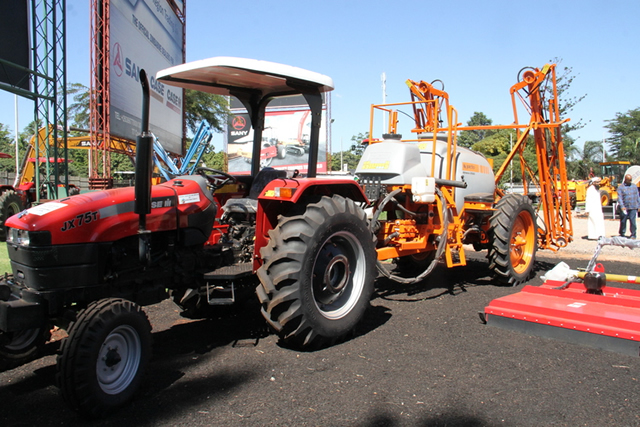
Elton Manguwo
THE Government is supporting the national reverse engineering of agricultural implements by providing equipment to support local manufacturers through partnerships with local universities, army engineers and the Institute of Agriculture Engineering.
Mechanisation Department chief director Engineer Edwin Zimhunga yesterday said mechanisation of the agriculture sector was crucial in developing the agriculture sector, as the country fights to mitigate the impact of Covid-19, the conflict in Eastern Europe and climate change.
“The use of mechanised implements such as the two-wheeler and land augers by smallholder farmers is critical in furthering the Government’s agenda of mechanising smallholder farming operations,” said Eng Zimhunga.
He added that the time was tender for the country’s farming systems to transition to precision agriculture but it was necessary to start at the micro level and household level.
“The smallholder mechanisation programme is designed in a way that addresses the dictates of precision agriculture at this level,” Minister of Lands, Agriculture, Fisheries, Water and Rural Development Dr Anxious Masuka made the remark recently.
Mechanisation of agriculture is critical, as it cuts on the cost of production that can hinder the participation of most farmers in the food production sub-sector at a time the Ministry seeks to transform the agriculture sector to be more business driven through maximum and optimised productivity, he observed.
Meanwhile, some private sector players have joined the Government’s push to mechanise smallholder agriculture with Zimplow Holdings, for instance, recording a 22 percent rise in tractor volumes sold as the agriculture mechanisation drive begins to gather pace ahead of the 2022/23 cropping season.
In their financial statement for the half year ended June 30, 2022 Zimplow Holdings chairperson Godfrey Manhambara revealed that the group’s tractor sales volumes were up 22 percent supported by the 3 percent increase in tractor drawn implements.
The group also extended its product range to include two wheeler tractors to complement what the Government is doing with its US$5 million facility, for example, the procurement of procure 600 two-wheeler tractors and an assortment of implements for small-scale mechanisation.
“Animal drawn implements sales volumes declined by 26 percent during the same comparative period,” said Mr Manhambara.
Mechanisation of the agriculture sector will play a pivotal role in setting the economy on a positive growth and recovery trajectory through the realisation of a potential gross domestic product (GDP) of 33 percent as downstream benefits of mechanised operations.



 Online Reporter