Harare Bureau
THE fight against corruption cannot be won by investigators alone, the Government has said, placing the media at the centre of the national effort and commending the Zimbabwe Anti-Corruption Commission (ZACC) for turning journalism into a frontline weapon against graft.
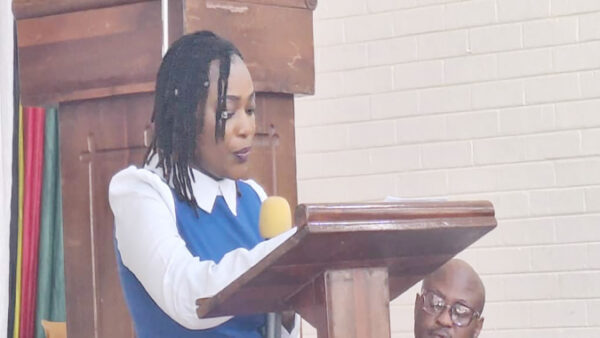
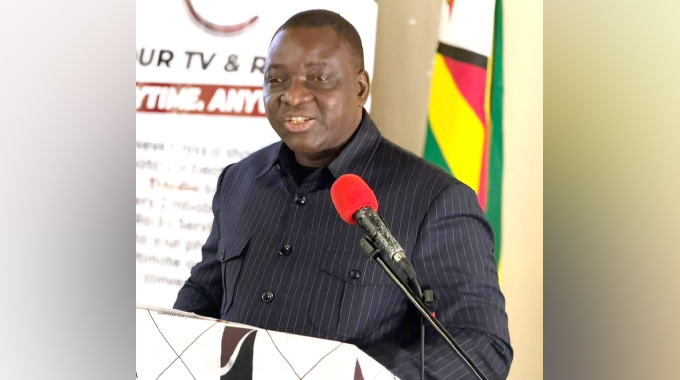
Speaking at the fourth edition of the Anti-Corruption Media Awards in Harare last night, held under the theme, “Anti-Corruption Journalism for an Empowered Upper Middle-Income Society,” Information, Publicity and Broadcasting Services Minister Dr Zhemu Soda said the media remains one of the most indispensable allies in the fight against corruption.
The awards, convened by ZACC, have been running since 2023. This year’s edition recognised six outstanding journalists and four media institutions.
Two Zimpapers journalists, Gibson Mhaka and Trust Freddy, clinched top awards.
Mhaka won the Anti-Corruption Reporter of the Year while Freddy clinched the Emerging Anti-Corruption Reporter of the Year award.
Government commended ZACC for sustaining the initiative, saying its continued growth reflected an appreciation that the fight against corruption cannot be left solely to oversight bodies, investigative agencies or the criminal justice system.
“Fighting corruption demands a whole-of-society response in which Government, the private sector, civil society, the media and citizens collectively champion a culture of integrity and accountability,” said Minister Soda.
Journalists were challenged to move beyond routine reporting on arrests, court appearances and convictions, and to dig deeper into the systems, conditions and incentives that allow corruption to thrive.
Through rigorous investigation, factual reporting and compelling public-interest storytelling, journalists illuminate governance deficiencies, amplify the concerns of affected communities and strengthen public accountability.
“By informing citizens about the nature, causes and consequences of corruption, the media performs an essential civic function, equipping society with the knowledge required to identify, challenge and reject corrupt practices,” said Minister Soda.
He added that investigative journalism serves not merely as a watchdog, but as a catalyst for institutional improvement and national reform.
As Zimbabwe advances towards Vision 2030, Minister Soda said the aspiration remains a prosperous, inclusive and empowered Upper Middle-Income Society founded on good governance, transparency, accountability and respect for the rule of law.
The National Development Strategy 2 provides the framework for achieving this vision, he said, but meaningful transformation requires more than investment and infrastructure.
It requires strong institutions, ethical leadership and prudent stewardship of public resources, said the Minister.
“Every act of corruption diminishes resources that could otherwise be directed towards healthcare, education, infrastructure, social protection and economic growth,” he said.
“Protecting national resources from abuse, misappropriation and illicit enrichment is therefore not merely an anti-corruption objective; it is a development imperative.”
The 2026 awards highlighted sectors needing intensified scrutiny, including mining and minerals, money laundering and illicit financial flows and public procurement.
Journalists were rallied to expose inflated pricing, bid manipulation, conflicts of interest, collusive practices and failures in contract implementation in public procurement.
“These are not simply procedural irregularities. They directly affect the quality of public services, diminish value for money and undermine citizens’ confidence in public institutions,” said Minister Soda.
Government recently approved the Second National Anti-Corruption Strategy (NACS II) to consolidate national efforts against corruption and the media is expected to play a pivotal role in raising awareness of the strategy and fostering citizen participation in its implementation.
Minister Soda also reaffirmed the Second Republic’s commitment to a free, professional and responsible media, citing ongoing reforms including the Broadcasting Services Amendment Act of 2025, and the expansion of digital broadcasting, online journalism and community radio stations.
The Emerging Anti-Corruption Journalist Award, which Freddy won, was open to journalists with less than five years of professional experience or aged 25 years and below.
He won for his investigative story titled: “The uniforms monopoly: Cost outstrips school fees,” which exposed boarding schools that defied a Ministry of Primary and Secondary Education directive not to force parents to buy uniforms at schools or from one supplier.
Speaking after receiving the award, Freddy paid tribute to Zimpapers and the ZACC for supporting young journalists.
“I am always grateful to the Zimpapers family. They believed in me and supported me since I joined on attachment in 2022. With just two years of post-graduate experience, this recognition means a lot. I am also grateful to ZACC for continuing to motivate young journalists like me,” he said.