Online Reporter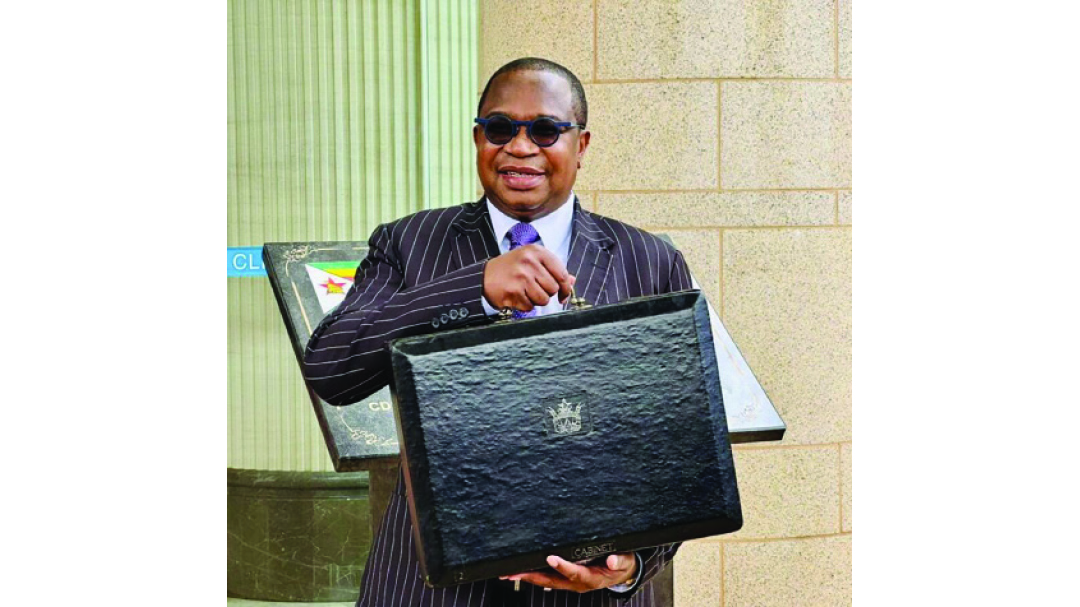
Business Reporter
FINANCE, Economic Development and Investment Promotion Minister Professor Mthuli Ncube presents the 2025 Mid-Term Budget Review this afternoon amid high expectations that the Treasury chief will announce measures to consolidate the rapidly stabilising economic conditions and more interventions to accelerate inclusive growth.
The policy review comes at a critical juncture.
Since the launch of the foreign currency and precious metals-backed ZiG currency in April last year, Zimbabwe has experienced relative price and exchange rate stability, a notable departure from the volatility of previous years.
Inflation has slowed, business confidence is returning, and investor interest, particularly in the mining and energy sectors, is growing steadily.
Economist Dr Prosper Chitambara believes this year’s review presents an opportunity to reinforce the gains made so far.
“We are at a point where the economy is showing signs of realignment. The review should go beyond maintaining order; it must unlock investment in underperforming but high-potential sectors like agro-industry, digital infrastructure, and clean energy,” he said.
Zimbabwe’s Treasury has set an ambitious target of 6 percent gross domestic product growth for 2025.
This follows a sharp deceleration to 2 percent in 2024, largely due to a prolonged El Niño-induced dry spell that severely affected agriculture, a sector that has traditionally anchored the economy. This year’s recovery is expected to hinge on improved rainfall patterns and increased support for irrigation and climate-resilient farming techniques.
However, it is not just about agriculture.
The formal economy is gradually being outpaced by a rapidly growing informal sector, which the Government has recently acknowledged in its revised GDP figures.
A national economic census conducted earlier this year boosted GDP estimates from US$35,2 billion to US$44,7 billion, mainly by capturing previously unrecorded informal economic activity.
According to economic analyst Namatai Maeresera, this shift demands a new fiscal mindset.
“If nearly half the economy is informal, then tax and spending policies must reflect that. The review should propose mechanisms to gradually formalise the informal sector, through simplified licensing, digital tax filing, and incentives for SMEs,” he said.
Business leaders also see the mid-year review as a litmus test for the Government’s commitment to the new currency. Kelvin Mombe, who runs a fast-moving consumer goods firm, says liquidity and predictability are vital.
“ZiG has potential, but businesses need guarantees. Payment delays on Government contracts, frequent regulatory changes, and uncertainty over taxes erode trust. We want clarity and consistency,” he told this publication.
Mr Mombe also called for better alignment between public procurement and domestic supply chains.
“If the state is spending billions on infrastructure and services, then that spending must feed into local industries. That is how we grow jobs, not just GDP,” he added.
Debt, however, remains a looming concern. With much of Zimbabwe’s domestic debt held in short-term instruments, repayment obligations are beginning to crowd out public spending on education, health, and infrastructure. Economists say this review must map out a plan to restructure existing debt and adopt more transparent borrowing practices.
Dr Chitambara agrees, “Debt transparency and restructuring aren’t just technical exercises; they are political signals. If Zimbabwe is to re-engage with international lenders and unlock concessional finance, it must present a clear and credible debt management roadmap.”
The International Monetary Fund recently praised Zimbabwe’s progress towards macroeconomic stabilisation, particularly after the introduction of ZiG, but stressed the importance of sustained structural reforms. These include improvements in public financial management and transparency in procurement.
Economic Analyst Namatai Maeresera believes the Government must act on those signals.
“The credibility window is open. This review should lay down time-bound reform targets. Not rhetoric, but concrete steps, audit reforms, procurement digitisation, debt registry publication, all of these signal intent,” he said.
On the spending side, there is growing consensus that capital expenditure must be more efficient. Last year, less than two-thirds of the development budget was actually disbursed. Experts say this undermines economic momentum and public confidence.
“There is no point in allocating more resources to roads, clinics, or power (infrastructure) if the funds don’t reach the projects,” said Mr Mombe.
“Let us fix project execution first. Let us also make sure that tenders go to firms that deliver, not those that lobby the hardest.”
Revenue mobilisation remains another key issue.
With tax collections currently around 16 percent of GDP, Zimbabwe performs relatively well compared to some of its peers in the region. However, analysts argue that more creative revenue tools, such as digital transaction levies or carbon taxes, could ease pressure on conventional tax bases.
Ultimately, the mid-term review is expected to provide more than just numbers. It must signal direction. With businesses watching closely, ordinary citizens hoping for improved services, and development partners assessing reform momentum, the stakes are high.
“Stability is welcome, but it is not enough,” said Dr Chitambara. “Now is the time to pivot, towards inclusive growth, smarter spending, and credible reforms. If the Treasury delivers that, Zimbabwe could be looking at a very different economic landscape by year-end.”