Chronicle Editor
Nqobile Bhebhe, Senior Business Reporter
GOAT breeders have been urged to formalise their operations by establishing recognised structures to guard against exploitation by middlemen who take advantage of the absence of formal trade facilities.
Goat value chain expert, Mrs Tryphine Dube, said recently that most small-scale goat farmers were not realising the real value of their livestock as they are often ripped off by brokers.
Speaking during an oversubscribed goat conference last week in Bulawayo that brought together goat breeders from the region, she urged breeders to have formal structures that enlighten them on the value of their goats.
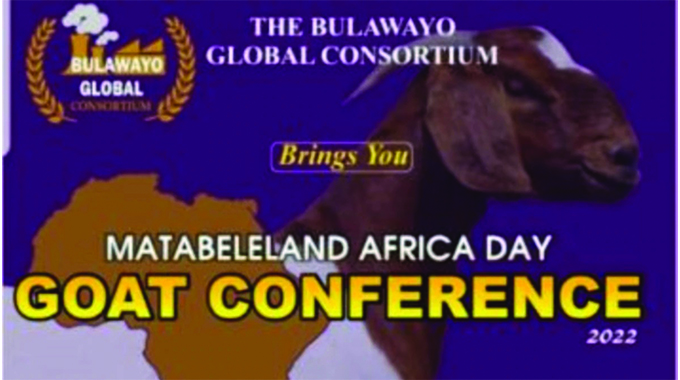
Bulawayo Global Consortium, a diversified limited company that offers unique and attractive investment opportunities, organised a one-day goat conference under the theme: “Understanding the goat value chain”.
“In most instances, farmers are not realising the value of their goats as they are taken advantage of by middlemen or brokers,” said Mrs Dube.
“Farmers are selling goats at very low rates, for instance US$50 to middlemen.
Goats cost more than that.”
Mrs Dube also said the lack of collection points in communal areas that allows farmers to cut down on transport costs to abattoirs leaves them vulnerable.
“With no collection points, this makes getting goats to abattoirs a huge challenge.
This creates a gap for exploitation by middlemen who offer farmers in communal areas less money,” she said.
“There have been attempts to formalise goat collection through setting up of collection points in Gwanda and Beitbridge although it suffered a stillbirth as collection points are not used.
We are not realising the value of goats.”
She said middlemen or brokers who buy on behalf of abattoirs get the largest share as they are highly mobile in communal areas and farmers feel short-changed.
“When farmers get low money, they are discouraged from continuing breeding, hence dwindling goat numbers,” she said.
Mrs Dube also appealed to goat breeders to formalise their trade, apply proper animal husbandry methods and equip themselves with entrepreneurial skills to access loans.
“The low production is due to poor husbandry practices.
We don’t vaccinate, infrastructure is of low standards and even on the nutrition side we are not doing well,” she said.
“Having proper records is very important but farmers are not keeping records.
That affects the production chain.”
A young breeder, Mr Donald Tshabalala, said middlemen were ripping off goat breeders.
“We are being ripped off by middlemen.
They are very persuasive in their conservation with farmers to the extent that we end up selling at a cheap price,” he said.
Mr Tshabalala urged farmers to form consortiums that enable them to have firm bargaining power.
“Goat breeding is very lucrative if done in groups or consortiums.
With this model we would be able to procure vaccines, feed, and have a strong voice when applying for loans,” he said.
Another advantage, according to Mr Tshabalala, is on assessing entrepreneurial skills through workshops as organisations would find it easy to engage consortiums rather than individuals.


 Online Reporter