Online Reporter
Patrick Chitumba, [email protected]
THE Midlands Province has emerged as one of Zimbabwe’s leading livestock hubs, with a cattle population now exceeding 980 000.
According to the Crops, Livestock and Fisheries Assessment Report (CLAFA 2) for the 2024/25 summer season, the province contributes 17,1 percent of the national herd, estimated at 5 741 397. This places Midlands second only to
Masvingo, which leads with just over one million cattle.
The statistics highlight the province’s strategic role in national food security, rural development and the broader agro industrial economy.
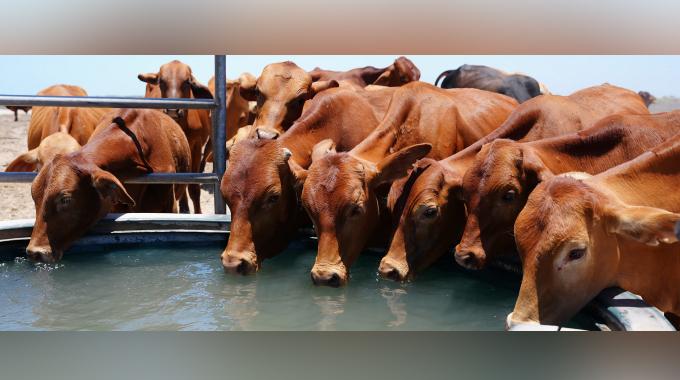
This was revealed by the Midlands Province Director for Economic Affairs and Investment in the Office of the President and Cabinet, Mr Kosheni Mtisi, who said the report underscores the region’s growing importance in Zimbabwe’s livestock sector.
“According to the CLAFA 2 report for the 2024/25 summer season, the Midlands cattle population stands at 983 871, which represents 17,1 percent of the national herd, placing the province second after Masvingo with 1 002 632 cattle,” he said.
Mr Mtisi said beef cattle production remains a cornerstone of the rural economy, sustaining thousands of households through income generation, draught power and, in some communities, social status.
However, he noted that herd expansion continues to face setbacks, particularly high mortalities from tick borne diseases, poor genetic quality of existing breeds and the gradual degradation of grazing lands.
Despite these challenges, dairy farming has recorded notable progress. Mr Mtisi said large-scale commercial dairy production is concentrated in Gweru, Kwekwe and Shurugwi, while smallholder dairy initiatives are expanding in districts such as Gokwe South.
“The establishment of Mafuro Dairy and Kaguvi Smallholder Dairy has significantly boosted milk output in the province, which now produces approximately 24 million litres of raw milk annually,” he said.
This output accounts for about 21 percent of national milk production, reinforcing the province’s strength in the dairy value chain. Mr Mtisi added that the sector continues to benefit from Government support and development partner interventions under the Zimbabwe Agriculture Growth Programme.
In line with climate smart agriculture strategies, goat production is also gaining traction due to the species’ resilience in drought-prone areas.
“Goats are more tolerant to disease and harsh climatic conditions compared to cattle, and most farmers are now venturing into commercial production,” said Mr Mtisi.
He said farmers are increasingly adopting high value exotic breeds such as the Boer Goat and Kalahari Red to improve productivity and profitability.
The poultry sector has also seen renewed expansion, with both urban and rural households turning to poultry production as a key income stream. Mr Mtisi said interest in indigenous chicken farming has surged, largely as a result of Government intervention.
“The Presidential Poultry Programme has revitalised a sector that had virtually collapsed over the past two decades due to recurring disease outbreaks such as Newcastle Disease, Avian Influenza and Coccidiosis,” he said.
Mr Mtisi said Midlands Province falls largely within Natural Regions III, IV and V, where rainfall is erratic and unreliable, making reliance on rain fed agriculture risky and driving the need for irrigation and livestock based livelihoods.
He said the Second Republic continues to support both crop and livestock producers through programmes designed to improve productivity, resilience and rural incomes.
“Cotton productivity increased from 600kg per hectare in 2020 to 800kg per hectare in the 2022/2023 season, while more than 30 000 farmers benefitted from the Presidential Pasture Production Scheme,” he said.
Under the Presidential goat and poultry pass on schemes, 395 goats and 120 018 chickens were distributed to farmers, contributing to increased indigenous poultry production across the province.
Mr Mtisi said the Traditional Grains Programme has also delivered encouraging outcomes, with finger millet productivity rising from 0,3 tonnes per hectare to 0,6 tonnes per hectare in the 2022/2023 season.
To boost mechanisation and enhance output, the province disbursed 27 tractors last year under the Belarus facility.
“Eleven tractors were allocated to institutions, while 16 were disbursed to individual farmers. In addition, eight tractors, two disc ploughs, seven boom sprays, three planters, six disc harrows and one trailer were handed over to eight young farmers under the Presidential Youth Empowerment Scheme,” he said.
Mr Mtisi said wheat production in the province has also maintained an upward trend.
“The hectarage under winter wheat for 2024 reached 12 081 hectares, surpassing the target of 12 000 hectares. In 2025, hectarage increased to 12 025 hectares against the same target,” he said.