

 admin
admin
Midlands Bureau Chief
OVER 3 500 urban farmers in Shurugwi, Gweru and Kwekwe are registered for the 2022/2023 Pfumvudza/Intwasa input scheme in the Midlands province.
The farmers were certified by the Department of Agricultural, Technical and Extension Services (Agritex) after proper holing and mulching of their plots.
The Pfumvudza/Intwasa input scheme was largely credited for the bumper harvest experienced during the 2021/2022 summer cropping season.
Another good rainy season has been forecast this year raising prospects for another good harvest for the country.
Midlands Provincial Agronomist, Mr Innocent Dzuke said a total of 3 577 urban farmers in the province had been registered.
“I can confirm that we have a total of 3 577 urban farmers that have been registered for the 2022/2023 Pfumvudza/Intwasa farming season. These are from Gweru, Kwekwe and Shurugwi,” he said.
He said the farmers received Pfumvudza/Intwasa farming inputs and urged farmers to approach their nearest Agritex offices to register so that they have access to get inputs.
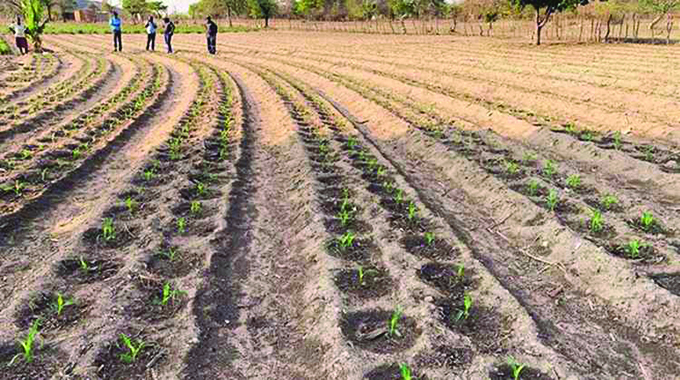
“The urban farmers under the scheme are required to be certified by the Department of Agricultural, Technical and Extension Services that they have prepared their plots correctly. They should also meet local authorities by laws that deal with urban farming,” said Mr Dzuke.
Recently, City of Gweru public relations officer Ms Vimbai Chingwaramusee said they support urban farmers who follow the laid down rules and regulations governing urban farming.
Ms Chingwaramusee said council will slash crops for farmers who practise farming in undesignated areas.
The Intwasa programme is set to benefit 3,5 million farmers across the country in communal A1, small-scale commercial farming, old resettlement and peri-urban farming sectors in the production of cereals, oil seeds and legumes including a special smaller pack for 500 000 urban farmers.
Under the programme, each farming household will get an input package of 10kg maize seed, 5kg sorghum, 2kg pearl millet, 5kg soya beans, 2kg sunflower/castor beans and 5kg sugar beans or 5kg cowpeas or roundnuts.
The seed type and varieties will depend on the farming region. The programme contributed 33 percent of the country’s maize output last year.
The country requires 2,2 million tonnes of maize for human and livestock consumption and the three million tonnes target will position Zimbabwe as a significant player in grain production in the region.
This year farmers are expected to plant 2 million hectares of maize. For sorghum, the Government has set a target of 380 000 hectares to produce 304 000 tonnes while 250 000 ha are set to be put under pearl millet to produce 150 000 tonnes.
Farmers adopted the Pfumvudza/Intwasa concept based on the principles of minimum soil disturbance (holing out), mulching to conserve moisture, timeliness of operations and adoption of good agronomic practices.
National food self-sufficiency is key to the Government’s economic blueprint, the National Development Strategy 1, which identifies food security and nutrition as key drivers of economic revival.



 Blessing Chizhande
 Online Reporter