Online Reporter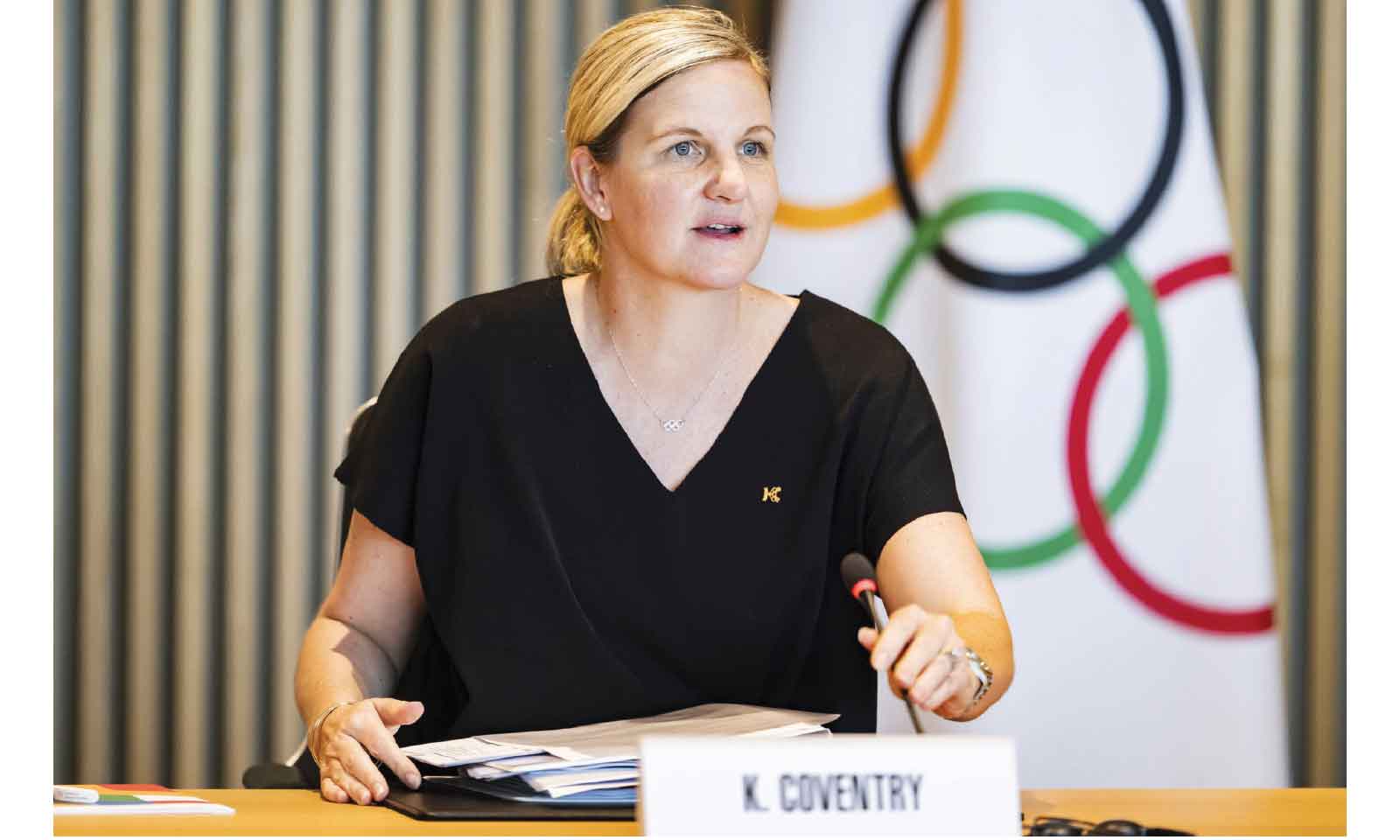
A TWO-TIME champion in the 200-metre backstroke and former Zimbabwe’s Minister of Youth and Sport, Kirsty Coventry made history as the first woman to lead the International Olympic Committee in its 132-year existence.
Coventry’s journey from athlete to global sports leader has been extraordinary, and it is still unfolding, just days before the opening of the upcoming Winter Games in the Italian fashion city, Cortina.
From Turin 2006 to Milan, Cortina 2026, passing through Canada, Russia and Asia, the 42-year-old has witnessed the evolution of the Winter Games. Ahead of Italy hosting the world once again, she reflected on the significance of the Games returning to Europe.
“Remember the incredible atmosphere of Paris 2024? Well, in Italy, in a month’s time, I expect something similar.
“You Italians bring a unique passion to sport, and your mountains will be a beautiful backdrop. Winter sports were born on Europe’s peaks. It will be an Olympic edition from which we can learn a lot,” she told Italian outlet Corriere Della Serra in an exclusive interview.
Learning is precisely what the IOC hopes to do in Italy.
The widespread Olympics, with events spread across the country, is unprecedented and presents new challenges.
“We’re entering a different phase: the new normal is that of Games spread across the country. The data we collect in Italy, by consulting with stakeholders, will guide us for the future. If adjustments need to be made, of course, we will,” Coventry said.
Two cities, Milan and Cortina, will host ceremonies and cauldrons, reflecting the country’s vision for inclusivity and celebration.
“The Organising Committee had complete freedom in this regard. From my perspective, I’m grateful that there’s a ceremony for the athletes in Cortina too: smaller, with lower costs, but able to allow everyone to participate in the great celebration, knowing that the heart of the inauguration will be Milan.
“As a former athlete, I say: it’s important that everyone experiences the Olympic spirit. Italy has the right to decide how to present its symbols and culture to the world.”
Even thorny issues, like the bobsleigh track in Cortina, were handled with care.
“The IOC had asked that a new facility not be built. It’s a recommendation, but the country has the right to do as it wishes. The Monti track will be one of the legacies of the Olympics. The test events demonstrate that good work has been done.” Coventry’s perspective is always that of an athlete. She embraces opportunities to celebrate gender parity and inclusivity in sport, as seen in the arrangement of four flag bearers for the Games.
“I wouldn’t say it took us by surprise. Our request was the gender parity introduced at Tokyo 2020: one man and one woman. Two flag bearers in Milan and two in Cortina seemed like a good idea. The more athletes involved, the better. I’ve been Zimbabwe’s flag bearer twice: it’s an experience I look back on with enormous pride.”
For Coventry, pride extends beyond sport. Representing one’s country is a culmination of dedication and sacrifice.
“I was nine years old when I told my parents that my dream was to win an Olympic gold medal.
“At the time, I had no idea how much work it would require: the ups and downs, the sacrifices, the training.
“In 2004, in Athens, when I found myself on the podium while the anthem was playing, it was a surreal and incredibly special moment. It was the achievement of a lifelong goal. Every Olympics I’ve participated in has been a kind of magic.” Even her medals are treated with care. “Each one is wrapped in a soft sock, to protect it from damage, in a safe. We’re thinking of displaying them in a display case at the Olympic Museum in Lausanne.” Coventry is conscious of her role in inspiring future generations. “This is a role that, regardless of gender, entails great responsibility and pressure. My first concern is not to disappoint.
“My second is to inspire: the future generation of sports leaders, but not only I have two daughters who are my constant reminder: the decisions I make every day, I hope, open up new opportunities for them too.”
Yet, she refuses to be defined by clichés. On balancing motherhood and leadership, she noted, “When they ask me, I smile. And I reply: but have you ever asked Thomas Bach, who preceded me?
“It’s a tax worth paying, I think. I have a wonderful husband who supports me with zero ego, who loves taking care of our girls, who often works from home, and who doesn’t feel diminished if he has to change his schedule to accommodate mine. — insidethegames.biz