


 admin
admin
In this week’s instalment, I again have the privilege of providing an informative article from Professor Chrispen Chiome of the Zimbabwe Open University. The article gives an overview of Zimbabwe’s education system soon after independence, and the imperative to review the curriculum to bring relevance to our education.
The Presidential Commission of Inquiry into Education and Training was a milestone towards bringing that relevance.
Below is Prof Chiome in his own words
* * *
Zimbabwe was born out of a protracted liberation struggle. It is common cause that it was a struggle for land, but education was also at the heart of that struggle.
The learning experiences, lessons and academic content taught in schools with the aim of developing skills, knowledge and correct attitudes to students is generally what is referred to as curriculum.
Curriculum is one of the foundational elements of effective schooling and teaching. It is often for this reason that it is the object of reforms.
Such reforms in the curriculum are basically intended to mandate and at the same time encourage greater curricular standardisation and consistency across provinces, schools, grade levels, subject areas and courses.
It is a known fact that curriculum reform and renewal play an important role in modernising educational practices and training so that they become more responsive to learners’ employment and personal needs.
The world is changing rapidly.
Our learners must not be left behind.
They need to develop and apply a set of key competences and relevant job-specific skills which cannot be acquired through fragmented, content-overloaded curricula that are far removed from real life and the demands of the workplace.
President Mugabe institutes curriculum reform
The vision and astute leadership of President Mugabe is more than vivid in the field of education where he is now touted as leading the most literate country in Africa. At independence in 1980, one of his major priorities was actualising the vision of the liberation struggle. Through his foresight, Zimbabwe embarked on one of the most acclaimed curriculum projects ever to be undertaken in an independent African country.
This is because he saw curriculum as the pillar of the entire educational process.
He saw curriculum as a means to achieving the aims of education and training which are dynamic and which evolve according to changing social and economic requirements.
It was natural that curricula change was introduced at independence so that society reflected the shifting trends in politics, education, training and labour market trends.
Now, more than ever before, the rate and pace of socio-economic transformation means that curricula are likely to need updating more frequently than in the past, with occupations emerging or changing at unprecedented rates.
Localising examinations
An important and indispensable reform strategy that directly or indirectly influences curriculum is assessment.
This is because the methods used to measure student learning compel teachers to teach the content and skills that will eventually be evaluated.
This then gives rise to a phenomenon generally called “teaching to the test”. This prompted Zimbabwe’s Government to localise examinations, which, all along, had been marked outside the country and specifically in Britain.
Teachers in many instances are consequently under pressure to teach in ways that are likely to improve student performance on examinations by teaching the content likely to be tested or by coaching students on specific test-taking techniques. Localisation of examinations was seen as one way in which assessment could be used to leverage curriculum reform.
Education systems ride on examination systems as one of many other strategies to improve teaching quality through the modification of assessment strategies, requirements, and expectations.
Thus, localising examinations was seen as a milestone in our education system as it created a more consistent and coherent academic programme by ensuring that teachers teach the most important content and eliminate learning gaps that may exist between sequential courses and grade levels.
Without changes in attitudes towards student assessment, significant curriculum reform will be rendered hopeless.
Evaluation plays a pivotal role in deciding what the learners learn and what the teachers teach in schools.
It is accepted universally as an integral part of teaching and learning. It is a powerful means that can be used as a basis for improving the quality of education.
It provides data that can inform decisions about curricular changes, adopting new pedagogies and incorporating new assessment strategies that can play an important role in how educational and curriculum reform is carried out.
Commission of Inquiry
The Presidential Commission of Inquiry into Education and Training – erroneously known as the Nziramasanga Commission (1999) – is well documented and does not need further debate.
What is important to note is that when everyone else in the world was applauding Zimbabwe’s education as one of the best, if not the best in Africa, President Mugabe was seeing otherwise.
To him, education had to constantly evolve and grow to meet the needs of our ever-changing socio-political environment.
He understood that the pace of change had become very rapid, and this was later confirmed by the Commission’s findings.
He foresaw our education system struggling to implement the changes needed to keep apace in a globalised and digitalised world. The only sensible thing to do was to completely change the education landscape by giving all stakeholders, including parents, the opportunity to chart the way forward in their children’s education.
This was meant to place the child at the centre of the education experience.
The current thrust on curriculum reform is one way of implementing the Commission findings. This is an acknowledgement that the current leadership in education believes that curriculum reform is not just desirable but necessary.
They also believe that curriculum reform is urgent. When educationists deny this, their credibility suffers as much as the nation’s. A good curriculum is even better for many of our disadvantaged children who have no access to supplementary material. This is because official curriculum serves as a body of knowledge to be transmitted in our education system. It is also viewed as a process, and as praxis which represents a course or guide of study to be undertaken.
Inclusive curriculum reform
In many instances, it is easier to define reform than it is to define curriculum. This is because reform simply means to reshape, to reconfigure or merely to make something different. Thus curriculum reform is defined as bringing changes to the subject content, delivery, and assessment of curriculum.
However, we must realise that mere change does not mean improvement. This applies to curriculum reform. What is needed is the total involvement of all stakeholders in curriculum reform as what happened with the Primary and Secondary Education Ministry.
The ministry allows for enrichment by parents and other stakeholders so that curriculum reform is inclusive.
To parents, this gave them a clearer sense of what their children will learn so that the brand of curriculum reform will bring with it socio-economic transformation to our society. Curriculum determined by specialists at the exclusion of beneficiaries will not last the test of time.
We must always remember that the design and goals of any curriculum reflect the educational philosophy—whether intentionally or unintentionally—of the curriculum reformers who developed it. What this means is that any curriculum must have a soul. Dr Mahamba once said, “The education system developed during the struggle is what provides the correct ideological direction for Zimbabwe’s education because it pursues the same purposes for which Zimbabwe was liberated.”
Inclusivity is central to the ethos of the liberation struggle because the theory behind inclusion is that the best way to provide quality education for all students is to increase marginalised students’ access to the general education classroom.
This is where the best curriculum and social opportunity are often provided.
Inclusivity is based on the principle that schools should provide for all children regardless of any perceived social, emotional, cultural, intellectual or linguistic difference or disability. Inclusive school reform also means providing each student an authentic sense of belonging in an inclusive classroom where difference is expected and valued. We may notice that having a sense of identification in the educational system helps students relate to the topics and lessons being delivered.
Stem/Steam
The need for Science, Technology, Engineering and Mathematics (Stem) components in the school curriculum cannot be over-emphasised. This was one of the Nziramasanga recommendations and is a critical component of any lasting curriculum transformation.
Science education is at the centre of current curriculum reforms since reformers are suggesting that teachers utilise inquiry-based, student-centred instructional practices that will facilitate students’ construction of knowledge.
In this regard, embedded technology used to support students in a deeper understanding of topics is encouraged.
The Ministry has called for the revision and reform of education content in the areas of curricula, textbooks and methods so as to take account of the African environment, child development, cultural heritage and the demands of technological progress and economic development, especially industrialisation.
We must all note that industrialising societies demands that education systems prepare students for the labour market through Stem or Steam (if you add Arts).
Conclusion
Zimbabwe was born out of a protracted liberation struggle, and curriculum reform must be hinged on this liberation struggle, which is the foundation for the new education of our country.
It was developed and implemented during the liberation struggle as outlined in earlier articles. Using this as our base, we must also realise that the curriculum reform of the 21st Century will be largely influenced by global economic changes, the accelerated growth of information technology and a diverse society at the local, national and international levels.
These influences currently speak to the new curriculum that has been developed, and in future articles, we will unpack learning areas suggested in the new curriculum, bearing in mind that creating sustainable curriculum improvements has been a virtual challenge to many education systems globally.
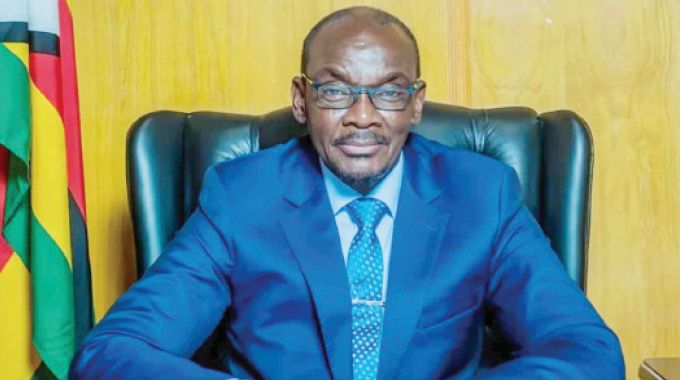
◆ Dr Lazarus Dokora is the Minister of Primary and Secondary Education. He sourced this article for The Sunday Mail as part of a series on Zimbabwe’s education curriculum review.


 Online Reporter