

 Online Reporter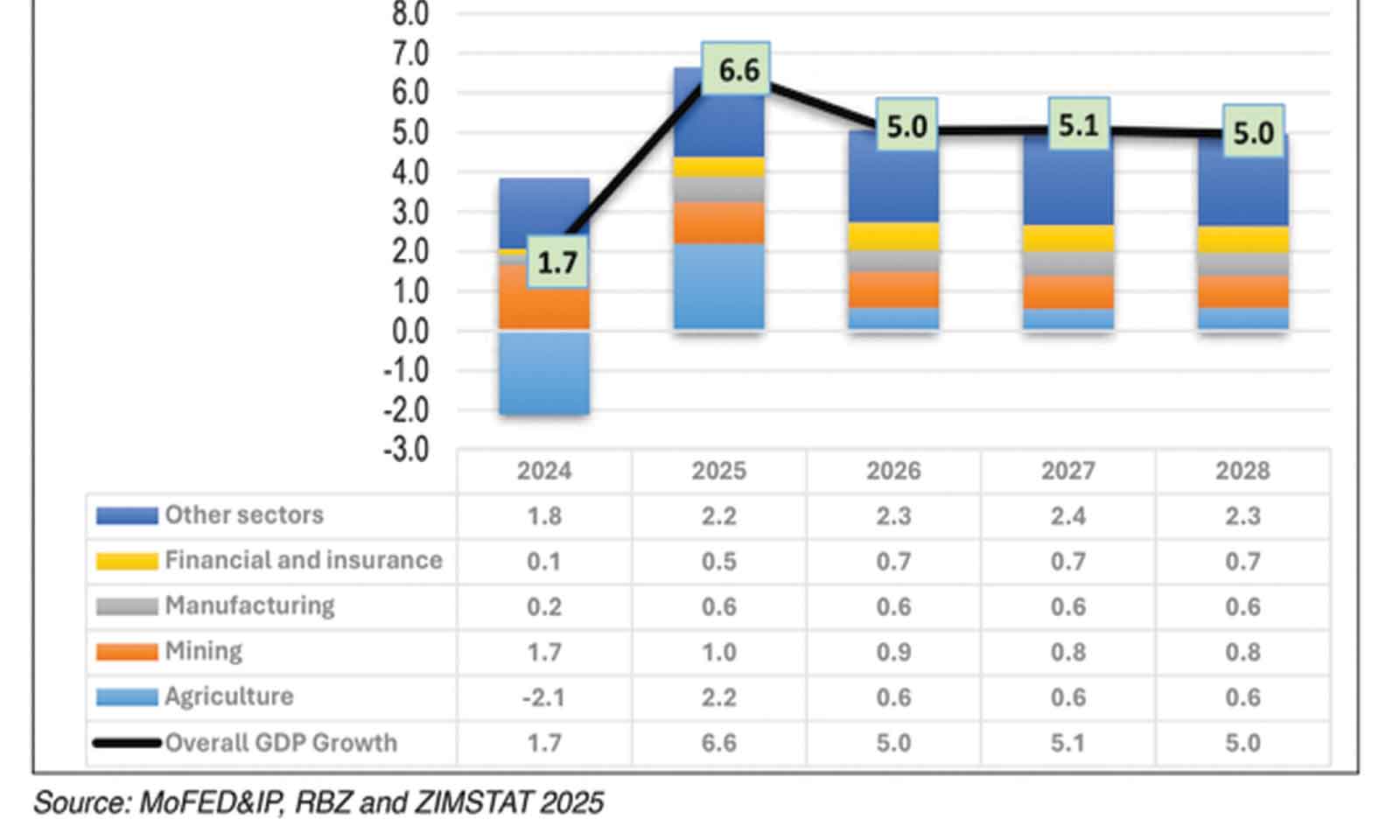
Martin Kadzere
Zimbabwe’s mineral exports rose by 10 percent in the 11 months to November 2025, primarily driven by a resurgence in the Platinum Group Metals (PGMs), data from the Minerals Marketing Corporation of Zimbabwe (MMCZ) show.
MMCZ facilitated the sale of 4,4 million tonnes of minerals valued at US$3,04 billion during the period to November 2025, compared to the four million tonnes valued at US$2,8 billion in the same period in 2024.
Export earnings from PGM matte surged to US$1,3 billion from 35,818 tonnes, a significant jump from the US$875,6 million in the same period 2024.
While volumes rose by 10 percent, the revenue spike was largely driven by stronger global prices for platinum, palladium and rhodium.
However, the performance in the cluster was mixed.
PGM concentrate, while still a top contributor at 8,63 percent of total revenue, saw earnings fall to US$262,5 million, down from US$494,4 million in the prior year due to lower export volumes.
Spodumene accounted for 15,75 percent of total export earnings, reflecting the country’s growing integration into the global battery minerals supply chain.
High carbon ferrochrome sales reached US$333,1 million, an 11 percent increase in volume and a 6 percent improvement in value year-on-year.
Coke sales volumes rose by 7 percent, generating US$162,9 million.
“MMCZ remains confident of achieving its 2025 performance targets,” said MMCZ general manager Dr Nomsa Moyo, in a speech read on her behalf by MMCZ marketing manager Gumisai Nenzou at a media reception last Friday.
“Positive momentum is expected into 2026, supported by firmer commodity prices. Continued focus on market diversification, strengthened compliance, beneficiation and value addition in line with Vision 2030.”
Beyond sales, MMCZ has invested in domestic capacity through the retooling of the Zimbabwe School of Mines and Government laboratories.
The corporation also recently funded the construction of a double-storey classroom block at Gangarabwe Primary School in Hurungwe, Mashonaland West Province, as part of its social responsibility mandate.
To safeguard mineral resources against smuggling, the MMCZ has intensified its monitoring and enforcement framework.
The corporation has trained 31 employees as certified drone pilots for enhanced mineral surveillance and has deployed inspectors at all major exit border posts, including Beitbridge and Forbes.
“We have introduced independent sampling and assaying prior to processing export documentation,” Dr Moyo said, adding that more inspectors are expected to be deployed in 2026.
This is supported by strengthened inter-agency enforcement with the Zimbabwe Revenue Authority, the Zimbabwe Republic Police, and the Minerals Flora and Fauna Unit to enhance mineral resource accounting.
The mining sector is strategically important to Zimbabwe. It is the country’s largest foreign currency earner, consistently accounting for over 70 percent of total export earnings.
The sector is expected to contribute approximately 13,3 percent to Zimbabwe’s Gross Domestic Product from 2024 to 2027.
Mining companies contribute around 20 percent of Government revenues through various taxes and levies.
The industry directly employs over 58 000 people in the formal sector, while artisanal and small-scale mining supports the livelihoods of approximately 2 million Zimbabweans.



