Online Reporter
Debra Matabvu, [email protected]
GOVERNMENT has commenced the construction and capacitation of mineral testing laboratories as part of efforts to enhance the country’s ability to accurately assess lithium ore, a strategic move expected to improve value retention and ensure Zimbabwe derives maximum benefits from its vast mineral resources.
The initiative, spearheaded by the Ministry of Mines and Mining Development in collaboration with the Mineral Marketing Corporation of Zimbabwe (MMCZ), seeks to strengthen the country’s ore-testing and assaying capabilities.
This will enable authorities to accurately determine the composition, grade and value of minerals extracted within Zimbabwe, promoting transparency and accountability across the mining value chain.
As part of the programme, authorities will first equip and modernise the National Metallurgical Laboratory in Harare before rolling out similar upgrades to other laboratories across the country.
Procurement of critical analytical and testing equipment has already been completed, paving the way for the operationalisation of the facilities. The development comes as Zimbabwe continues to position itself as a key player in the global lithium value chain, with demand for the mineral rising due to its importance in producing electric vehicle batteries and renewable energy storage technologies.
Finance, Economic Development and Investment Promotion Minister Professor Mthuli Ncube has said while Government continues with lithium beneficiation, more capacity and support will be channelled to establish the exact list of rare minerals in lithium ore.
“On the issue of minerals in a multi-ore body that we call lithium ore, there are other rare minerals in there being separated,” he said. “For pure lithium, the beneficiation story is the story; it will continue. For lithium ore, as Government, we are investing and setting up laboratories for testing ore so that we can set the right royalties for these other minerals.
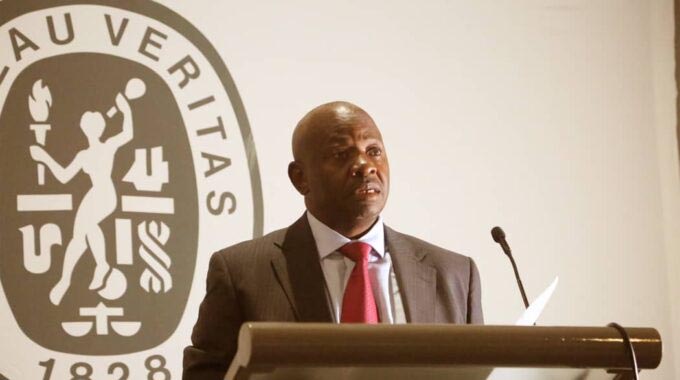
“However, it is clear that the list of rare minerals is long and we may need more capacity and support to really know what is in this ore, but it will start with investment in testing labs.
“We are doing this as Government through the Ministry of Mines and we are collaborating with our universities like the University of Zimbabwe and the School of Mines, among others.”
In an interview, the Permanent Secretary for Mines and Mining Development, Dr Thomas Utete-Wushe, said the expansion and capacitation of the laboratories will see testing of minerals across the entire mining value chain.
“The Ministry has resolved to capacitate and expand the National Metallurgical Laboratory in Harare into a comprehensive national reference laboratory capable of testing minerals across the entire mining value chain, from exploration samples to beneficiation and final product analysis,” Dr Utete- Wushe said.
He said the programme is being implemented under a five-year development plan with funding support from MMCZ.
“Significant progress has already been made through the procurement of key analytical equipment, including an X-Ray Fluorescence (XRF) spectrometer, an Inductively Coupled Plasma Optical Emission Spectrometer (ICP-OES), and a Carbon and Sulphur analyser,” Dr Utete-Wushe said.
The programme, he said, is ongoing, with further procurement of equipment, infrastructure upgrades and capacity development planned to ensure the National Metallurgical Laboratory attains and maintains excellence as a world-class mineral testing facility.
“Once the laboratory has been fully capacitated, the Ministry will consider establishing additional regional laboratories based on demand, available resources and national priorities.”
Zimbabwe holds some of the world’s largest lithium deposits and has positioned the mineral as a key driver of economic growth and industrialisation.
The establishment of testing laboratories is therefore expected to strengthen mineral valuation, improve royalty assessments, enhance transparency in the mining sector and reduce the risk of revenue leakages.
Government has set January 2027 as the deadline for a ban on the export of lithium concentrates to boost local refining and maximise revenue retention from value-added lithium exports.
Recently, Government approved a new Minerals Value Chain Framework, ending reliance on foreign labs for mineral certification.
Under this policy, the Ministry of Mines and Mining Development is decentralising analytical hubs to national universities, establishing a Mine-to-Market tracking system, and mandating value-added compliance for export permits.