Chronicle Editor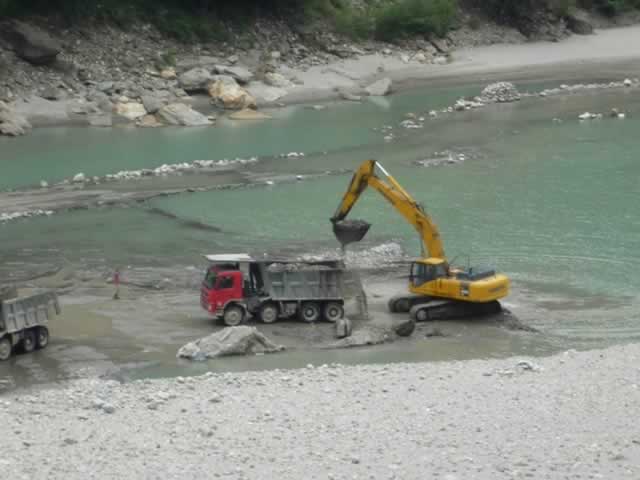
Jeffrey Gogo Climate Story
DIRECTORS of mining companies that pollute and degrade the environment face up to 20 years imprisonment if proposals by Mines Minister Walter Chidhakwa are passed into law.
In developments that campaigners say are a victory for the environment and human rights, Minister Chidhakwa plans to overhaul the existing Mines and Minerals Act, making it difficult for miners to pollute the air, water systems, the soil or the land.
The proposals — contained in a 97-page document due to be tabled in Parliament for scrutiny any time from now — will force every miner, big or small, to contribute a portion of their annual earnings to the Safety, Health and Rehabilitation Fund.
Though not entirely new, the Fund promises to tackle the dangerous long-term mining-related issues such as mine fires and explosions, chemical spillage, water contamination, waste dump breeches and others.
Miners will be compelled to implement comprehensive plans — approved by unnamed authorities, presumably the Environmental Management Agency (EMA) — that limit danger to humans, ecosystems and biodiversity — and to see to it that, indeed, such damage is prevented or minimised on a continuous basis.
Executives of defaulting firms may be jailed for 20 years or fined $5 000 each, or both, according to the proposed changes.
“The directors of a company or members or a close corporation or syndicate are jointly and severally liable for any unacceptable negative impact on the environment, including damage, degradation or pollution advertently or inadvertently caused by the company, close corporation or syndicate which they represent or are represented,” it says.
Those that fail to contribute to the Safety, Health and Rehabilitation Fund will be shutdown.
And there is no excuse for non-payment, either, not even closure
“Any failure to pay the fee will result in the cancellation of rights or title. Such cancellation shall not waive the miner’s obligation to pay the amount due,” Mr Chidhakwa proposes.
Even when the payment was made, mining companies will still be obliged “to carry out quittance work or other work to rehabilitate the environment during mining operations and upon cessation of operations.”
With over 1 000 active mines across Zimbabwe today, according to the Mines Ministry, mining is already causing serious damage to ecosystems, biodiversity and livelihoods — damage that the sector’s 50 percent GDP contribution has failed to reverse.
With open cast, the most common type of mining here, forests and woodlands clearing causes deforestation and desertification — destroying important carbon absorbers — while blasting results in dangerous gas and dust emissions.
The sector generated more than 7 500 gigatonnes of carbon dioxide equivalent in 2000, the second most greenhouse gas emitting sector behind energy. Carbon dioxide is the biggest driver of climate change and global warming.
Alluvial mineral extraction causes water pollution, siltation, loss of marine species, and may result in serious health problems for communities dependent on the affected river systems, experts say, as already seen in the diamonds fields at Marange.
In July 2015, the Environment, Water and Climate Ministry shutdown several local and foreign companies extracting gold along Mazowe river in Mashonaland Central for discharging heavy metals like mercury into the river, a large source of drinking and agriculture water.
According to a 2014 report by a Cabinet Committee on water pollution, mining ranks among top industries that discharge harmful industrial chemical waste, which deplete under and above ground water.
Victory for environment, but not for EMA
Mr Chidhakwa’s plan will spur environmental sustainability and responsibility in an industry that has so far been negligent, campaigners say.
As fines remain a pittance, multi-million-dollar worth mining firms have found polluting a lot easier compared to spending money investing in mitigatory technologies.
The highest fine environmental offenders can pay is just $5 000.
But not everyone is as pleased. Mr Aaron Chigona, director at environment regulator EMA, says the Mines Minister appears to have hijacked an already existing law and smuggled it into his Bill.
A law passed in 2007 provides for the collection of a 2 percent levy on the sale of every mineral, which was to be deposited into an Environmental Fund — more or less similar to Mr Chidhakwa’s planned Safety, Health and Rehabilitation Fund – managed by EMA.
For unknown reasons, however, the responsible authority, the Minerals Marketing Corporation of Zimbabwe, has not been collecting the levy for the past decade, said Mr Chigona, leaving communities at the mercy of profit-driven miners.
“We are not sure if the current Bill proposes to replace that Statutory Instrument (allowing for the 2 percent levy),” queried Mr Chigona by telephone on March 13.
“We have said the levy must not be collected by those ministries responsible for polluting the environment, but should be the mandate of EMA.
“We have asked for the Bill from the Ministry of Mines so we can peer review it, but the ministry has not been forthcoming. We are not even sure how it (the new Fund) is going to be administered, by whom.”
Mr Chidhakwa or his deputy Mr Fred Moyo were unavailable for comment at Press time.
Burdened by various taxes, miners are already fretting over the proposed changes to the Mines and Minerals Act.
“Our biggest fear is that of double taxation,” Chamber of Mines chief executive, Isaac Kwesu, told The Herald Business.
“EMA already has a fund similar to this. There is need for synchronisation of the law to avoid such issues (double taxation).”
Mr Kwesu said the mining industry was not averse to practices that safeguard the environment, but couldn’t say what it is exactly miners were doing to achieve this goal.
A safety, health and environment expert with Metallon Gold told me in a previous interview that some large mining companies had taken on voluntary and mandatory measures to minimise environmental damage, but it is seldom enough.
For instance, others have obtained international standards certification, helping to shape production towards a path that is environmentally sustainable, yet profitable.
Certified companies are obliged to sustainably use resources such as power, water, fossil fuels among others.
Others have gone a step further to reduce pollution through zero discharges.
Waste is recycled, reduced, reused so as to prevent pollution, said the expert who cannot be named for professional reasons.
God is faithful.



 Online Reporter