Online Reporter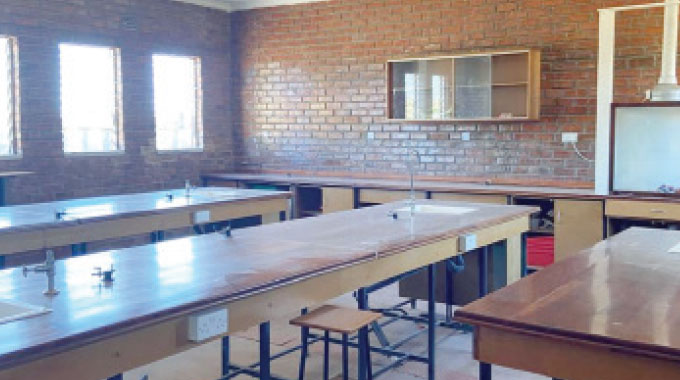
Sukulwenkosi Dube-Matutu, Mat South Bureau
THE Gwanda Community Economic Empowerment Trust (GCEET) is accelerating socio-economic transformation in Matabeleland South, with millions of United States dollars received from Blanket Mine being channelled towards schools, health facilities, water infrastructure and income-generating projects aimed at improving livelihoods in mining communities.
The Trust received US$1,8 million in dividends from Blanket Mine during the first quarter of 2026, while a further US$2,5 million has been declared for the second quarter, providing fresh capital to drive major development projects and strengthen the organisation’s long-term sustainability.
Formerly known as the Gwanda Community Share Ownership Trust (GCSOT), GCEET has become a key vehicle for ensuring that communities directly benefit from the exploitation of mineral resources in their areas, in line with Government’s economic empowerment agenda.
The Trust has over the years funded the construction of schools and clinics, rehabilitation of dams, drilling of boreholes, provision of scholarships for disadvantaged learners and implementation of various community development programmes across Gwanda District.
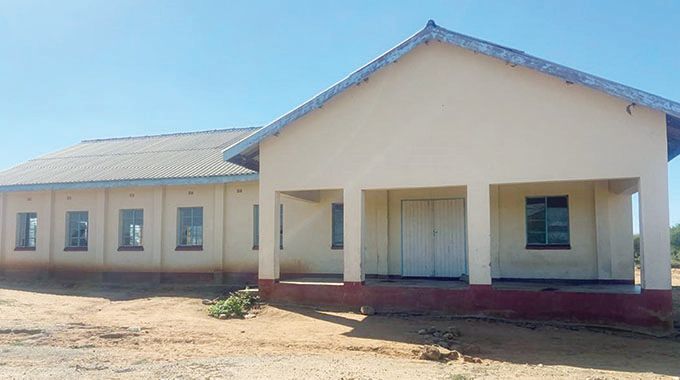
Each of the district’s 24 wards also receives US$5 000 annually to finance community-prioritised projects such as classroom blocks, waiting mothers’ shelters and other social infrastructure identified by residents.
In an interview, GCEET chairperson, Coster Nkala said the Trust aligns its development programmes with Government’s Vision 2030 and the National Development Strategy 2 (NDS2), ensuring that community projects contribute towards the country’s broader socio-economic transformation agenda.
“Our programming takes into account Government’s national and sectoral development priorities. We are implementing projects that support the country’s transformation agenda of attaining an empowered upper-middle-income economy by 2030,” he said.
Nkala said since its establishment in 2012, the Trust has invested significantly in education, healthcare, water provision and enterprise development.
He said in the education sector, they built and equipped Advanced Level science laboratories at Ntepe High School, Sibona High School, Mzimuni High School, Selonga High School and Gungwe High School.
“We also constructed and furnished classroom blocks at Maphane Secondary School, Mabheka High School, Bhalula Primary School, Betsa Primary School and Chongwe Primary School. In addition, we built a teachers’ house at Simbumbumbu Primary School and constructed a computer laboratory complete with a solar power system at Mzimuni Primary School,” said Nkala.
Under the health sector, the Trust constructed Silikwe Clinic, renovated Mapate and Sitezi clinics and electrified three health facilities to improve access to quality healthcare in rural communities.
To address water challenges, GCEET rehabilitated two dams, including Gungwe Dam, through a public-private partnership with JRG Construction.
The Trust has also purchased a drilling rig, with 70 percent of its operations dedicated to commercial activities to generate income and 30 percent reserved for community borehole drilling.
So far, 15 boreholes have been drilled in communities, while water systems at two clinics have also been rehabilitated.
Beyond social infrastructure, the Trust is investing in commercial ventures designed to generate sustainable revenue and reduce reliance on mining dividends.
Nkala said these include cattle pen-fattening, microfinance services, property investments and commercial borehole drilling.
“We are transforming the Trust into a community organisation that uses business as an instrument for socio-economic development while balancing financial sustainability with social impact,” he said.
The Trust also intends to diversify into pecan nut production and establish a gold custom milling plant.
Projects expected to create employment opportunities while adding value to locally produced resources.
Nkala said the initiatives support Government’s rural industrialisation drive by stimulating local enterprise development and creating sustainable economic opportunities in rural communities.
“The Trust recognises the need to contribute to national economic growth. Our programming is informed by Government’s national and sectoral development priorities as outlined in the National Development Strategy 2,” he said.
The Trust was established by Government under the Community Share Ownership Trust framework to ensure communities benefit directly from mining activities taking place in their areas.
The legislation provides for qualifying mining companies to contribute towards community development through community share ownership structures, with proceeds invested in projects that improve the social and economic well-being of local residents.
The initiative complements the Second Republic’s drive to ensure that Zimbabwe’s vast mineral wealth translates into tangible improvements in people’s lives through infrastructure development, rural industrialisation, community empowerment and inclusive economic growth in line with Vision 2030. —@DubeMatutu