admin
admin
The National School Building Fund to be introduced in 2017 will be administered separately from development levies and tuition fees, The Sunday Mail has established.
Parents and school authorities had raised concern over administration of the fund, arguing it created the “unnecessary burden” of depositing money into the account.
The Fund will be administered by the Infrastructure Development Bank of Zimbabwe.
It has been established that a certain amount will be deducted directly from school levy accounts and credited to the National School Building Fund account each term.
School Development Associations will continue operating, with school heads administering money collected by the associations to ensure accountability.
The NSBF will be used to construct schools and improve teaching-related infrastructure.
Zimbabwe has a deficit of 1 252 primary and 804 secondary schools, and Government recently invited foreign firms to get involved in building new learning institutions.
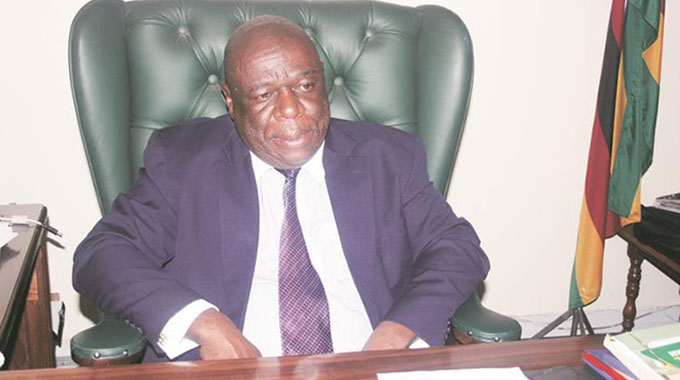
Primary and Secondary Education Deputy Minister Professor Paul Mavima said the fund will be used to repay loans from institutions that would have provided funds for school construction.
“The issue of the National School Building Fund will be central to the success of Joint Venture Partnerships. Any investor into education infrastructure will want assurance that they will be able to recoup the investment together with its residual value or profit.
“With the fund, each learner will make a contribution. On a termly basis, a predetermined amount will be levied on each learner and that amount will be deposited into an escrow account (the building fund).
“Our priority will be in satellite areas where there is no infrastructure to talk about. We no longer want a situation where students are learning in tobacco barns, under trees or with inadequate learning resources.”
Since 2014, Government has condemned more than 1 400 satellite schools where children were learning in squalid conditions.
Education expert Dr Peter Kwaira said there is need for Government to guard the fund against abuse.
“The idea is noble. However, there is need for transparency because we are witnessing many cases of corruption and abuse of funds in public institutions,” he said. If there is proper management of funds, the project is bound to succeed.”



 Online Reporter