admin
admin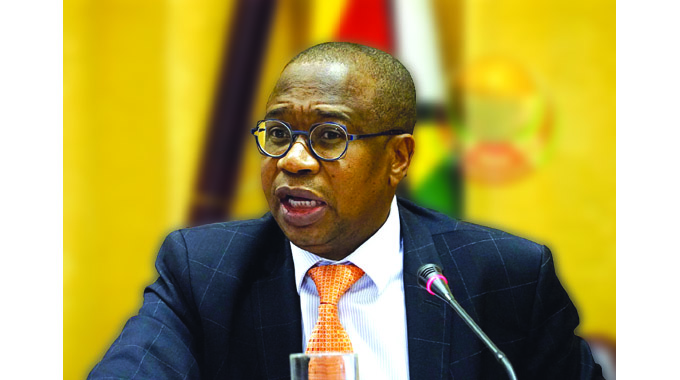
Farirai Machivenyika Senior Reporter
Economic prospects next year show estimated growth of five percent with favourable international prices of commodities, reasonable rains, more energy generated, the continued use of the multicurrency regime, tight monetary and fiscal policies, and mobilisation of domestic resources, Finance and Development Minister Mthuli Ncube said yesterday.
Speaking during Parliament’s pre-budget seminar, running in Harare from yesterday to Monday, he said the budget will focus on ”deepening economic transformation”, and will be guided by the need to entrench prevailing macro-economic stability, with no overdraft at the Reserve Bank of Zimbabwe and maintaining the fiscal deficit at under three percent of GDP.
“The 2023 budget will be based on the macro-economic framework presented in the 2023 pre-budget strategy paper which has a growth projection of five percent,” he said.
Apart from favourable commodity prices and the expected good rains, economic growth will also be anchored on improved power supplies, tight monetary and fiscal policy and the continued use of the multi-currency regime. Prof Ncube added that revenue collections are expected at $3,1 trillion in line with the growth projections with almost all, $2,9 trillion, being tax revenues.
The rise in revenue comes from increased efficiency at the Zimbabwe Revenue Authority and the growth of the economy meaning there is more to be taxed.
“Expenditures are projected at $3,4 trillion of which 44,7 percent will go towards compensation of employees at $1,5 trillion while capital expenditure would be allocated $23,7 percent of the total expenditures, among other expenditures,” Prof Ncube said.
Government would strengthen the public finance management system in order to address accountability and risks to budget sustainability especially the accumulation of domestic arrears and extra-budgetary expenditures.
Subsidies would be rationalised ensuring that such expenditures are budgeted for and approved through the annual estimates of expenditure while disbursements by Treasury will be linked to available revenue and within the approved budget.
Government’s procurement process will be subjected to due diligence using the concept of value for money.
Priority areas for the 2023 budget will include economic growth and stability, supporting productive value chains optimising the value of natural resources, infrastructure development, ICTs and the digital economy, women gender equality, SMEs, war veterans, youth, sport, arts and culture, devolution and decentralisation and engagement and re-engagement, said Prof Ncube. Owing to the illegal sanctions imposed on the country, Government was ramping up mobilisation of domestic resources since there was no access to affordable, long-term loans from multilateral agencies or others outside the country.
Speaker of the National Assembly Advocate Jacob Mudenda also stressed the need for Zimbabweans to leverage on domestic resources given the issues that have affected the world economy recently.
“The Covid-19 pandemic and the Russia-Ukraine conflict have slowed down the pace of our economic growth to 3 percent down from an average of 6 percent as projected in the National Development Strategy1.
“It is, therefore, imperative that the country leverages on domestic resource mobilisation in the wake of unpredictable and volatile aid as well as the skewed Foreign Direct Investment as a result of the debilitating illegal sanctions,” Advocate Mudenda said.
“The negative impact of sanctions on our economy should be tackled head on guided by the President’s mantra: Nyika inovakwa igotongwa nevene vayo or ilizwe lakhiwa njalo libuswa ngabanikazi.
“To that an extent, domestic resource mobilisation speaks to strategic human capital deployment that is highly productive. Thirdly, needless to remind this august gathering that our country has not been spared from the rising energy and food inflationary pressures, which have been exacerbated by the demand-supply imbalance that has occurred globally due to the Russia-Ukraine conflict.
“The resultant painful rise in the cost of living is now threatening to push many people into poverty. We are, therefore, expected to propose strategies to push the masses out of poverty and offer solutions for our country’s most pressing challenges. The solutions should largely be anchored on vigorous domestic resource mobilisation in order to accelerate economic transformation.”



 Online Reporter