admin
admin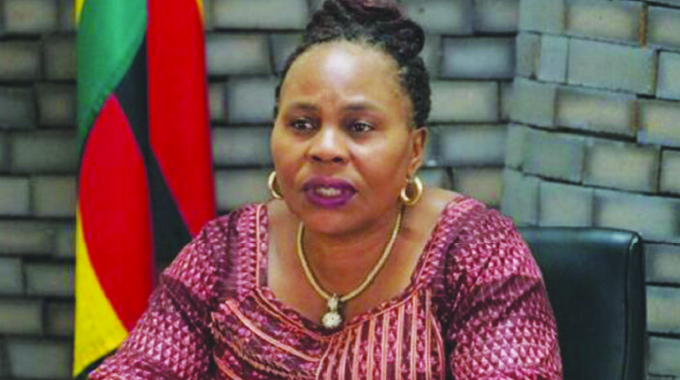
Mutsawashe Mashandure-Herald Correspondent
Small and medium-sized enterprises will be grown through training, market access, funding and cluster development, Women’s Affairs, Community, Small and Medium Enterprises Development Minister Monica Mutsvangwa pledged yesterday.
Addressing SMEs in Harare at the official opening of the 2024 SME Summer Business School, organised by the Vision 2030 Movement, she emphasised the importance of empowering SMEs with skills that could drive economic development in the country.
The event ran under the theme: “Empower small and medium enterprises through a comprehensive set of objectives designed to foster business growth, skills development and sustainability.”
Minister Mutsvangwa, who was the guest of honour, stated that SMEs were the lifeblood of economies worldwide, serving as engines of innovation and job creation.
“Allow me to encourage the SMEs present to embrace the opportunities presented by this event and work together to shape the future of our businesses. I now declare the 2024 Summer Business School officially opened,” she said.
“Globally, SMEs account for 90 percent of businesses, 60 percent of employment and 50 percent of GDP, according to the World Bank in 2020. Zimbabwe is no exception, as micro, small and medium enterprises play a pivotal role in employment generation, wealth creation and poverty reduction,” she said.
The minister stressed that the empowerment of SMEs was central to achieving the National Development Strategy 1 and Vision 2030, as they contributed significantly through the provision of raw materials.
“Furthermore, under the current devolution and decentralisation thrust, MSMEs significantly contribute to provincial GDPs, as they constitute the majority of businesses operating throughout the country,” she added.
The Government was addressing the skills gap in the sector and was offering business management training to empower entrepreneurs.
“We are committed to providing technical skills training throughout the country to equip entrepreneurs with the necessary knowledge and skills to enhance their decision-making, problem-solving and leadership abilities so they can remain competitive and adapt to changing market conditions.
“I would like to encourage other SME associations to prioritise training in their programming to build the capacity of their membership,” she said.
Minister Mutsvangwa called for SMEs to register their businesses to enhance long-term sustainability. “Informality negatively affects the sustainability of a business as it limits access to business development support services from stakeholders, access to finance, market expansion opportunities, and regulatory compliance, among other issues.
“My ministry, in collaboration with SME associations, is working closely with other government departments to accelerate the formalisation of MSMEs in areas such as business registration, taxation, and licensing.
“The business operating landscape is evolving and becoming highly competitive, impacting SME operations. The adoption of digital technologies has become imperative for any business to stay competitive,” she said.
By embracing innovation, SMEs could enhance their resilience, efficiency, and market presence, thereby ensuring long-term growth and sustainability.
“We are all aware that innovation is the driving force behind the economic growth of any nation. In this regard, innovation is critical not only for surviving the challenges faced by SMEs but also for ensuring the existence of thriving businesses in this highly competitive environment.
“I encourage SMEs to leverage the power of digital technologies such as e-commerce platforms, social media marketing and data analytics to reach local, national and global audiences,” she said.
The Government had established innovation hubs at tertiary institutions to nurture and develop innovations in the country.
“It is common knowledge that SMEs are innovative by nature as they actively engage in developing new products and services. I encourage the sector to work closely with our tertiary institutions in perfecting their innovations and also with the Zimbabwe Intellectual Property Office to register and protect their innovations,” she said.
The minister called for stakeholders to engage to create a comprehensive and coordinated support architecture for the sector.
“This will ensure the development of effective supportive interventions that leverage the competencies of the stakeholders involved. Stephen Covey once said, ‘Interdependent people combine their efforts with the efforts of others to achieve their greatest success.’ Indeed, for us to achieve success in supporting the development and growth of MSMEs in Zimbabwe, we need to work together as a team.”
She applauded the Vision 2030 Movement for prioritising business skills training, as evidenced by the event.
“Zimbabwe has high levels of informality, with an estimated 86 percent of enterprises operating informally in the country. Your dedication to nurturing the entrepreneurial spirit in our country is truly commendable. Keep up the exceptional work,” she said.
Speaking at the same event, Vision 2030 Movement communication officer Mr Laxon Zambuko highlighted the importance of equipping SMEs with practical knowledge for business growth.
“It is essential to develop sustainable growth. We aim to transition from informal to formal business growth. A business that subscribes to the national agenda can facilitate individual growth over the years. For example, Strive Masiyiwa’s business evolved from an individual capacity into a sustainable enterprise.
“We are collaborating with the Zimbabwe Chamber of SMEs and chartered accountants to upskill entrepreneurs and startups so they can acquire various skills necessary for business.
“We look forward to moving around all provinces, leaving no one behind, training SMEs in entrepreneurship and ensuring they have a collective voice to contribute to frameworks that influence policies regulating and empowering SMEs,” he said.
Minister of Skills Audit and Development Paul Mavima emphasised the need for schools to provide entrepreneurial skills programmes.
“Today, at the official opening of the Summer Business School, we believe attendees have gained valuable skills that will enable them to contribute to economic development in the country, as well as become their own bosses. You will be able to know that you are the employer rather than just an employee,” he said.
Minister Mavima promised to open vocational schools that do not require formal qualifications.
“I don’t see how some skills should require qualifications; for example, in the carpentry sector, there is no purpose in requiring five O-Levels. As long as there is talent, they can perform well. Many people have all the qualifications, but they cannot perform the duties they were trained for. So, if we open schools that do not require formal qualifications, we can train them to be entrepreneurial skilled,” he said.



 Online Reporter