Chronicle Editor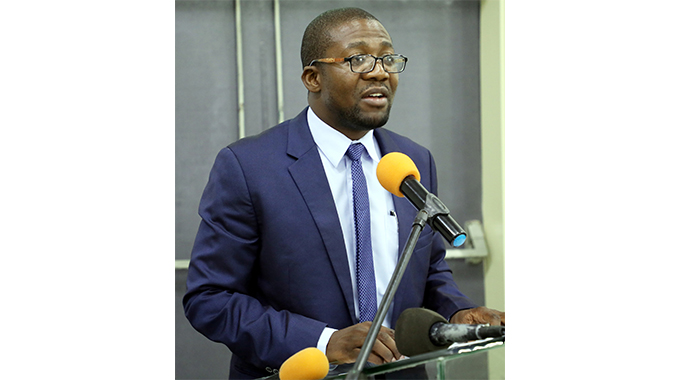
Nqobile Bhebhe recently in Victoria Falls
ZIMBABWE is spending huge amounts of its budgetary provisions towards building resilience, climate adaptation, and dealing with the direct severe impacts of extreme weather patterns.
Minister of Environment, Climate, Tourism and Hospitality Industry, Nqobizitha Mangaliso Ndlovu said this on Friday during the inaugural Africa Voluntary Carbon Credits Market Forum in Victoria Falls where he underscored the need for climate finance discussions that interrogate how governments in developing countries can be better equipped to respond to these crises.
“Zimbabwe as an example, spends huge amounts of its budgetary provisions towards building resilience and climate adaptation for our people through the Climate Smart agriculture programme,” he said.
“Huge sums of money are spent in dealing with the direct severe impacts of extreme weather patterns, Cyclone Idai being one of the recent examples.
“It, therefore, is critical that climate finance discussions interrogate how governments in developing countries can be better equipped to respond to these crises.
“This is not a unique Zimbabwean story, we know the recent climate change-related tragic events in Malawi, Mozambique, South Africa, and many more,” said Minister Ndlovu.
The forum was held under the theme “Accelerating Africa into Climate Economy”. The minister further noted that Africa is gifted with an abundance of natural resources from forests to wildlife, water, good agricultural soils, and minerals, among others.
These resources feed the world’s industrial machinery and sustain the economies of our people, countries, and those of our partners beyond the continent. Sustainable exploitation of these resources is crucial to ensure that our future generations can also enjoy the associated benefits.
“Unfortunately, Africa has for a long time not been benefiting enough from its own resources and the services they provide to the rest of the world due to the unbalanced structure of the global economy,” Minister Ndlovu said.
“Africa needs climate financing as a matter of urgency and more innovative ways of raising climate finance are needed so that our adaptive capacity and resilience building is enhanced.”
He added that in the global quest to achieve green growth, the world is increasingly looking to African nations to engage in projects and programmes that contribute to the reduction of greenhouse gas emissions at the same time generating carbon credits that can be sold on the international market to entities and governments that seek to address their carbon footprint.
However, the minister said Africa has not benefited much in this trade as it was dominated by the so-called “large developing countries”, some of which were also among the highest carbon emitters.
“It is now time that the continent, which is disproportionately affected by climate change, fully benefits from the sale of carbon credits generated from our sovereign assets,” he said.
The Government recently came up with a carbon credit framework that will see it collecting 50 percent of revenue from the sale of climate mitigation securities.
Incomes from the carbon credit will be deposited into the National Climate Fund, and channelled towards funding of climate-friendly projects.
Revenue to local investors has been capped at 30 percent, while foreign investors will be entitled to at least two percent.
The Government nullified all offset programmes and gave producers of the securities two months to comply with new rules, including handing over half of their revenue.
The global market for carbon offsets is worth roughly US$2 billion and is projected to grow to as much as US$1 trillion in 15 years, according to some estimates.
The benefits of trading voluntary carbon credits on the Victoria Falls Stock Exchange (VFEX ) include increased liquidity, standardisation, access to capital, and transparency.
As such, Minister Ndlovu said Governments, local communities, the private sector, and development partners have a role to play in halting global warming.
He noted that this shared responsibility must not escape the foundation of carbon trade, because it is an “unusual” business where past and present pollution has been turned to trade.
“We, therefore, need to set up the appropriate institutions to facilitate the trade including relevant carbon exchanges, registries, and co-ordination mechanisms.
“We also need to define how local communities and countries can benefit from carbon trading on the voluntary market,” said Minister Ndlovu.


 Online Reporter