aurora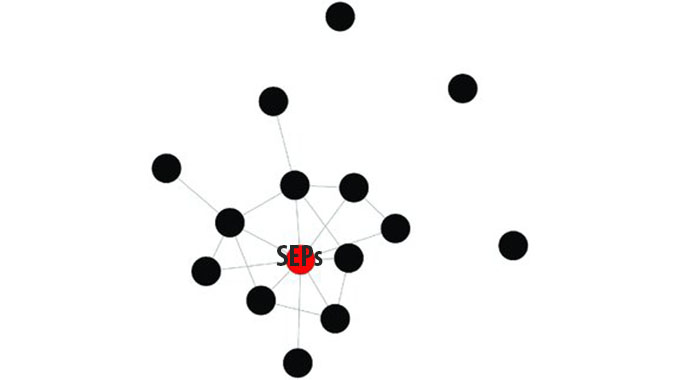
Business Writer
There are growing calls for the government to speed up centralisation of ownership of state enterprises and parastatals (SEPs) to eliminate inconsistencies in governance and ministerial interferences.
While the Government approved the centralisation of ownership of SEPs last year, well-placed sources told Business Weekly that there “is resistance building up” as some ministers feel the move amounts to “stripping them of their powers and influence.”
Currently, Zimbabwe has a decentralised SEPs ownership model, where the Government shareholder function is spread across different line ministries. The ownership model has been associated with a number of challenges, including inconsistencies in governance practices, ministerial interferences, delays and or reversals of the Government approved SEPs reforms due to vested interests within some line ministries, and generally weak and passive oversight function, among others.
Under the centralised ownership model, a single Government institution carries out the role as shareholder in all companies controlled by the State.
The current model has been related to the poor performance of the SEPs sector not only in Zimbabwe, but the world over, wherever this model has been followed.
As such, many countries in the region, such as South Africa, Mozambique, and more recently, Namibia and Zambia; as well as those on the continent and beyond, such as China, Malaysia, France, have migrated from the decentralised ownership model in favour of centralised or dual ownership models.
“There are still discussions around that important issue and officially, they are progressing well but there is underground lobbying going on to have the model set aside,” said one source who declined to be named because the matter is private.
“Some ministers want to have the state enterprises to remain under their ministries . . . so naturally, you are bound to face resistance.”
A renowned corporate governance expert said government should expedite implementation of the new model to enhance governance of the SEPs.
“Why would we continue having a situation were a new minister cause board or management changes in all state enterprises under him or her. This model should be able to address this and government should move with speed.”
No official comment could be obtained from the Ministry of Finance and Economic Development by the time of going to print yesterday.
Analysts say the proposed model was critical to restore the viability of SEPs and enhance performance.
“Interference especially from the ministries is the biggest challenge affecting SEPs . . . so to have all entities fall under one institution is a viable way of eliminating this. By doing so, you will continuity of policies,” said Carlos Tadya, an analyst with a local research firm.
The State Enterprises and Parastatal Reform Agenda remained one of the key policy thrusts for Government.
The other supportive policy priorities that the Government said it will implement this year include privatisation of 11 SEPs, six subsidiaries of the Industrial Development Corporation of Zimbabwe and 17 Zimbabwe Mining Development Corporation (ZMDC) subsidiaries.
All boards for ZESA Holdings subsidiaries will be dissolved to allow Zimbabwe Power Company to engage strategic partners for power generation projects.
Silo Foods would be recapitalised through strategic partnership.
The Government will implement recommendations by the performance reviews for 10 SEPs to come up with effective turnaround strategy options.
The 10 SEPs identified for this review process include ZMDC, Zimbabwe National Road Authority, the Scientific and Industrial Research and Development Centre, Allied Timbers, the Infrastructure Development Bank of Zimbabwe, Agribank, Small and Medium Enterprises Development, the Zimbabwe Electricity Distribution Company, ZimParks, Environmental Management Agency, Forestry Commission and Zimbabwe Revenue Authority.
There would be the development and implementation of reform strategies for Printflow, Traffic Safety Council of Zimbabwe, Kingstones, CMED, National Oil Infrastructure Company, the National Pharmaceutical Company and the Agricultural and Rural Development Authority.
With regards to TelOne and NetOne, the Government is working with the World Bank Group on an appropriate privatisation roadmap.



 Online Reporter