admin
admin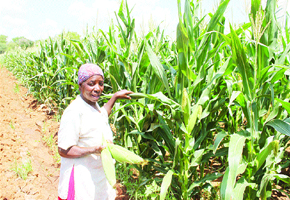
The move is meant to improve food production in the country and to counter the effects of climate change,which has of late become a major challenge for farmers especially in the southern region.
Conservation agriculture, popularly known as Gatshopo, refers to a resource-saving crop production technique that thrives to achieve high yields while conserving moisture with less soil disturbance.
The method also uses mulching and crop rotation.
Addressing farmers during the 2012 national best extension worker of the year in Bubi District in Matabeleland North yesterday, the Permanent Secretary in the Ministry, Mr Ngoni Masoka, said research by the Ministry has proved that the method has the potential of achieving improved yields despite the dry spell and urged all farmers to embrace it.
“Our experience is that farmers who practise conservation technology generally get better yields than those not practising. There is also increasing evidence pointing to the fact that even return per labour invested in conservation agriculture is substantial for those farmers practising the method,” said Mr Masoka.
“As a ministry we have put together a national framework for conservation agriculture where we have set a target that 500 000 households should be practising critical components of conservation agriculture by 2015, covering 250 000 hectares.
“To date more than 300 000 households are practising covering just over 100 000 hectares. We need to ensure that we all have the knowledge and skills to support such activities.”
Mr Masoka challenged extension officers to promote the adoption of the technique and equip farmers in all parts of the country with the requisite information.
“I would like to see extension staff who are alive to critical issues such as conservation agriculture. You should be judged by the extent you have organised your farmers in terms of numbers and level of adoption of conservation farming in your wards,” he said.
Stakeholders in the agriculture sector and implements manufacturing companies have also embraced conservation farming and vowed to produce implements that are suitable for the technique.
Mr Masoka said climate change has become a real challenge for farmers across the country and urged extension officers to work closely with them on how to reduce its effects.
“I recognise and appreciate the current training being done to assist field staff on the impact of climate change on agriculture. It is important that our extension workers are able to interpret climate information to farmers for them to make sound decisions at the time of planting, the varieties to plant as well as probabilities of having dry mid seasons,” said Mr Masoka.
He, however, acknowledged that more resources were needed to fully equip extension workers and said the Government was committed towards improving their conditions of service.
Mr Masoka said this year alone his ministry managed to acquire 492 motorbikes for extension workers and paid tribute to development partners who have also extended technical assistance to extension workers and farmers.
He also reiterated the need to improve irrigation and livestock farming in order to broaden the sector and help improve livelihoods for ordinary people.
Said Mr Masoka: “Dependency on rain-fed agricultural production has become more unsustainable especially for small holder farmers and most farmers without irrigation facilities, hence the need for our extension staff to come up with initiatives that mitigate challenges posed by drought,” he said.
“This calls for extension staff to support livestock activities, including small stock such as goats, sheep and poultry. Our farming system is both crops and livestock and is thus integrated.”



 Online Reporter