

 dyton mupawaenda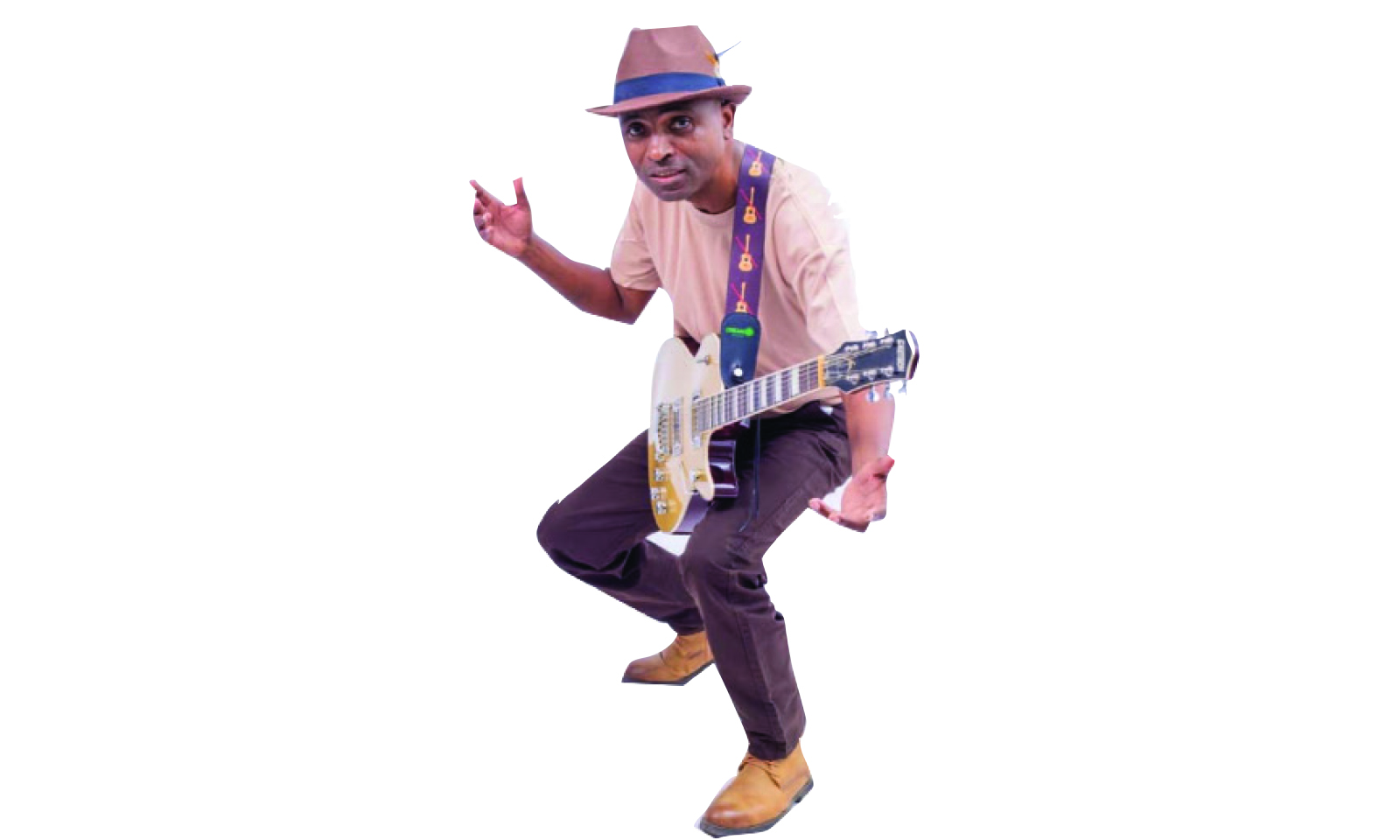
Trust Khosa-Zimpapers Arts and Entertainment Hub
FIERY rhythm guitarist Innocent Mjintu has recounted being by Leonard Dembo’s bedside, along with his widow Eunice Munatsi, when the icon passed away.
Dembo died on April 9, 1996, at the age of 36. He would have turned 65 this year.
Dembo’s departure left a wound that Mjintu is still nursing, 29 years later.
At 53 years of age, Mjintu, the only surviving member of the then mighty Barura Express, shared how that day continues to affect him.
He still believes he will never have another paymaster who prioritised his workforce’s welfare as Dembo did.
Plucked from the back of beyond and exposed to the city lights, Mjintu believed he had settled until Dembo fell ill and eventually died.
He felt the world had collapsed around him.
Mjintu said he even contemplated quitting music to pursue a different dream.
He took the Zimpapers Arts and Entertainment Hub down memory lane as he narrated his stint with the late inimitable guitarist and exceptional composer.
Mjintu vividly remembers each detail from the time when he was recruited into the Barura Express family.
“I was always with Mukoma Dembo in his last days in the hospital, along with his wife, Amaiguru Mai Morgan (Eunice Dembo), and his mother Gogo Sukai Pasipanodya.
“On the day he died, I was by his bedside deliberating on what we should do as a band to raise money for his medical bills and the welfare of the family. He had been unwell for a year-and-a-half, but this time the situation was worse and he died in my presence,” he recalled.
“I was devastated when he died because it meant that we had to man up and be our own men as well as try our best to support his widow. Morgan, Tendai and Fenny (Fenistia) were still young when their father died. It was as if I had lost my father since my life depended on him.”
Mjintu disclosed the message Dembo would tell him in his last days.
“There was a time when he would hold my hand and advise me to be strong. It seems as if he knew he was dying because his look showed it all. He advised me to stick with his family and assist them during happier and trying times,” reflected Mjintu.
After Dembo’s death, the multi-instrumentalist shared how he gathered the courage to continue doing music.
“Like I said earlier, his death really affected me, and at one point, I contemplated quitting music. One day, I heard a voice that told me to soldier on and continue doing music. In a way, I think Mukoma Dembo had anointed me because I recall the time he invited me for some compositions,” he shared.
He also revealed how Dembo made him a partner in creativity when it came to compositions.
“Most of the guys were shocked that I was Mukoma Dembo’s favourite, and he was the person who taught me how to write songs and arrange music. I know it might sound like an April Fool’s Day prank, but I was actually the one behind most of the hits.
“I would give him leads and melodies, and he ended up writing some of those notes in his book, which he later perfected.”
As their fortunes took a serious downturn, Mjintu claims he ended up supplementing his earnings by playing challenge pool tournaments.
“I can play pool, and at one point, I eked out a living from that game. I would place bets with opponents, winning most tournaments, and it was just fun that helped me put food on the table,” he recalled.
Mjintu, who finished recording the album “Babamuni” after Dembo’s death, also narrated how he tried to revive Barura Express.
“I sat with Maiguru Mai Morgan, who gave us the green light to hold a series of shows under the name Barura Express. We tried our best with the likes of Crispen Dzimbiru, Kidson Madzorera, and others, but the band folded. In fact, all the guys have died, and I am the only surviving band member at the moment.”
Mjintu told the Zimpapers Arts and Entertainment Hub that he has buried many of his peers.
“I get scared to note that I have witnessed so many deaths in Barura Express. It’s scary losing the people you worked with over time because you become like a tight family.
“In my case, I will always miss those guys because we were very close and enjoyed merry-making together,” he shared.
Mjintu reckons he met Dembo by God’s grace after being left stranded in Harare by the late Richard Mapfuwamhandu of Nyami Nyami Sounds.
“I came to Harare in 1988 to join Nyami Nyami Sounds, but things did not go well. I think I was around 17 or 18 years old then, and I had nowhere to go because I had travelled all the way from Bulawayo in search of greener pastures.
“Dembo sent his manager, Makwiramiti, who convinced me to join the band,” he narrated.
“I joined Dembo at a time when he was deserted by some of his band members who wanted to form their own band. Dembo liked my skills and roped me in as his rhythm guitarist.
“He appreciated that I was versatile enough to start a song by playing the rhythm guitar,” he said.
Mjintu believes his versatility paid off as he became a vital part of the band.
“I was part of the crew that recorded Chitekete, and I also played drums on the album Mazano when the drummer fell sick.
“I used to play drums for fun, but Dembo had an eye for talent and an ear for good music. To be honest, I was reluctant to play drums, but I took a gamble,” recounted Mjintu.
The rhythm guitarist also had a fruitful stint with Alick Macheso’s Orchestra Mberikwazvo, where he helped the outfit record two albums – Vapupuri Pupurai and Zvido Zvenyu Kunyanya which carries the smash hit song, Madhawu.
“I had a wonderful time with Baba Sharo, but I left to pursue my dream with ZARE (Zimbabwe African Rhythm Experts), with whom I have recorded 25 albums. I make sure to release two albums per year – one at the beginning of each season and the other towards the year-end,” he emphasised.
Although he was yet to make an impact as a solo artist, he insists he is following his heart.
“I don’t care if I record 50 albums without being called a superstar because I know my music will be there for my kids. It’s timeless music that will find its way onto the market. After all, I am following in the footsteps of my mentor – Leonard Dembo,” he stressed.
As the world remembers Dembo each year on April 9, Mjintu’s name should not be forgotten as well.


 Bongani Ndlovu
 Online Reporter