I belong to the last group of journalists who were directly trained by Mkays, Mkhululi Sibanda when he was the News Editor of the Chronicle before his elevation to become the Sunday News Assistant Editor.
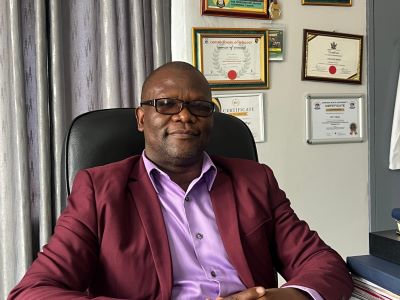
I joined the Chronicle in 2013, just a week before the Harmonised Elections. Having spent only a few months under his direct supervision before his promotion, I may be one of the least qualified people to claim that I truly knew Mkays, or uChief, as most journalists affectionately call their seniors. Yet, over the years, I earned the privilege of calling him a mentor, a friend and in many ways, a brother.
While I was still at the Chronicle, hardly a week passed without me dropping by his office. We would discuss journalism, politics, history and life. His life was firmly grounded in journalism, and every conversation with him inevitably found its way back to the profession he loved.
Mkays never tolerated mediocrity.
As a student reporter, I convinced myself that because it was only my second week in the newsroom, I could attend the morning diary meeting without a diary. After all, I was there to learn, I foolishly reasoned.
When it was my turn to present, I confidently announced that I did not have a diary. Mkays exploded.
“Why are you here, Cde? You are not serious. Get out of my newsroom.”
I giggled, convinced he was joking. He wasn’t.
He ordered me out of the newsroom and instructed me to return only when I had a diary. About an hour later, I was called back, I’m told there are some who never returned after similar encounters.
That moment shaped my journalism career and has defined me even when I joined Corporate Communications.
Your diary may not always contain the strongest story ideas, but you must always have one. It is far better to present ideas that are rejected than to arrive with none at all. From that day onwards, I never attended another diary meeting without a diary.
Although our time together as editor and student reporter was brief, it was enough for me to appreciate another side of him.
He could tear your story apart during the diary meeting, but afterwards invite you for a walk, encourage you and remind you that the newsroom was never meant for the faint-hearted. His criticism was never personal; it was his way of making you a better journalist.
Our relationship only grew stronger after his promotion. I continued visiting his office almost every week. We spoke about professional matters and social issues, and Mkays genuinely enjoyed conversations with people he believed were intellectually curious.
He had an exceptional understanding of national affairs, but he remained deeply invested in Matabeleland. He believed the region deserved serious, sustained coverage, something both the Sunday News and the Chronicle consistently still pursues.
His network of sources was extraordinary. Despite enjoying close relationships with influential people in government and other sectors, he remained remarkably humble in his interactions.
Mkays was also committed to growing academically. He enrolled at Lupane State University for his undergraduate studies, where his research examined media framing, specifically how Zimbabweans living in South Africa were portrayed by the local media. His work interrogated the prominence given to the Injiva narrative compared to the experiences of Zimbabweans who had established themselves as successful businesspeople in South Africa. His research demonstrated how language can reinforce stereotypes or become a tool for empowerment.
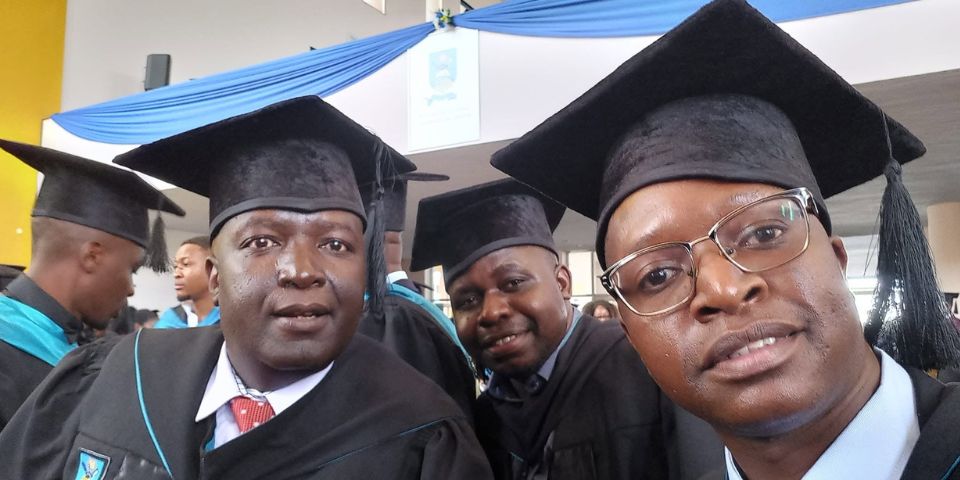
In 2020, we became classmates after enrolling for the Master of Science in Journalism and Media Studies. Those were memorable years. During the Covid-19 period where distance learning was embraced, his office became our study room, where several classmates gathered for discussions and examination preparations. The debates were rigorous, and many of our colleagues still remember those sessions fondly.
Mkays graduated as the second-best student in our class, behind Centre for Innovation and Technology (CITE) News Editor Leslie Moyo. He was capped by His Excellency, Dr Emmerson Mnangagwa, the President and the Chancellor of Zimbabwe’s State universities.
His academic interests naturally complemented his journalism. His Master’s thesis focused on memory studies, a field he had long practised through his weekly Lest We Forget column. Through that platform, he preserved the stories of Zimbabwe’s liberation fighters, including that of my current boss at the City of Bulawayo, Town Clerk Mr Christopher Dube.
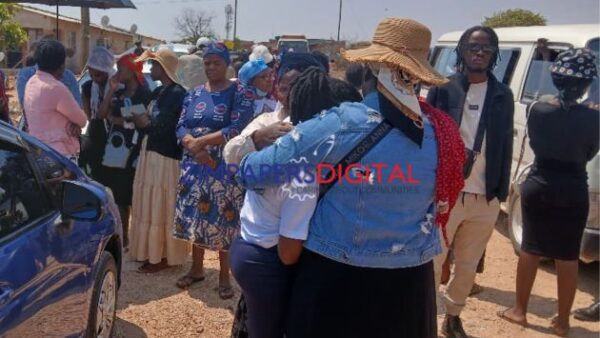
Mkays’ passing feels deeply personal.
His ability to connect effortlessly across generations speaks volumes about the man he was. While he belonged to the Sibanda family, those of us in journalism and communications, politics and among the country’s former freedom fighters all feel entitled to say he belonged to us too.
He lived and breathed journalism. Yet beyond the profession, he was devoted to his children, whom he always placed above everything else.
His sudden passing has left an immeasurable void because Mkays belonged to so many people.
Impilo yakho iphunyukile wasitshiya singazwisi.
We are left with countless “what ifs”, but they cannot change what has happened.
Dawu, your life reminds us that although legacy media faces unprecedented challenges from new technologies, journalism remains an indispensable tool for national development when it is driven by truth rather than the pursuit of likes and trends.
Today, we mourn with your family, especially your children, whom you loved beyond measure.
As you rest eternally, you leave behind a remarkable legacy. Those of us who knew you closely understand the treasure that Zimbabwe has lost.
Lala ngokuthula, Dawu.
You were a mentor, a brother, a father figure and a friend to many.
Nqobile Tshili is the Corporate Communications Assistant at the City of Bulawayo and writes in his personal capacity.