Online Reporter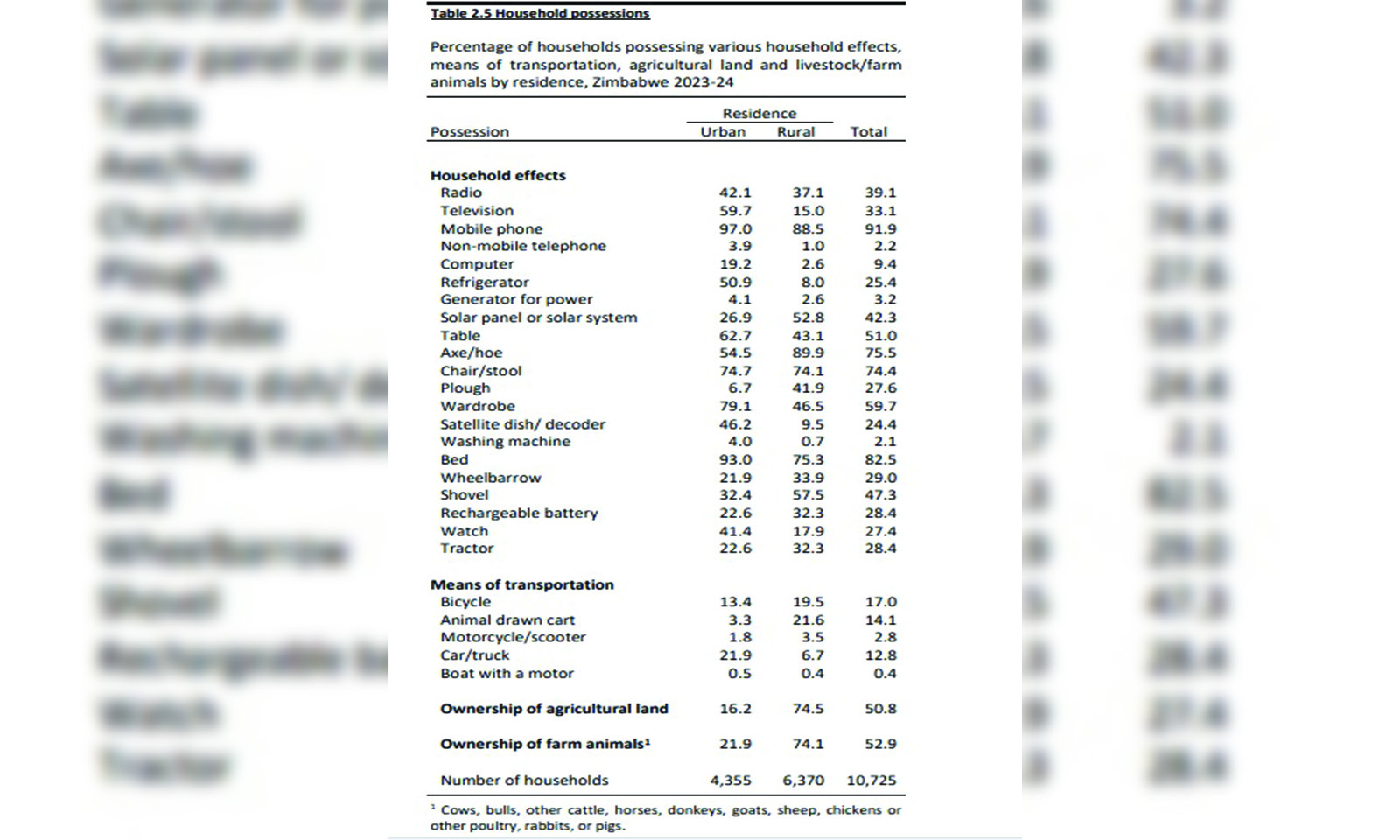
Nqobile Bhebhe,Zimpapers Business Hub
Mobile phones, beds, and agricultural tools such as axes and hoes are the most commonly owned household items in Zimbabwe, according to the latest national survey on household possessions conducted in 2023–24.
The 2023–24 Zimbabwe Demographic and Health Survey (ZDHS) was conducted by the Zimbabwe National Statistics Agency (ZIMSTAT), in collaboration with the Ministry of Health and Child Care (MoHCC), from December 2023 to May 2024.
According to the findings, mobile phone ownership stands at an impressive 92 percent, making it the most ubiquitous item across households nationwide.
Beds follow closely at 83 percent, while 76 percent of households reported owning either an axe or a hoe, reflecting the country’s agrarian roots and continued reliance on subsistence agriculture.
“The survey also collected information on household effects, means of transportation, and ownership of agricultural land and farm animals. The most commonly owned household items in Zimbabwe are mobile phones (92 percent), beds (83 percent), and axe or hoe (76 percent),” the report noted.
While the majority of households across the country share similar basic items, the survey noted a significant divide in ownership trends between urban and rural households.
Urban households are more likely to possess a broader array of household goods, including cars, trucks, and electronic appliances.
“Ownership of household items is higher among urban than rural households except for agricultural equipment or tools, solar panels, and rechargeable batteries,” the report said.
Transportation patterns also differ significantly, with private cars and trucks being more common in cities.
“Cars or trucks are households’ most common means of transport, more so in urban areas (22 percent) than in rural areas (7 percent),” the survey findings revealed.
In contrast, rural households dominate in agricultural resources, with the majority owning land and livestock.
“Rural households are more likely to own agricultural land (75 percent) and farm animals (74 percent) compared to urban households (16 percent and 22 percent),” the report added.