

 admin
admin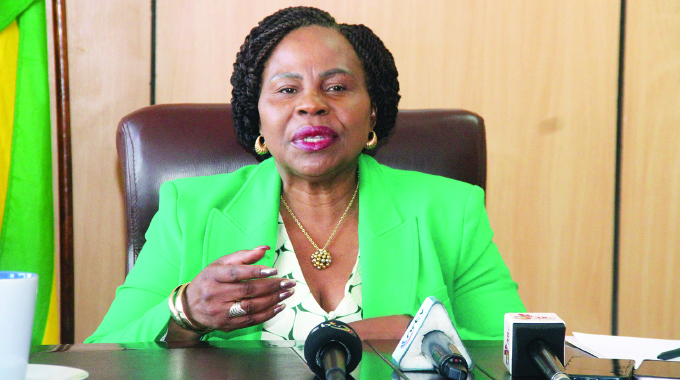
Rumbidzayi Zinyuke in CHINHOYI
Zimbabwe needs to come up with a sustainable resource mobilisation strategy for one-stop-centres and safe shelters so as to continue providing vital support to survivors of sexual and gender-based violence (SGBV), a Cabinet minister has said.
With support from the United Nations Population Fund (UNFPA) and other partners, Government has established eight one-stop-centres in Harare, Manicaland, Mashonaland West, Mashonaland Central, Masvingo, Midlands, Bulawayo and Matabeleland South, which have been instrumental in providing comprehensive services to survivors.
However, it has been a challenge to secure resources to sustain the operations of the centres and related services.
The Ministry of Women Affairs, Community, Small and Medium Enterprises Development and partners, this week embarked on a drive to assess the state and needs of one-stop-centres and community shelters in Mashonaland West and Mashonaland Central.
The Ministry has also assumed responsibility over some safe shelters previously run by Civil Society Organisations (CSOs) in Makonde, Muzarabani, Hauna and Hurungwe.
Speaking before the fact finding mission, Women Affairs Minister Monica Mutsvangwa said a new funding model would ensure continuity of the services that were being offered to survivors.
“We had the Spotlight Initiative supported by the European Union, which helped us come up with these one-stop-centres and safe shelters.
That funding has come to an end, but sustainability is the most important thing.
“As Government, we are now doing a fact-finding visit to see how we can sustain these institutions which help a lot of our women and children who are being abused in the homes.
“We are working with everybody, the civil society organisations and development partners to make sure that we look at some of the low-hanging fruits.
“We can quickly harness to raise funds to solve challenges like increasing the workforce, getting clean water to the centres and accessing food for the survivors,” she said.
Minister Mutsvangwa expressed hope that the Presidential Borehole Drilling Scheme could come in to assist with the provision of water.
She also said the involvement of the Ministry of Public Service, Labour and Social Welfare would be for the provision of food.
The sustainability of one-stop-centres is crucial to maintain the gains recorded since their inception, added Minister Mutsvangwa.
“One of our major mandates is to make sure that we reduce the number of gender-based violence cases and the one-stop-centre and safe shelter model is something we are proud of.
“This is where we are giving an opportunity for the girl child to access help, for women to be empowered, and the communities can all be taught also about GBV.
“We want our people to know, especially women and young girls, that they should not to suffer in silence,” she said.
The one-stop-centre model ensures access to holistic services namely health, psychosocial support, legal and police services, by survivors under one roof at no cost, whilst providing a confidential and friendly environment that encourages survivors to report gender-based violence cases.
Safe shelters provide temporary safe shelter for survivors in need while their cases are being handled.
UNFPA country representative Ms Miranda Tabifor said the one-stop-centre model was put in place with the vision to attain zero gender-based violence (GBV) in Zimbabwe.
“The vision of the Ministry and the partners, especially UNFPA that supported the setup of these one-stop-centres is to have a sustainability plan.
“Because, even though the project has ended, we still have survivors of gender-based violence.
“So, we have decided to undertake a needs assessment to determine how will we sustain these one-stop centres.
“With the recommendation and the guidance that we get from the Ministry, we should be able to have the statistics and evidence to continue the resource mobilisation strategy that we want.
“This is done to put in place measures to sustain the one-stop-centres,” she said.
Ms Tabifor said the one-stop-centres had contributed to sustaining and providing the much-needed approach of preventing GBV and helping survivors to regain their dignity after they have experienced gender-based violence.
She said there was scope for more partnerships in future between the private sector, Government and development partners to ensure issues of GBV are addressed holistically.
About one in three women aged 15 to 49 in Zimbabwe have experienced physical violence while about one in four women have experienced sexual violence since the age of 15.
At the Chinhoyi Provincial Hospital one-stop-centre, an average of 350 GBV cases are being reported every year since 2019.
The centre has been assisting survivors who come through to access health and counselling services.
However, senior nursing officer, Sister Mary Tatira, said many survivors delay reporting cases.
“We expect victims of SGBV to report within the first 72 hours so that they can get health services like post exposure prophylaxis (PEP) and others. We realise that while some report within the time, there are some who report late.
“We still need to work hard to sensitise communities to come forward to report cases of GBV on time to ensure they get services,” she said.
But the centre is not providing legal and victim friendly services owing to unavailability of resources.


 Online Reporter