Online Reporter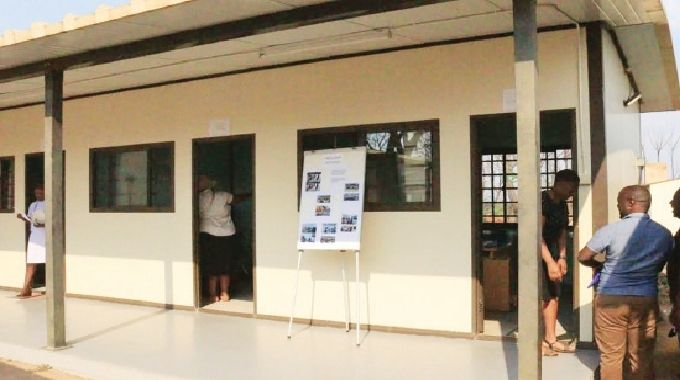
Thupeyo Muleya [email protected]
A small centre operating from a hospital in Umzingwane is making a significant impact in a district grappling with teenage pregnancies, child marriages, violence against children and HIV. For many survivors of abuse, it offers a lifeline through safety, medical care, counselling and legal support.
Community leaders say it is helping curb gender-based violence and new HIV infections, while health officials point to its success as proof that coordinated interventions can produce tangible results.
The One Stop Centre (OSC), supported by the National Aids Council (NAC) and run by the Zimbabwe Association of Church Related Hospitals (ZACH), is increasingly being viewed as a model that could be replicated across Matabeleland South.
Established in 2018 with funding from The Global Fund through UNDP and NAC, the centre is one of only four such facilities in Zimbabwe. The others are located in Umguza, Kwekwe and Chimanimani.
At its core, the centre focuses on providing support to Adolescent Girls and Young Women (AGYW) aged between 15 and 24, a group considered particularly vulnerable to HIV infection and abuse.
Speaking during a NAC media tour of HIV and Aids programmes in Matabeleland South, ZACH Programmes Officer for Umzingwane, Miss Portia Ndlovu, said the centre was designed to address the factors that place young women at risk.
“The purpose is to reduce HIV incidence among AGYW aged 15 to 24 years through layered interventions that address the determinants of HIV infection,” explained Miss Ndlovu.
Unlike traditional referral systems where survivors move from one office to another seeking help, the One Stop Centre brings key services together in one place.
Miss Ndlovu said the centre operates through four major pillars: psychological support, police services, legal services and medical services.

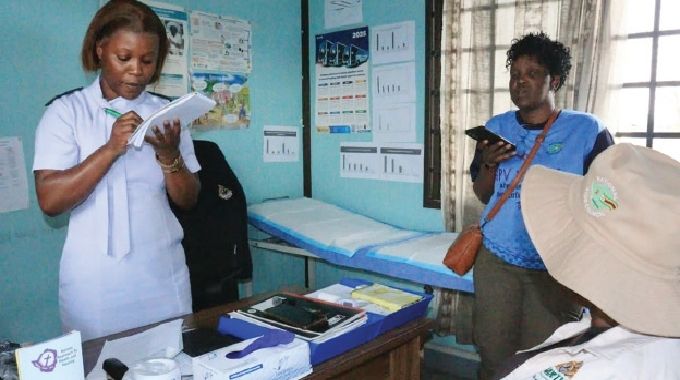
Because the facility is housed within a hospital, survivors can immediately access treatment, counselling, HIV testing and preventive medication without unnecessary delays.
“We also link survivors who test positive to HIV care services such as HIV testing and ART initiation through the OI department. The hospital is also offering recency HIV testing which determines if the positive status is due to the abuse or is an old infection,” said Miss Ndlovu.
The importance of early intervention cannot be overstated. Survivors of sexual violence who report quickly can access post-exposure prophylaxis, which significantly reduces the risk of HIV infection.
Centre records show that between January and September 2025, 122 adolescent girls and young women were tested for HIV following incidents of abuse. Five tested HIV positive due to abuse, representing a 4.1 percent yield.
The number of people seeking help at the centre also reflects both the extent of the problem and growing confidence in the services offered.
In 2024, the facility assisted 217 survivors. That figure rose to 255 in 2025. By June 2026 alone, 150 survivors had already received support.
Of those cases, 74 in 2025 and 45 during the first half of 2026 involved sexual abuse. However, only 11 cases in 2025 and 10 in 2026 were reported within 72 hours, highlighting the need for greater awareness on the importance of reporting abuse quickly.
According to Miss Ndlovu, the centre’s success lies in its ability to work closely with communities.
The OSC collaborates with the SASA programme, a community-based initiative that focuses on preventing violence against women and girls. Community volunteers help identify survivors, raise awareness and refer victims to the centre.
“The OSC model closes leakages in GBV management by having most necessary services under one roof. It increases survivor safety and perpetrator accountability,” she said.
She added:
“What has helped is being located at the hospital, having community cadres at ward level, buy-in from stakeholders and traditional leaders, and conducting mobile OSCs in hard-to-reach areas.”
The centre has also introduced practical support measures to help survivors navigate difficult situations.
These include escort services to court, district shelters that provide temporary safety, dignity packs for survivors and agreements with medical suppliers to ensure essential medicines remain available.
The impact is beginning to show not only in individual cases but also in district-wide health indicators.
Umzingwane District Aids Coordinator Mr Bongani Ngwenya said some encouraging trends have emerged over the past year.
“In a district with 73 000 people and 20 wards, in 2025 we had 238 cases of teenage pregnancies between January to June. In 2026 that has reduced by 16 cases,” said Mr Ngwenya.
“The incident rate of HIV has gone down to 0,3 percent in the first half of 2026 compared to 0,5 percent in 2025. Prevalence has gone down from 16 percent in the first half of last year to 13,3 percent during the same period this year.”
The centre’s growing influence has also been noticed by law enforcement officials.
A Victim Friendly Unit (VFU) police officer stationed at the centre said awareness campaigns were helping to reduce abuse cases and encouraging people to seek assistance.
“We are now handling around 10 criminal cases which include rape and age mixing in sex,” said the police officer.
For counsellor Miss Marvelous Njanji, many of the stories that come through the centre reveal the social realities that continue to place children at risk.
“Most of the victims of sexual offences are children from poor backgrounds, child-headed families and those with absent parents working out of town or in the diaspora,” she said.
One Stop Centre Administrator Mr Bongani Sibanda said strong partnerships remain critical to the centre’s operations.
“We are using the referral system in coordination with the Ministry of Health and Child Care, Social Development and the Police and other stakeholders to address the cases and identify the victims,” he said.
Sister Blessed Ncube, a nurse at the facility, said bringing services together under one roof had reduced delays and improved outcomes for survivors.
The centre’s work extends far beyond responding to abuse cases.
Through mobile outreach programmes, home visits, school dialogues and engagement with traditional and religious leaders, the initiative is helping to change long-held attitudes towards violence, early pregnancies and child marriages.
Community members are increasingly reporting cases, stigma is declining and more people are seeking help earlier.
Today, the centre receives referrals from SASA! Champions, health departments, community stakeholders, outreach programmes and walk-in clients. The most common cases involve physical abuse, sexual abuse and economic abuse.
Despite the progress, uncertainty remains over the future of the programme.
NAC Provincial Manager Mr Mgcini Sibanda said funding support for the project is expected to end this year.
“Efforts will be made to ensure continuity of the services because the need is still there,” he said.
For many communities in Umzingwane, that need remains urgent. Yet the evidence emerging from the district suggests that when medical care, counselling, legal support and community mobilisation work together, real change is possible.
What began as a single intervention has evolved into a lifeline for survivors and a powerful tool in the fight against HIV, teenage pregnancies, child marriages and violence against children.
As a result, the Umzingwane One Stop Centre is increasingly being cited by NAC as a model worth replicating across Matabeleland South and beyond.