Sikhumbuzo Moyo, [email protected]
ZIMBABWE’S education sector has expanded its school network to more than 12 300 primary and secondary schools, with enrolment surpassing 4,7 million learners, but declining secondary school participation remains a major concern, a new report has revealed.
The 2026 Education Management Information System (EMIS) Statistical Report shows that the country now has 8 653 primary schools and 3 670 secondary schools, representing an increase of about 17 percent at each level since 2022.
However, the expansion has not translated into sustained participation at all levels, with the report indicating that secondary school participation has declined since 2022.
It also reveals that only 18,46 percent of Form Four pupils proceed to Lower Six, while financial constraints remain the leading reason for learners dropping out of school. Marriage and pregnancy also continue to disrupt the education of girls.
Released by the Ministry of Primary and Secondary Education (MoPSE), the 243-page report provides a comprehensive assessment of the country’s education sector, covering access, enrolment, infrastructure, staffing, learning conditions and challenges affecting the delivery of education.
In a post on its social media platforms, the Ministry confirmed that the report is now publicly accessible on its official website, www.mopse.gov.zw, providing education stakeholders, researchers, policymakers and the general public with statistical information on the country’s education sector.
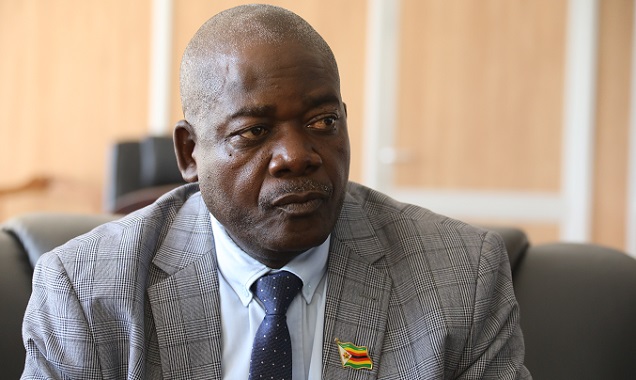
In his foreword to the report, Primary and Secondary Education Minister Torerayi Moyo said reliable education statistics were indispensable in assessing the Ministry’s achievements and identifying areas requiring further intervention.
“The Second Republic remains committed to the principle that no child should be left behind. Our commitment to inclusive, equitable and quality education is anchored in the Constitution of Zimbabwe, the Education Act [Chapter 25:04] as amended, the Heritage-Based Curriculum and our national, regional and global commitments, including the SADC Indicative Regional Strategic
Development Plan, the African Union’s Agenda 2063 and Sustainable Development Goal 4,” he said.
Minister Moyo said fulfilling these commitments required sound evidence, with the 2026 statistics demonstrating progress in expanding access to education and improving learning conditions.
“Primary participation is effectively universal, with a Gross Enrolment Ratio of 100,01 percent, and gender parity has been achieved at ECD and primary levels.
“Classroom construction between 2025 and 2026 exceeded the Education Sector Strategic Plan (ESSP) target, pupil-to-classroom ratios have fallen at every level, and the teaching force has grown, with 97,58 percent of primary teachers trained,” he said.
The report also highlights progress in digital learning, with more than half of primary schools and nearly three-quarters of secondary schools reporting functional internet connectivity.
“More than half of primary schools and nearly three-quarters of secondary schools now report functional internet connectivity, an encouraging step towards our digital learning ambitions,” he said.
However, significant infrastructure and access gaps remain. A third of primary schools have no electricity, while Early Childhood Development (ECD) pupil-to-teacher ratios remain well above the national standard. Women are also under-represented in school leadership positions.5
The report further indicates that only 28,49 percent of Grade One entrants begin school at the official age of six, pointing to challenges in ensuring timely access to formal education.
“The report is equally candid about the challenges that remain. Only 28.49 percent of Grade 1 entrants start school at the official age of six. Secondary participation has declined since 2022, and only 18.46 percent of Form 4 pupils proceed to Lower Six with financial constraints remaining the leading reason for dropping out, while marriage and pregnancy continue to cut short the education of too many girls,” said Minister Moyo.
The findings come as the Ministry develops its 2027 Strategic Plan, with the statistical evidence expected to guide priority-setting, resource allocation and interventions aimed at improving access, equity, quality and relevance in the education sector.
The data is also expected to provide a foundation for aligning the Ministry’s programmes with national development priorities under the National Development Strategy 2 (2026–2030).
Minister Moyo said the findings would inform the priorities of the new ESSP and the distribution of resources across provinces and districts.
“These findings will shape the priorities of the new ESSP and the allocation of resources across provinces and districts.I therefore urge all education managers, policymakers, development partners, researchers, school development committees and communities to make full use of this report.
“The evidence it contains should inform planning and budgeting at every level, from the school to the national level, and should be used to hold all of us accountable for the commitments we have made to Zimbabwe’s children,” said Minister Moyo.