Online Reporter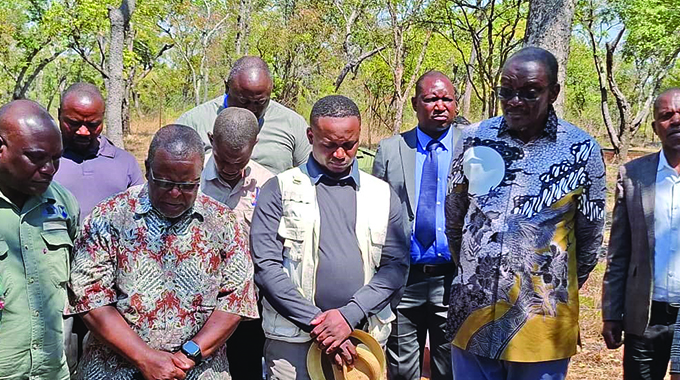
Africa Moyo in Kabwe, Zambia
VICE President Kembo Mohadi yesterday continued his tour of liberation war shrines in Zambia, visiting the Mkushi Training Girls Camp, where over 1 000 combatants — including his own brother — were brutally killed by the racist Smith regime.
The attack was launched on October 19, 1978 at around 8am. It appeared to be part of a co-ordinated assault on bases housing freedom fighters, as Freedom Camp (also known as Chikuti) was similarly attacked at approximately 11am the same day.
At Freedom Camp, more than 400 freedom fighters were killed in combined air and ground raids. The Mkushi Girls Camp massacre remains vivid in the memories of many locals, and news of a senior Zimbabwean Government official’s visit drew a crowd. Some arrived on foot, others by bicycle or motorcycle. By the time Vice President Mohadi arrived, around 100 locals had gathered at the shrine.
As he stepped out of his vehicle, women broke into song and dance. Men and women alike moved closer to catch a glimpse of him, with many pulling out smartphones to capture photos and videos.
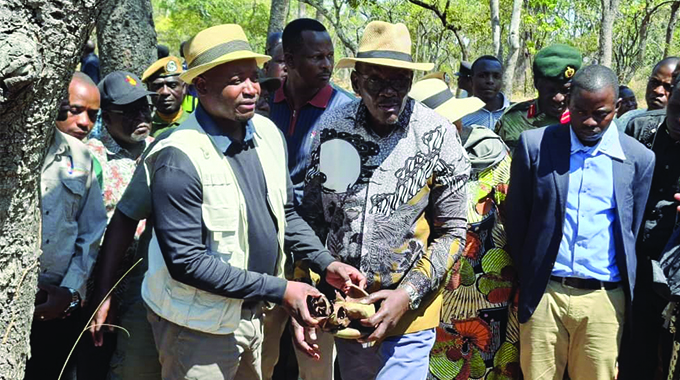
The tour began with Mr Lovemore Mandima, Director of the National Museums and Monuments of Zimbabwe, explaining the events of the massacre and the historical significance of the Mkushi Girls Camp.
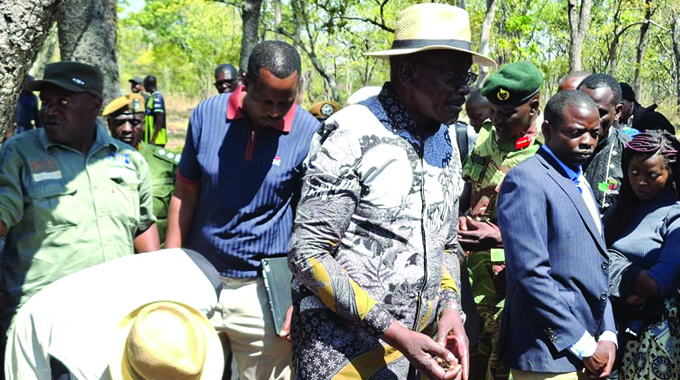
Vice President Mohadi was then led on a tour of the 11 mass graves at the shrine. He was also shown bullet cartridges believed to have been used by Rhodesian ground forces during the attack.
His brother, who served as a trainer at the camp, was among those killed. The assault involved six Dakota aircraft carrying 120 paratroopers, two Canberra bombers, two Hawker Hunter fighter jets, and an unknown number of helicopters transporting 45 heliborne troops and an 81mm mortar team.
At its peak, Mkushi Girls Camp — located about 130km northeast of Kabwe, which itself is 138km north of Lusaka —housed approximately 3 000 combatants, mainly from Zapu.
“There are mass graves here where families of the fallen come to pray,” said Mr Charles Mpabanga, a local born in Zambia who speaks fluent Shona and Ndebele, as his father hailed from Gokwe.
Yesterday was no exception. Vice President Mohadi asked Reverend Paul Damasane, Deputy Chief Secretary to the President and Cabinet responsible for Social Services, to lead a prayer.
In an interview following the tour, Vice President Mohadi urged young people to champion economic freedom, building on the political freedom secured on April 18, 1980.
“I am reliving my youth. I feel energised, as though ready to fight again — this time against the Bretton Woods institutions, for economic independence, which those boys and girls buried here never had the chance to attain. They fought for political emancipation, and we achieved that. But the journey continues. We now face the long battle for economic freedom and emancipation. We want to walk this path with you.
“That’s why we bring you here — to understand the sacrifices made. You too must be willing to sacrifice, even go hungry for a day, to ensure Zimbabwe becomes economically independent,” he said.
Vice President Mohadi emphasised that Zimbabwe possesses the mineral resources and skills needed to succeed.
“Some of us are ageing. We’re no longer as young as we were when we were here. You must take up the mantle and carry the baton forward until Zimbabwe reaches its full potential,” he said.
Asked about the loss of his brother, he responded: “Oh yes, my brother — the one I come after. He was training these girls and died defending them. I don’t know what you mean by closure, but we have forgiven those who committed these atrocities. However, we have not forgotten.
“That’s why we want to memorialise these places, so future generations understand what happened here. As Mr Mandima rightly said, this site can be developed into a museum, attracting tourists and generating income.”
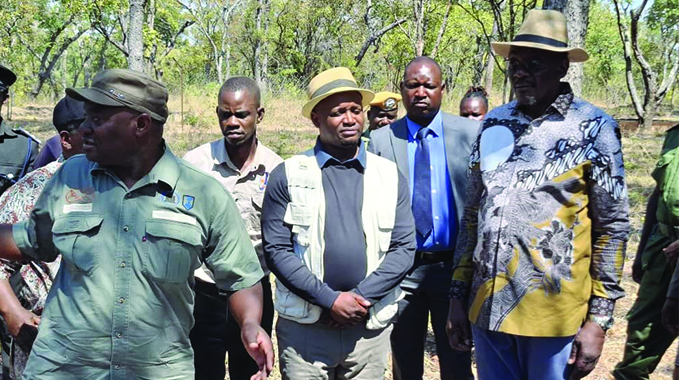
Vice President Mohadi instructed the Ministry of Home Affairs and Cultural Heritage to ensure all significant artefacts at and around the shrine — including bullet cartridges, medicine bottles, a car wreckage, defensive kitchen positions, and foxholes —are preserved.
His Royal Highness Chief Kanyensha, under whose jurisdiction the shrine falls, announced he was handing over large swathes of land surrounding the shrine to the Zimbabwean Government to enable fencing and protection from roaming animals.
“This entire area must be fenced—not just the burial sites—because everything created here is part of our history. There are people born in Zimbabwe and others born in Zambia at this shrine,” he said.
Chief Kanyensha also appealed to the Government to assist in constructing a school, clinic, and a proper road leading to the shrine.
As Vice President Mohadi prepared to depart, locals once again broke into song, ululating and clapping in appreciation.
In recognition of their efforts to maintain the shrine, he offered a token of appreciation through Chief Kanyensha.
Vice President Mohadi was accompanied by Deputy Minister of Information, Publicity and Broadcasting Services Dr Ompile Marupi; Deputy Minister of Home Affairs and Cultural Heritage Chido Sanyatwe; Zimbabwe’s Ambassador to Zambia Charity Charamba; Institute of African Knowledge Chief Executive Officer Ambassador Kwame Muzawazi; and other senior Government officials.