

 admin
admin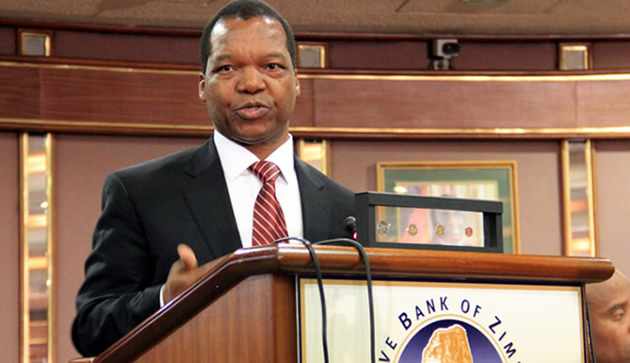
Tapiwanashe Mangwiro
The Reserve Bank of Zimbabwe (RBZ) Governor, Dr John Mangudya’s Monetary Policy Statement released this week was a sign of caution and effort of continuity in policy as a country, with a few tweaks to make things better.
It was a policy statement that targeted both producers and consumers through foreign currency policies and money supply growth targets. The governor took into consideration appeals by industry, but also had the stamina to stand his ground on targeting inflation via policy.
Inflation
The RBZ Monetary Policy Committee (MPC) saw its inflation targets fail as money supply began to increase in the third quarter despite efforts to slow it down in the fourth quarter made the variance much smaller.
Inflation has been agreed by the Bank that it will use money supply to attack it and reduce cost push inflation caused by the exchange rate movements due to excess local currency and a few drips of foreign currencies.
The RBZ has always come under severe criticism for rising money supply, which is said to be contributing to exchange rate instability.
In the Monetary Policy Statement, the governor alluded that his tight monetary policy did cut the annual growth in broad money from 507,9 percent in January 2021 to 131,8 percent by December. This is true, but not entirely because the bank has actually moved away from using notes and coins, with the public also phasing out some of the notes as they deemed them too small to transact due to rising inflation.
The Bank is to cut its quarter-on-quarter reserve money target from 10 percent to 7,5 percent for the quarters ending March and June 2022.
This means the Bank plans to slow down the rate at which it releases money into the market, and hopes that this will allow inflation to subside and move within their parameter by maintaining the exchange rate.
The Bank targets that month-on-month inflation reduce to below 4 percent in the first quarter of the year and to average below 3 percent in the second half of 2022. This path is expected to reduce the country’s annual inflation rate to a range of 25-35 percent by end of December 2022.
Interest rates
The Bank maintained the policy rate at 60 percent amid other measures aimed at reinforcing macroeconomic stability. Dr Mangudya also maintained the Medium Term Bank Accommodation (MBA) facility interest rate at 40 percent.
The measure to maintain the high-interest rate is aimed at curbing speculative borrowing, which has fuelled a decline in the value of the Zimbabwe dollar and the bank has maintained it in order to have continuity with policy and achieve less turbulence in the economy.
The statutory requirements for demand call deposits were also maintained at 10 percent and at 2,5 percent for savings and time deposits.
Maintenance of statutory reserve requirements for demand/call deposits and savings and time deposits at current levels is just a way to promote savings and time deposits and is a good thing to do going forward.
Foreign currency policies
Dr Mangudya showed his resolve by not buckling to pressure on the export retention issue, as he kept his policy of 60 percent to the exporter and 40 percent to the Reserve Bank at the prevailing rate.
In his defence, this is in order to continue to push to stabilise the local currency.
Dr Mangudya said foreign currency needs to be earned from foreign sources such as exports and remittances and competitiveness of local production becomes very essential to promote exports, and stability of the local currency is key to promote investment and for value preservation.
But industry has always asked how they can increase export earnings when the manufacturing sector forex retention threshold remain at 60 percent — 40 percent, with the forex auction system is taking four weeks and interest high as they are — the local industry will remain uncompetitive.
Building foreign exchange reserves to provide the necessary back-up support for the local currency to enhance its attractiveness through setting aside 5 percent of the foreign exchange available for the auction system is a good move but there definitely is a need to improve industry viability.
Exporters in manufacturing, horticulture or in cross-border transport, will now be able to keep 100 percent of their incremental portion of export receipts. Tobacco and cotton farmers now get to keep 75 percent of their earnings for the new marketing season up from 60 percent last season.
However, players in the tourism industry can now keep 100 percent of their forex earnings, “to allow them to quickly recapitalise and procure the necessary goods and services required by tourists and travellers”.
The governor although showing signs of continuity and being less hard headed on policy approach, he failed to address the key issue of foreign currency availability. He admitted that it surely was a problem, but could not proffer any solution rather than just a pledge to reduce time of disbursement on auction allotted funds.
With all these policies, it comes down to how the Bank and the ministry will coordinate. For as long as there is no cohesion with fiscal authorities the problems will remain the same as expenditure on agriculture and construction push the exchange rate up.


 Online Reporter