Zimpapers Politics Hub
THE Second Republic’s nationwide verification and mop-up vetting of liberation war collaborators and non-combatant cadres is seeking to close one of the remaining gaps in Zimbabwe’s liberation history.
The exercise is intended to ensure that citizens who contributed to the struggle for independence but were not formally recognised are identified and registered.
This initiative is also consistent with the Second Republic’s stated philosophy that no one and no place should be left behind.
Combatants alone did not fight the liberation struggle. Communities played a crucial role in the providing food, intelligence, shelter, transport, medical assistance and other forms of support that sustained the armed campaign.
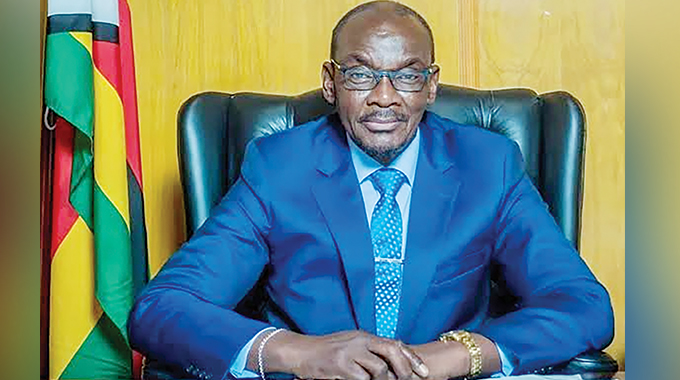
Vice President Kembo Mohadi highlighted this during the burial of national hero Brigadier General Albert Nyamuronda last Monday.
He said the liberation struggle was a people’s war and that every Zimbabwean who contributed to it had a place in the country’s history.
That reality provides the basis for the current mop-up exercise. If independence was achieved through a collective effort, recognition of that contribution cannot be limited to those whose names were formally recorded soon after independence.
Correcting a historical omission
For years, some war collaborators and non-combatant cadres have felt that their contributions were either forgotten or inadequately acknowledged. Some may not have had formal documentation to immediately prove their participation. Others were part of local networks whose contributions received limited attention in the years following independence. The nationwide verification exercise provides an opportunity to address that gap.
Government, through the Ministry of Veterans of the Liberation Struggle Affairs, is conducting verification and mop-up vetting targeting war collaborators and non-combatant cadres. Those found to have made qualifying contributions can be registered under the Veterans of the Liberation Struggle Act (Chapter 17:12), opening the way for access to recognition, welfare support and other benefits.
The significance of the process goes beyond registration. For an elderly former collaborator who spent decades believing that their contribution had been forgotten, formal recognition can provide a sense of belonging and closure.
It also ensures that the national record more accurately reflects the broad social base that sustained the liberation struggle.
A people’s war
Zimbabwe’s independence came after years of armed struggle and widespread sacrifice.
The war involved guerrillas, war collaborators, mujibhas and chimbwidos. Entire communities were affected by intimidation, displacement, imprisonment, torture and other forms of repression.
Combatants made the ultimate sacrifice by taking up arms and risking their lives for national freedom. But their operations depended heavily on civilian support.
Communities provided food and shelter. Information had to be gathered and transmitted. Supplies had to be transported. Fighters required medical assistance and safe routes.
Without this support, sustaining the armed struggle would have been considerably more difficult. The recognition of non-combatant cadres should therefore not be viewed as an act of charity. It is an acknowledgement of their contribution to the attainment of independence.
Broadening recognition also does not diminish the sacrifices made by those who fought on the battlefield. Instead, it provides a fuller account of the liberation struggle.
From recognition to economic participation
Recognition becomes more meaningful when it is linked to economic empowerment.
Once verified and registered, qualifying liberation war contributors can access provisions available under the relevant legal framework.
This can bring previously excluded veterans into the mainstream of the national development agenda. The approach is consistent with President Mnangagwa’s philosophy, Nyika inovakwa nevene vayo.
Liberation war veterans should therefore not only be remembered during Heroes Day or at commemorative events. Where possible, they should also be given opportunities to participate in building the economy of the country they helped to liberate.
Government empowerment programmes provide a framework through which veterans can pursue productive activities and improve their livelihoods. For those who have previously been left out, successful verification can become the first step towards accessing these opportunities.
It changes their position from that of forgotten historical figures to active participants in Zimbabwe’s development.
Benefits for future generations
The recognition programme also has an important intergenerational dimension.
The sacrifices made during the liberation struggle were not only for those who fought or supported the war. They were made to secure a better future for subsequent generations.
Benefits available to qualifying veterans and their families, including educational assistance, scholarships and other welfare interventions, can therefore turn liberation credentials into tangible opportunities. A veteran’s child receiving education, skills development or empowerment support represents a practical extension of the independence struggle.
Such interventions can also strengthen the social contract between the State and those who made sacrifices for national freedom.
The objective should be to ensure that the legacy of the liberation struggle is not confined to monuments, speeches and commemorations, but continues to produce tangible benefits for families and communities.
Preserving the memory of those who died
The Second Republic’s approach to liberation heritage extends beyond living veterans.
Government is also working to preserve liberation war shrines in neighbouring countries where Zimbabwean fighters and other contributors were buried.
Vice President Mohadi said progress had been made in the rehabilitation and preservation of liberation war sites following assessments undertaken in countries such as Zambia and Mozambique.
Among the sites being rehabilitated are Freedom Camp, Nampundwe, Mkushi, Kavalamanja and St Mary’s Cemetery in Zambia, alongside other sites in Mozambique.
The preservation of these sites is important because national memory is not confined to Zimbabwe’s borders.
Many chapters of the liberation struggle unfolded across the region, and the resting places of those who died during the war form part of Zimbabwe’s national heritage.
Maintaining the shrines also provides future generations with physical reminders of the sacrifices that were made to secure independence.
The highest honour
The awarding of Independence medals to veterans during the recent Heroes and Defence Forces Day commemorations adds another layer to the recognition programme.
Such honours provide formal acknowledgement of sacrifices that cannot be repaid.
But the most enduring tribute lies beyond ceremonies.
The responsibility of the present generation is to build the peaceful, united, prosperous and sovereign Zimbabwe for which the liberation generation fought.
The liberation struggle secured political independence. The challenge now is to consolidate that independence through economic development, productivity, innovation and national unity.
From political independence to economic liberation
This responsibility is central to Vision 2030, which seeks to transform Zimbabwe into an upper-middle-income economy.
The liberation struggle therefore has a contemporary dimension.
Political independence was the first frontier. Economic liberation is the new one.
This means liberation war veterans should, where possible, be empowered not only as beneficiaries of the economy but also as producers, entrepreneurs, farmers, investors and contributors to national development.
Their children should inherit opportunities as well as the history of their parents’ sacrifices.
The same principle applies to the wider population. The independence achieved through the liberation struggle must translate into improved livelihoods, productive communities and a stronger national economy.
A practical test of leaving no one behind
The mop-up vetting exercise is therefore an important practical test of the Second Republic’s philosophy of leaving no one and no place behind.
The passage of time should not erase a genuine contribution to the liberation struggle.
Geographical location should not determine whether a person receives recognition. Nor should the absence of documentation from decades ago automatically result in permanent exclusion where a genuine contribution can be established through the verification process.
The initiative complements the rehabilitation of national, provincial, district and community liberation shrines.
Together, these efforts seek to preserve the memory of the liberation struggle while extending recognition to those whose contributions may have remained outside the formal national record.
For combatants and non-combatants who have waited decades for recognition, the mop-up exercise offers an opportunity to reclaim their rightful place in Zimbabwe’s history.
For Government, it provides an opportunity to demonstrate that leaving no one and no place behind is more than a political slogan.
It is also a reminder that the country’s liberation was a collective achievement.
Those who helped build the foundations of Zimbabwe’s independence must be allowed to participate in building its future.