

 admin
admin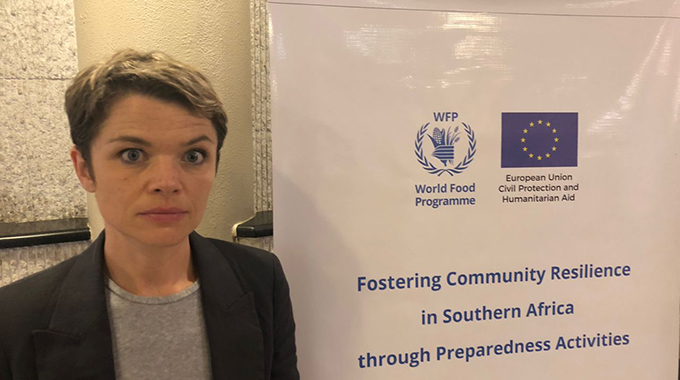
Yeukai Karengezeka and Lesego Valela Herald Correspondents
More urban resilience programmes are needed to cushion the urban poor from the impact of climate change and pandemics like Covid-19.
The latest report focusing on urban vulnerability funded by the European Civil Protection and Humanitarian Aid Operations (ECHO) in partnership with the United Nations agency World Food Programme (WFP) revealed that the urban population is increasing hence the need to increase resilience-building programmes.
WFP Regional Urban Preparedness Coordinator, Ms Arianna Francioni told stakeholders in Harare at a national validation workshop that from the findings of the project, new modalities were needed to address urban vulnerabilities.
“Based on the findings we got, we want to find the best criteria for an urban response to the shocks of diverse nature,” she said.
“In Zimbabwe, the study focused on Gweru, Mutare and Epworth where hotspots are located and how a cash-based urban response could be designed in terms of value and transfer modality to address the essential needs.”
WFP added that the project was done by different stakeholders including government departments, international and local NGOs, community-based organisations, private sector, and academic institutions in assessing urban vulnerability contexts in Mutare, Epworth and Gweru.
In an interview, Department of Civil Protection Unit deputy director Mr Farai Hokonyo said the Government was committed to ensuring that it leaves no place and no one behind in disaster risk management programmes.
“We have taken both urban and local authorities into DRRM planning and we then assist them in terms of preparedness, recovery and response to emergencies that we foresee in urban areas,” he said.
Mr Hokonya said the Government was recapitalising local authorities by procuring fire tenders and rolling out emergency roads rehabilitation programmes.
The Future of Hope Foundation, assistant director Dr Beverly Kuveya said her organisation was implementing a programme in Epworth and Harare South of training women to plant mushroom.
“We are training vulnerable communities in mushroom production across the country and this can be done at a minimum cost.
“This project helps communities at household level as they get food for their sustenance and surplus for sale. We mainly target women and the disadvantaged groups,” she said.



 Online Reporter