admin
adminTHE articles on 22 December 1978 Rhodesian security forces bombing of Mboroma under Operation Vodka, a Zipra camp in Zambia where suspected enemy agents were kept has generated a lot of interest with the former inmates of the facility coming forward to give accounts of how they survived death by a whisker on that fateful day.
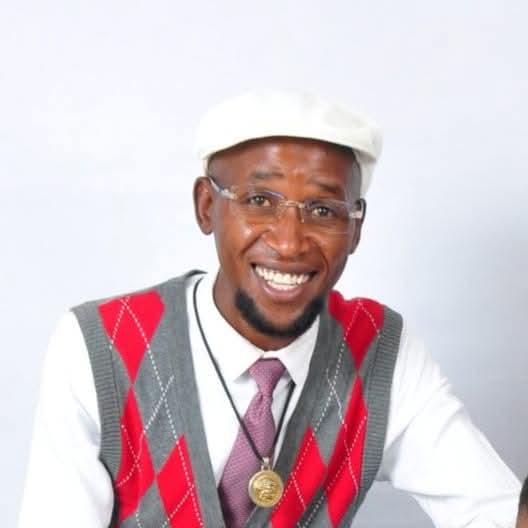
In the last two weeks in our Lest We Forget Column we carried interviews on Cde Squeeze Dlodlo who gave his account on the raid on Mboroma and how he was arrested by the Zipra military intelligence officers who accused him of being a spy when he arrived at Nampundwe Transit Camp in Zambia. Today our Assistant Editor Mkhululi Sibanda (MS) speaks to Cde Steven Mathanda or Biko who came forward to give his side of the story after reading the interview on Cde Dlodlo. Below are excerpts of the interview:
MS: Cde Mathanda, can you please tell us how you ended up at Mboroma.
Cde Mathanda: I was arrested on my return to Zambia in February 1977 after I had been deployed to Bulawayo to assist in the recruitment of those who wanted to join the armed struggle.
MS: You mean you had undergone military training before?
Cde Mathanda: Yes, I had joined the armed struggle in Zambia after leaving Rhodesia in 1967. After receiving my military training my unit which consisted about six comrades was given a special task to go to urban areas where we were told to work as undercover agents of the party. We were told that we had to join Zapu structures and play a pivotal role in the recruitment of those who wanted to join the armed struggle. During that time Zipra was known as the Department of Special Affairs. Some of the people that were in my unit were Rodrick Malaba, Nguboyenja, Mdubazi, Jatsha and Promise. When I got to Bulawayo I sought employment and got a job at a city clothing factory. I then went into a massive recruitment exercise and some of the people that I recruited today hold senior ranks in our security forces and some are retired brigadier-generals. This background is meant to show you how stupid some of my colleagues in the struggle who later arrested me on trumped up charges that I was a Selous Scout were. That was hogwash. In fact I am still angry because I believe they slowed down the wheels of the revolution.
MS: You are saying you worked with Zapu structures in Bulawayo, can you tell us some of the people that you worked with?
Cde Mathanda: I worked with Cdes Johnson Mnkandla, who after Independence worked as a senior magistrate here in Bulawayo, Luke Macebo, Cephas Nkomo, Christopher Mkhwananzi and so on. When Dr Nkomo was released from Gonakudzingwa in 1974 I became part of his security team. I was very active in setting up party structures throughout Bulawayo because that is where we fished for our recruits. I worked closely with members of the party’s youth wing such as Manila Nkomo, Pono Zondo and Nathaniel Moyo. However, in 1977 I was forced to flee the country after the Rhodesian security forces were on my case. This was after they had caught a guerilla I was working with Cde Puzzen Tavengwa at a house in Mzilikazi during a gig. In his moment of having a good time, a member of the Special Branch noticed an AK-47 folded butt under his coat. When he was tortured he revealed that he was working with me. I had to flee but I took with me 50 recruits to Botswana. I still had my weapon.
MS: Then when did your problems start with members of the military intelligence?
Cde Mathanda: When I got to Nampundwe I met Albert Nkomo, uTafara, a boy I had recruited in Old Magwegwe, he was now a member of the military intelligence. He might have told his colleagues about my role in the recruitment of the cadres and a majority of those people in the military intelligence were jealous as they felt threatened by progressive forces like myself. In fact if they found out that you had reached a certain stage in education, you had been holding an influential position in the party you were in for it. Word also reached the Zimbabwe House (ZH), our headquarters in Zambia that I was at Nampundwe, so Dr Joshua Nkomo sent word that I should meet him. When I got to ZH I was immediately deployed to the health department where I became an ambulance driver while at the same time working closely with Cde Killion Bhebhe who was the organising secretary in Zambia. Cde Bhebhe is still alive and he is in Kadoma. However, after staying at ZH for about two months I was raided by members of the military intelligence who arrested me and took me back to Nampundwe.
MS: Do you remember some of the military intelligence officers who arrested you and what was the charge.
Cde Mathanda: Among them was Bango and Mutsi. Aah bangitshaya labana abantu (those people gave me a thorough beating). I was handcuffed and also put in leg irons. When we got to Nampundwe I was detained underground where I found about 15 others. All of us we were being accused of being Rhodesian agents. I was accused of being a Selous Scout. I was also blindfolded. My pleas that I had been sent by my commanders such as Ackim Ndlovu for a recruitment exercise fell on deaf ears. I even tried to explain to them that in the struggle there was also a need to teach people our political programmes as the party leads not the gun but who could listen. Among the people I was arrested with was Roger Ndlovu who had been a member of the police force in Rhodesia but had decided to join the armed struggle. As for Roger he received the worst treatment. In fact Roger had played a pivotal role in giving Zapu members tips about the pending raids on the party offices and arrests. So when his superiors started to suspect him of working for the nationalist forces he skipped the border, so his case was that of from the frying pan to the hot fire.
MS: Then how long did you stay in detention in Nampundwe?
Cde Mathanda: For quite some time. Around May/June one day in 1977 when I thought they were going to kill me I was moved to Freedom Camp where I was further detained. What happened was that an operative of the National Security Organisation (NSO), which was led by Dumiso Dabengwa, Nephat Madlela stumbled upon me when the MI guys had taken me to a secluded place where they had tied me to a tree while I was naked. Madlela knew me and he was shocked to find me in such a condition. The MI officer who was guarding me waiting for whatever instructions rushed to the camp commander of Nampundwe, Killion not Bhebhe. Then my assailants came for me with a huge sack which they threw me in. So when the NSO guys came looking for me, they could not find me. At FC I was kept in a standing position for a week while part of my body was in water. After that I was moved to another place where I joined others but the place was also horrible as it was used as a storage facility for what looked like bags of grain. At one point I am told elderly people who were in the armed struggle but could not be trained because of their advanced age approached the senior officers in the military intelligence to release me, but that hit a brick wall.
MS: Who were those people, do you remember them? And why for your release?
Cde Mathanda: They were Mzaca, Mguni, Togwe and the now Insiza chief, Vezi Maduna Mafu. They were known as king killers, a sort of derogatory term for those who could not undergo military training because of their ages or physical condition.
They were involved in agricultural production and other duties which were not of military nature. On why they called for my release was because of my track record in the recruitment drive that I had carried out in Bulawayo. Later on we were taken to Mboroma and there I found people that I had trained with and were veteran guerillas but considered troublemakers. They included comrades like Mkapesi, Mathuthu, Mdubazi and Promise. However, as time went on and that was in 1978 the NSO officers, who included Jeconia Moyo started coming to verify our cases and to their utter surprise they found out that we were innocent and there were no Selous Scouts among us. Besides the so-called troublesome guerillas, former policemen, district assistants and educated peoples, some of the people who were locked up at Mboroma were former bus conductors who were considered to be physically fit for civilians, so they could have worked for Rhodesian security services, what rubbish was that.
MS: So you mean all of you were innocent.
Cde Mathanda: I would say almost everyone was innocent. However, there was one guy whom we all suspected was an enemy spy, a Gumbo fellow who had been working as a Rhodesian soldier, that guy’s behaviour was suspect. As time went on Jeconia and Nephat Madlela started making changes within the camp on their periodic visits. They are the ones who ordered that irons should be removed from us. We were always in leg irons. They also demanded that we should set up different camps about two to three kilometres from the original camp to decongest it in the event of an attack. So what remained at the original camp was the kitchen, the barracks and underground pits and this was done towards the end of November 1978 and I think the Rhodesian reconnaissance unit that had spied on the camp should have used the old formation on the set-up when they finally attacked us. Those changes helped a lot as when the attack was carried out they were few people there. Some were also out on a hunting expedition.
MS: On the day of the attack, 22 December 1978 what happened?
Cde Mathanda: On that fateful day my team was the one on duty in the kitchen, cooking for other comrades. In fact the previous night I had dreamt the camp being attacked and comrades running away in all directions and I told that dream to my fellow comrades I was working with in the kitchen. So after 8am while we were still working in the kitchen there was a sudden noise of aircrafts followed by loud explosions. It then became every man for himself. I quickly dashed out and went straight to a tree where I momentarily hid under. Our comrade, umfana kaDaggie returned with rapid fire using a Zegue and then there was a lull in attack by the aircrafts. It was at that moment that I ran across the camp and hid where there was a small cave, it was not even a cave, but an opening at a rock. I can tell you three of us, myself, Benjie and Mabaleka fitted there.
MS: That rock was within the camp.
Cde Mathanda: It was. While the Rhodesians were making their comb-up after dropping paratroopers, we were there seeing everything, it was frightful. We saw everything especially myself who was the last to push in. One Rhodesian soldier even came from behind the rock and stamped on the rock while we were hiding there. We were very lucky and this is possible because military people have one weakness, when they are moving in battle formation they cast their eyes about 20 metres from where they are. They anticipate that danger could be a distance away, not where they are. After the bombing heavy rains started falling and a deluge of water was just flowing through our position, we got soaked but could not move. After the rains, a big snake with larges scales passed near our position and that was very scary. When I saw that snake which could have been very old because of the frightening scales I said to myself our Zimbabwean ancestors were with us and at that moment I had a feeling that we were out of danger. From our position I saw everything, our fellow inmates being captured and the Rhodesians lifting the Zegue which mfana kaDaggie had sabotaged by removing the firing pin so that the Rhodesians could not use it when he realised that he could not hold on.
MS: You remained in that position until when?
Cde Mathanda: We remained there until I think well after 7pm.
MS: Why?
Cde Mathanda: You know when you have been bombed it takes time for the confusion to clear, you still hear sounds as if the aircrafts are still around. However, we later moved away and started wandering in the bush living on wild fruits such as mazhanje, which are plenty in Zambia. We were found by a search team from our comrades after a week. Before those guys found us we had come across a big python that had coiled on a rock and to us that was a good sign again that our ancestors were with us. After that bombing the camp was moved to the tsetse control area which is called Lima where military training started for others. Trained guerillas like us were moved to Solwezi where we remained there until 1981.
MS: So you remained in Zambia until 1981, any reasons for that?
Cde Mathanda: This was because we were part of a force that remained in Zambia in case the Rhodesians misbehaved. We were not sure of those people.


 Online Reporter