


 malvernmugadzikwa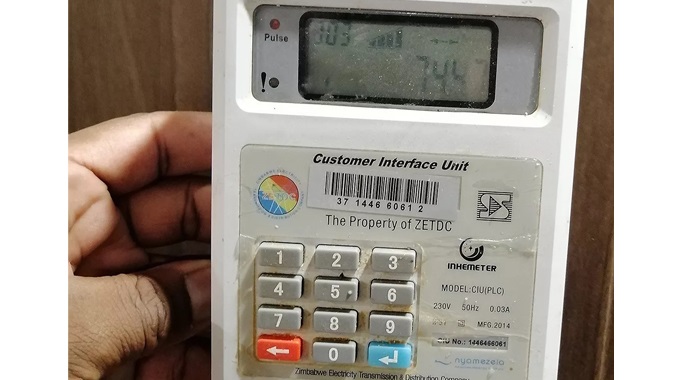
Theseus Shambare
Improved power supply should naturally make everyone happy. Strangely, it is not so in some cases.
Spats
It is now common to see residents quarrelling over power usage, electricity top-ups or other related issues.
“I do not understand this. We are not yet halfway through the month yet you are telling me that we have already exhausted our units for the month. How is that possible?
“The same amount of money and token used to last us a month or even beyond? What has changed?” fumed Braeside-based Elijah Munemo after his fellow tenants asked him for additional funds to keep the lights on.

Zimbabwe, just like most countries in the Southern African region, has, heretofore, been grappling with daily power outages.
But, of late, the situation has tremendously improved. However, this has come with its fair share of unexpected challenges, particularly for domestic users.
Some desperate families are resorting to a self-regulating system called “private load shedding”.
Tutsirai Mangezi, from Rydale Ridge Park, says electricity has become a common source of bickering, especially at shared apartments.
“We had a nasty conflict last month over power usage. Resultantly, we came up with our own load-shedding timetable. We switch on electricity at 4.30am and switch it off at 8am so that we all use power at the same time,” she revealed.
But the move, Mangezi said, is inconvenient and less than ideal.
“A lot is involved. For instance, we had agreed that we all stop using electric stoves, particularly ovens, but some are in the habit of waking up at night to do so. It then disadvantages others.”
Apparently, in some households, there are now rules on what to cook using electricity.
Top of the list are foodstuff that require a longer period to prepare. They include beans, mazondo (cow heels) and guru (tripe).
In some situations, families are going for days without electricity after failing to agree on top-up amounts.
Sustainability
But have tariffs been increased or residents are simply failing to properly conserve energy?
Similarly, for how long will consistent power supply be guaranteed?
An official from ZESA Holdings said it was the parastatal’s wish to permanently restore normalcy on power supply.
A number of strategies, he said, were being employed to make this a reality.
To fill the power deficit, Government developed several power sources that include the Hwange Units 7 and 8 expansion projects, which are now both on stream, adding 600 megawatts to the grid.
Also, several small hydro-electricity projects on dams that are being constructed in every province are expected to augment supplies.
“Initially, we had problems with electricity countrywide, but, as you are aware, the situation has greatly improved and we now do not have any form of load shedding countrywide, in general. We have also increased the level of support in terms of response to faults,” ZESA Holdings consultant (international business) Engineer Cletus Nyachowe told The Sunday Mail Society.
Tariffs
ZESA has long abandoned the flat tariff system in favour of several tariff bands that are designed to reward energy conservation and punish heavy power users.
As of Wednesday last week, 50 kilowatts (kWh) of power (or 50 units, as they are generally called) were being sold for $8 579,58, while 200kWh and 400kWh were pegged at $82 935,93 and $254 527,52, respectively.
The middle band, which is where ZESA believes 80 percent of their household consumers fall, is considered the optimal use level as the subsidy is relatively lower.
Under this category, households are allowed to purchase 150kWh, which adds to the initial 50kWh to make a total of 200kWh considered enough for a home using power optimally.
So, the average cost per household is supposed to be $83 000.
The units should be purchased in one tranche per month for maximum benefit, as additional ones that will be bought thereafter are punitively expensive.
The subsidy is meant to make sure those in the low-income bracket can afford electricity and, at the same time, penalising those who excessively use power.
The varied discounted rates stretch up to 400kWh per household every month and those who go beyond this meet an unfiltered cost, at the rate of US$0,16 per unit.
Energy expert and managing director for African Transmission Corporation Mr Utedzi Victor reckons electricity tariffs in Zimbabwe are reasonably priced, compared to other countries in the region.
“In most instances, we are below the pricing in neighbouring countries. The model used by our power utility is a costing formula that promotes fair usage as the amount a household pays will be directly proportional to the scale of power usage,” said Mr Victor.
“What this means is that the first few units you buy are cheaper. Because access to electricity is considered an essential need, there is a heavily subsidised first component.”
According to ZESA, electricity is cheaper when bought in one tranche per month on any day, not only on the first day as wrongly suggested by some people.
“How much you will get depends on how much electricity you have already bought in that particular month. Buying a lot of units at once is also not a solution. Under this scheme, it is a bad idea as well. One simply needs to know the amount of power they require every month,” advised Mr Victor.
“Going beyond subsidised categories automatically places one under heavy users. Likewise, the money loses its purchase power with each extra unit outside the fair use threshold.”
Misleading reports suggest that consumers can save on electricity if the power is used early in the morning or late at night.
“For domestic users, ZESA only has one tariff regime, whether it is off-peak or during peak hours.
“When you top up on units, these units represent actual kilowatts. The amount of power devices consume does not normally depend on the time of day. Thus, you will not save power by cooking late at night or early in the morning,” added Mr Victor.
Troubleshooting
There are several methods to cost-effectively use energy.
One of the ways is to identify energy vampires that are said to suck as much as 20 percent of monthly electricity bills.
An energy vampire is basically defined as a device that continues to use energy, even when it is turned off.
These gadgets lurk in the home, taking the form of phone chargers, cable boxes, computer cords and any other electrical gadgets that are left in standby mode.
It is advisable to switch off the power point rather than leave appliances on standby.
Turn off the heater or other electrical appliances when going to bed or leaving the house.
Energy-saving light-emitting diode (LED) globes are also said to save up to 80 percent of lighting costs and last longer. Switching to solar or gas energy has also proved to be cost-effective.
Naturally, more energy is consumed in winter due to the need to stay warm.
According to energy experts, heaters (including water heaters) account for 40 percent of a home’s general energy consumption.
An average refrigerator uses 225 watts, and assuming a family uses the gadget all day, it consumes about 162kWh per month.
At 2 500 watts for an oven and 1 500 watts for a stove on medium-high heat, using these for one hour a day results in 75kWh and 45 kWh power consumption per month, respectively.
Lighting accounts for about 9 percent of a typical home’s energy use while television sets and other electronic gadgets make up about four percent.
A household that uses a TV set for an average of six hours a day can use about 55kWh per month.
Business
Domestic consumers are not the only ones who now have guaranteed power supply.
Confederation of Zimbabwe Industries (CZI) president Mr Kurai Matsheza said they are delighted with the current trend and expressed hope that the Government will continue bolstering power supply.
“We welcome this development and we hope the situation will sustain forever. Power availability has been a major drawback to many manufacturing activities. This has already removed the cost of alternative power supplies.
“We hope refurbishment on units 1 to 6 at Hwange will also cushion the vulnerability of the Kariba generation. We are also impressed by the official rate that is improving as the local currency continues to strengthen,” said Mr Matsheza.
Twitter: @TheseusShambare



 Bongani Ndlovu
 Online Reporter